Movie Review: ‘Saltburn’
Director: Emerald Fennell
Cast: Barry Keoghan, Jacob Elordi, Rosamund Pike, Richard E. Grant, Alison Oliver, Archie Madekwe
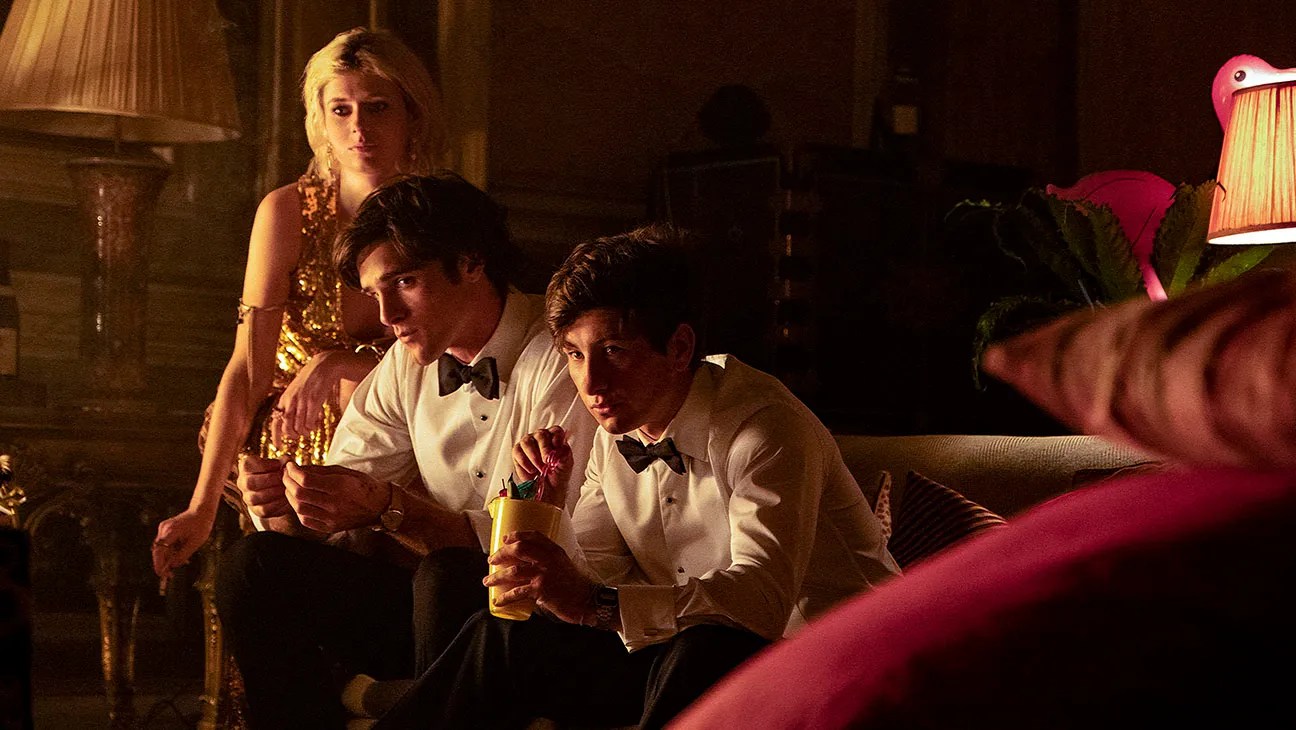
Plot: Oliver Quick is a gifted Oxford student whose obsession with the wealthy and handsome Felix leads him to infiltrate his life and family. Felix invites Oliver to stay at his estate home Saltburn, where Oliver joins a game of manipulation played by the family of disconnected elites.
Review: The sub-genre of media focusing on the heinous and hedonistic behaviour of the 1% has turned up in horror, thrillers, dramas, all kinds of genre. In the current political and social climate, there’s something telling about the audience fascination with the wealthy elite family unit trying to destroy each other over greed or for fun.
Our audience insert character is Oliver (Keoghan), who we meet as an out-of-place student at Oxford. He’s openly envious of the clique of wealthy youths, in particular Felix (Elordi). A chance encounter brings them together as friends, and Oliver is invited to Felix’s family home at Saltburn so he doesn’t have to return to a dysfunctional home. In the sprawling medieval mansion Oliver is thrown in with Felix’s eccentric family who act on their whims with little concept of what would be considered normal moral or financial restraint. Felix’s parents Sir James and Lady Elspeth (Grant and Pike respectively), his sister Venetia (Oliver), the disconcerting butler Duncan (Paul Rhys) and Felix’s cousin Farleigh (Madekwe), who relies on the family for financial support.
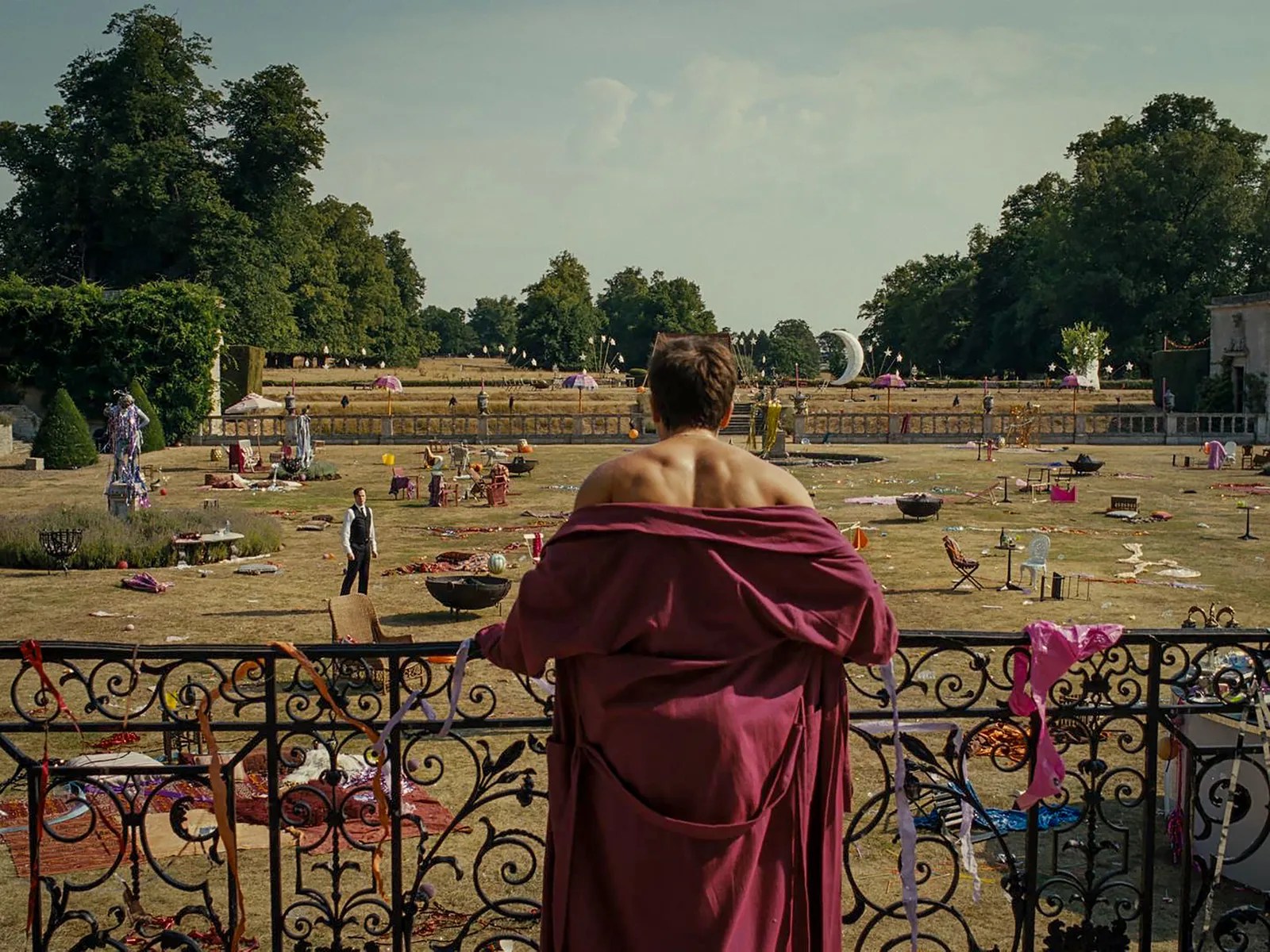
It quickly becomes a game of manipulation, as Oliver flirts, blackmails and threatens to curry favour with Felix and his closest family members. Many characters are presented as sociopathic monsters, dismissing the death of a close friend as them “doing anything for attention” while throwing spur of the moment decadent parties with elaborate theming and decorations. Quite often, the Felix’s family fall back on infantile behaviour when challenged, insisting the cause of distress be removed and carrying on as though out of sight is truly out of mind. When tragedy eventually strikes, the stakes are raised and Oliver’s actions become more desperate.
As delightful a time as this sounds, it’s really the way it’s presented that makes the audience uncomfortable. When the characters get into each others faces to whisper threats or lines of seduction, the camera forces use uncomfortably close to them. Their lecherous and emotionless twisting of each other to keep them in the house and in favour fills the screen. That’s just the dialogue scenes, the wider framing is more often used for moments where the mind-control guy from The Eternals desecrates a freshly filled grave. For a very long, unbroken take.
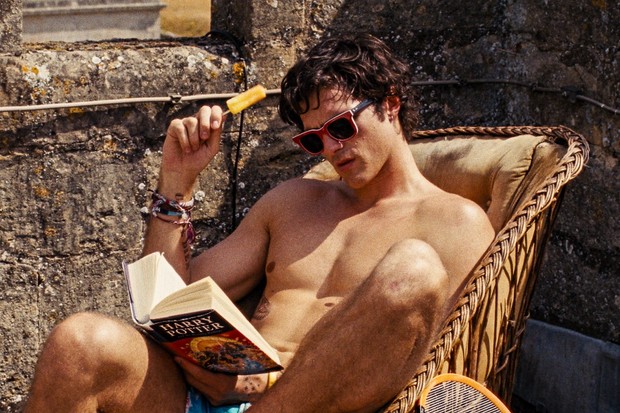
The entire experience is akin to the Theatre of Cruelty, a form of theatre that sets out to make the audience squirm in their seats and feel their skin try to crawl off their body (for example: Cats). For all the performance and technical excellence on display, it’s difficult to recommend this to anyone. Spending two hours with Oliver Quick is an endurance as it is, throw in sexual assault, suicide, and grave-humping and this is only going to be for those with strong stomachs. We’re enjoying the works of Emerald Fennell, but it’s always going to be with some trepidation.
A horrible, excellent film.
Rating: NINE out of TEN


![Top 10 Creepy Cryptids [by Bea Harper]](https://i0.wp.com/houseofgeekery.com/wp-content/uploads/2016/10/cryptid.jpg?fit=1200%2C675&ssl=1&resize=40%2C40)


