Movie Review: ‘Good Luck, Have Fun, Don’t Die’
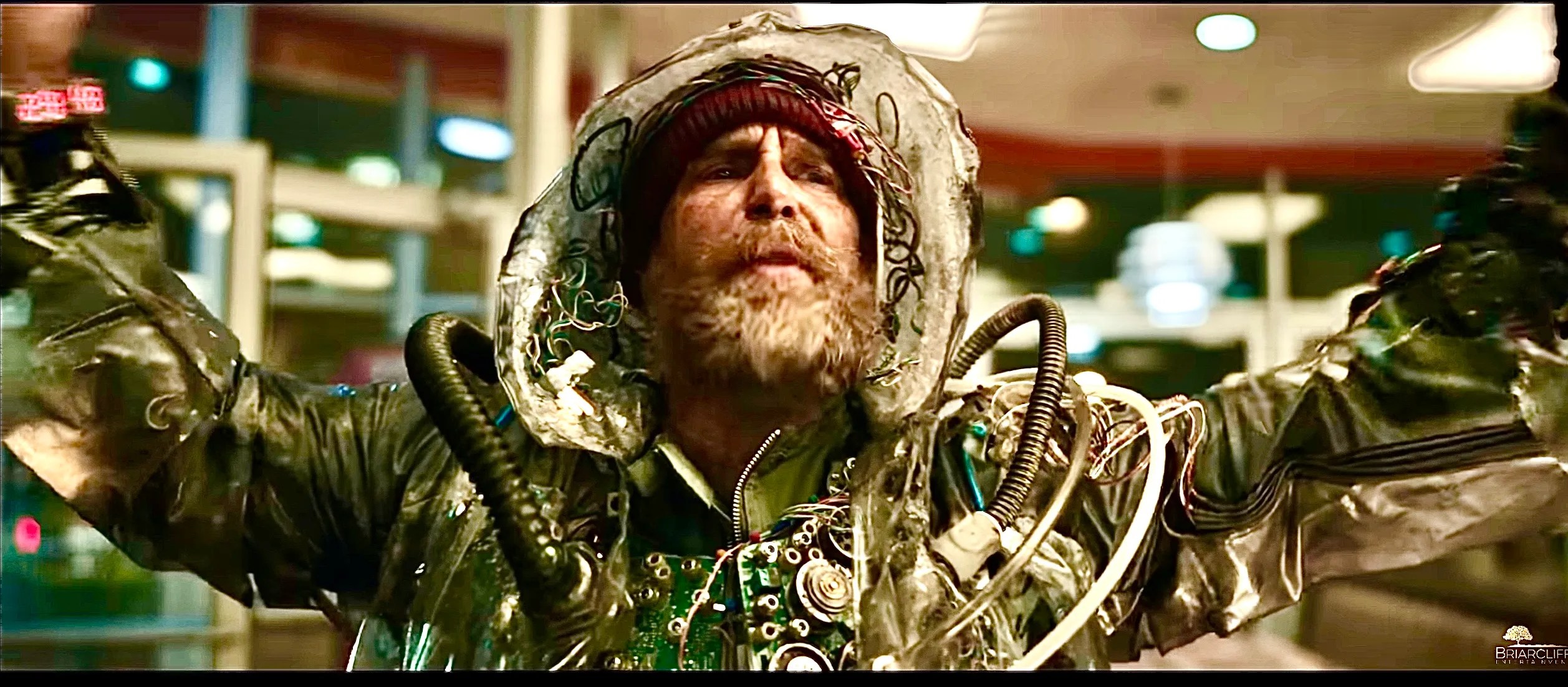
Plot: On a quiet evening in Los Angeles, a wild-eyed and strangely dressed man (Sam Rockwell) arrives at a Norms diner, claiming he’s from the future. Declaring that a specific combination of diner patrons will help him prevent the world from a global apocalypse, the man entreats the various guests to volunteer for his cause. With teachers Janet (Zazie Beetz) and Mark (Michael Pena), grieving mother Susan (Juno Temple), birthday party entertainment fairy Ingrid (Haley Lu Richardson), and skeptical blue-collar worker Scott (Asim Chaudhry) in tow, the unwilling adventurers set out. What ensues is a wacky, hilarious, and poignant quest to redeem the world from artificial intelligence and save humanity.
Review: It’s hard to believe that it’s been nearly a decade since director Gore Verbinski released a major theatrical film. This is a man who started out his career like a red-hot comet, burning bright with hits like The Ring, the original Pirates of the Caribbean trilogy, and Rango, which won the Oscar for Best Animated Feature. Hell, I even have a soft spot for his directorial debut, Mouse Hunt. Unfortunately, Verbinski’s 2017 psychological thriller A Cure For Wellness was a box office and critical disappointment, and he’s been in “director jail” ever since. After a nine-year hiatus, Verbinski returns to the big screen with his sci-fi comedy Good Luck, Have Fun, Don’t Die. Upon completing Verbinski’s latest cinematic sensation, I had only one immediate thought.
Welcome back, Mr. Verbinski!
Topical, poignant, deftly directed, boasting a dynamic cast and an excellent lead performance from Sam Rockwell, Good Luck, Have Fun, Don’t Die was everything I hoped it would be. It sports a stellar script from Matthew Robinson that strikes the perfect balance between emotionally resonant and hilarious. Verbinski’s film also manages to be both wildly entertaining and speak to the existential crisis of AI without being pedantic. Equal parts quirky and cathartic, it’s an absurdist look at our modern-day attention economy culture that pulls no punches and reminds us of the importance of authentic human connection.
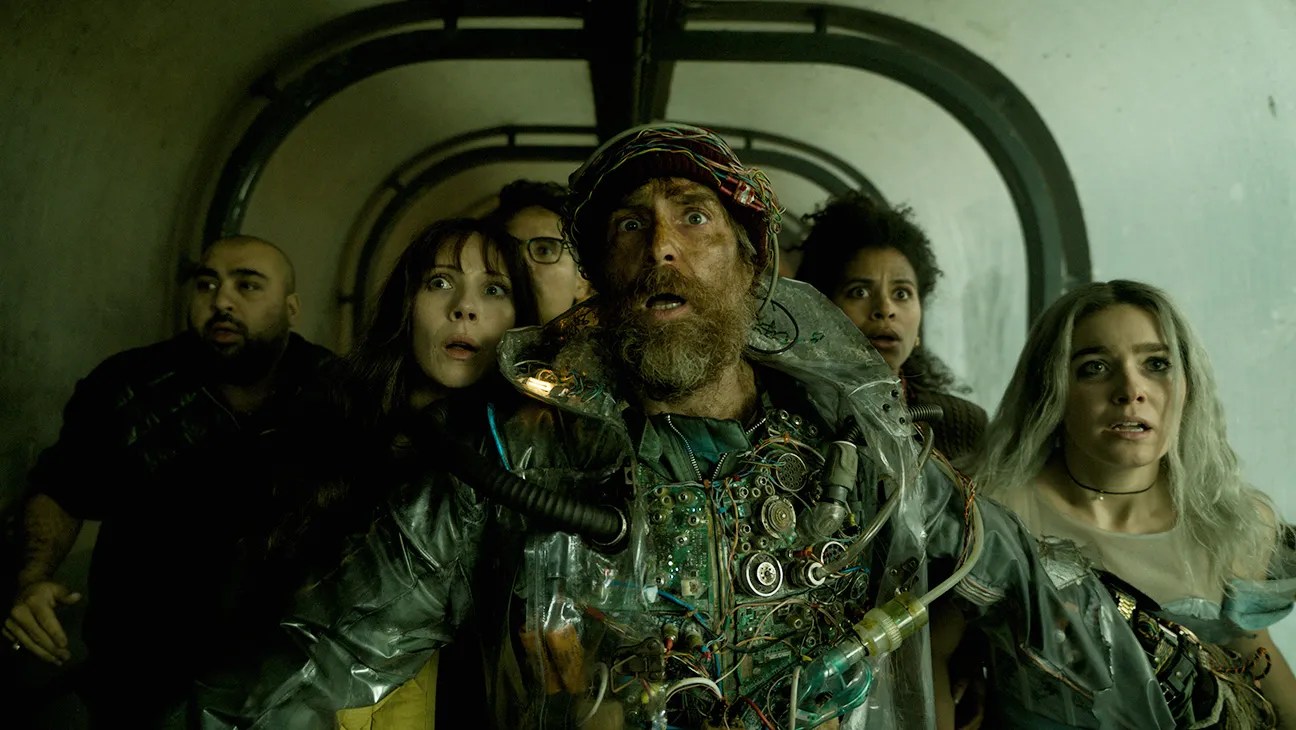
What surprised me about Good Luck, Have Fun, Don’t Die is how it takes a standard sci-fi trope and makes it compelling. The “man from the future goes back in time to save humanity” is something we’ve seen a thousand times, yet Verbinski and company imbue GLHFDD with a vitality and nuance that makes it feel fresh. There are clear influences of The Terminator, Time Bandits, The Fifth Element, 12 Monkeys, and even The Mitchells Vs. The Machines at play here, but it never feels derivative or like nostalgia bait. If you’re a science fiction fan, in particular a time travel fan, you will take to this thing like a cat to catnip. Incidentally, cats and kittens play a vital and hilarious role in the film, but to say more would ruin the fun. Just trust me when I say it’s unlike anything you’d expect.
I also appreciated how topical and relevant Good Luck, Have Fun, Don’t Die feels. It’s an excellent commentary on a variety of social issues. First and foremost is how distracted we’ve become and how much we retreat into our smartphones to avoid real human connection. This becomes self-evident when Sam Rockwell’s character (known only as “the man from the future” in the credits) arrives, spouts his craziness, and everyone stays glued to their phones. It really speaks to the times we live in when people only stop looking at Instagram reels when the protagonist threatens to blow up the restaurant.
There’s also an unexpected but welcome examination of the topic of school shootings. Several of our main characters’ stories are told in a series of flashbacks. One is Susan’s, played brilliantly by Ted Lasso’s Juno Temple. When her son Darren is killed in a school shooting, she’s directed to a company that clones dead children by a group of mothers who’ve experienced it in the past. The whole exercise showcases a blasé approach to school shootings, where they are presented as so common that a whole money-making industry has resulted. It’s a searing indictment of how Americans have become so numb to school shootings, how they’ve become so normalized that people see them as common as a DoorDash order. The whole situation comes off soul-crushing and absurdist, yet somehow Verbinski succeeds at getting you to laugh amid the horror. In the hands of a less capable director, this could have been disastrous, but Verbinski makes it work.
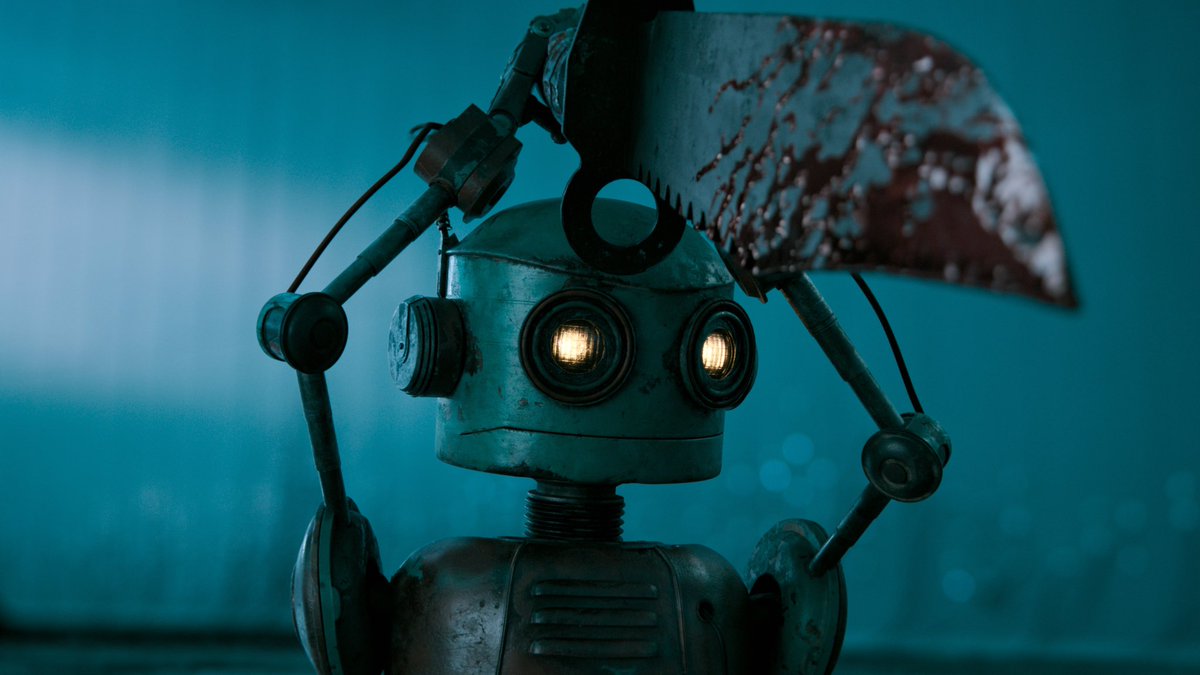
Furthermore, the fact that Susan patronizes a place that would clone her dead child speaks to the increasing commodification of human beings. The new Darren’s “personality” is only given cursory attention by a disinterested employee, with traits broken down into simple boxes like “funny” and “likes sports.” There’s even an ad-supported model that spouts endorsements for energy drinks and products of similar ilk multiple times a day. Not only does this call attention to how our humanity is being deliberately stripped away so that companies can maximize profit, but it also reminds us that emotions – even painful ones like grief – are what make us human. If you reduce every moment to just endless opportunities to escape from pain, you remove every semblance of what it means to live a fully authentic life.
Which leads us inevitably to the topic of A.I. I won’t ruin Good Luck, Have Fun, Don’t Die by revealing the source of the A.I. and why Rockwell’s character seeks to fix it. That would only ruin the fun, and 90% of the joy of GLHFDD is the journey from point A to B that this group takes. Suffice it to say this film leans into the darker dangers of A.I. while maintaining a high degree of humor to take the edge off of the sting. There’s an A.I. generated creature towards the end of the film that is the result of a bad prompt that had me rolling. Yet as Rockwell rightly points out, A.I. will always try to give you the perfect happy ending. Why go through the effort of overcoming pain to become our best selves if A.I. can instantly make us our best selves? In the age of Chat GPT, this is an interesting question that Verbinski’s film poses.
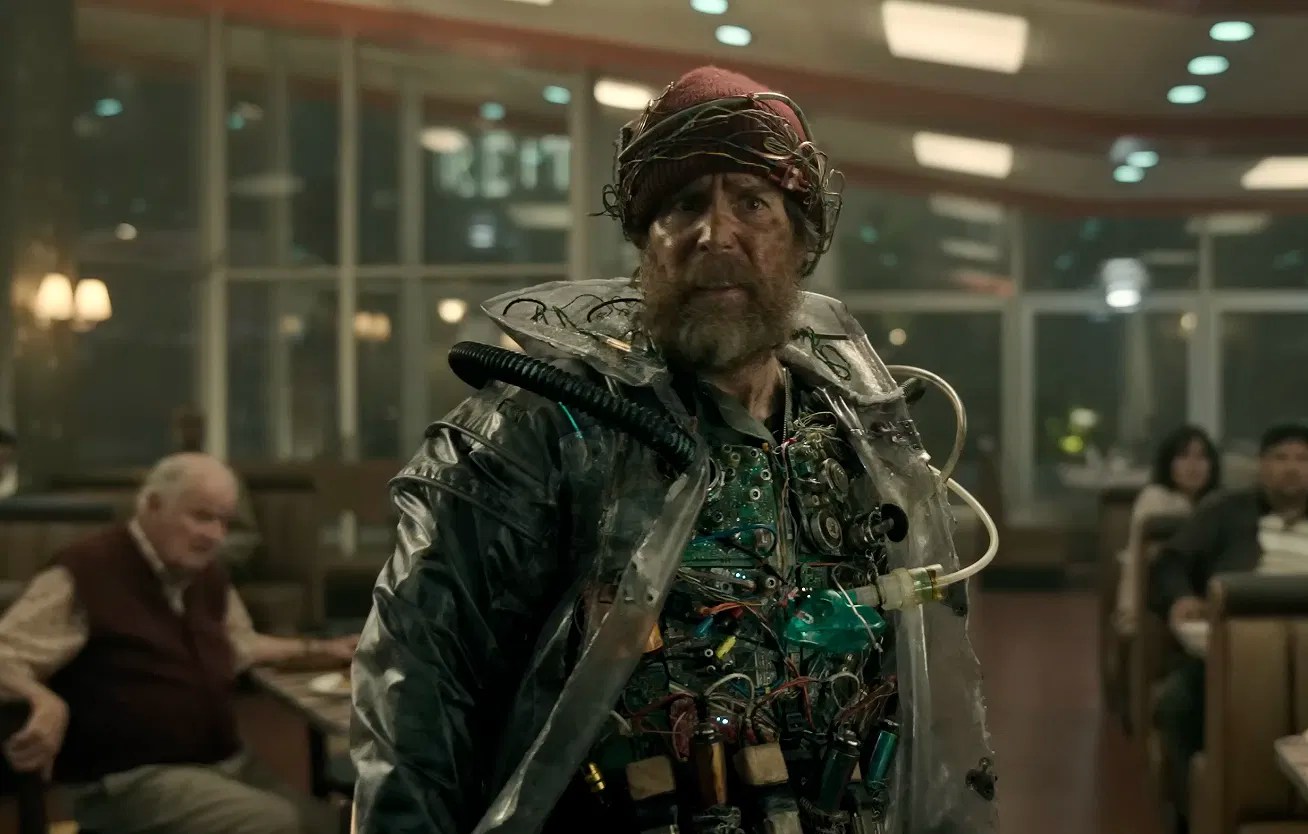
From a purely cinematic standpoint, Good Luck, Have Fun, Don’t Die is impeccably made. James Whitaker’s cinematography manages to make the small scenes somehow epic. Although this film possesses a modest $20 million budget, it never looks cheap, and the smaller scale helps it feel more relevant. The one exception is the CGI, which looks noticeably A.I. generated. In fact, it resembles A.I. slop so much that it had to be intentional, creating a bold and successful meta commentary. Whitaker’s work is complemented by an eerie and delightful throwback score from Geoff Zanelli that’s reminiscent of Doctor Who. I also loved the costume work from Neal McClean, particularly Rockwell’s getup. Rockwell looks like a combination of David Rappaport from Time Bandits, Bruce Willis in 12 Monkeys, and Peter Weller in The Adventures of Buckaroo Banzai Across the 8th Dimension. And man does it work.
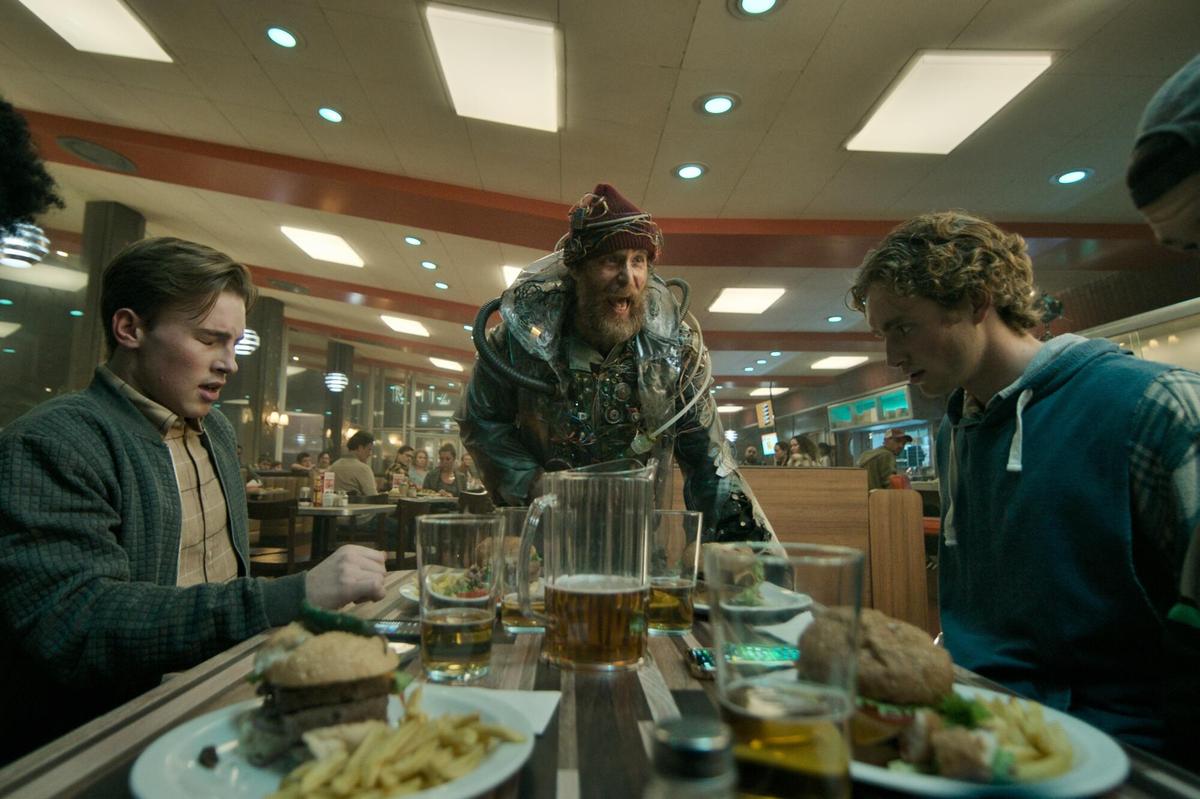
Speaking of Rockwell, he makes for a compelling, hilarious, and dynamic lead. I’ve always admired his work, even going as far back as the original Teenage Mutant Ninja Turtles movie. While usually touted as a character actor, he’s always had leading man chops, and that holds true here. In the context of our modern world, you can’t help but relate to this desperate character screaming into the void. This is a man who, when this movie begins, has already made 117 trips into the past trying to get it right. He’s undeterred by failure and the apathy around him. There’s something admirable about his dauntless nature. In a weird way, you “want to be like him when you grow up” because he represents the best qualities of humanity. He also carries a tremendous amount of guilt from his own past and harbors a secret that, while predictable, is nonetheless important. Rockwell is also just damn funny. An early scene where he describes why he doesn’t want to have certain people join the group had me in stitches.
I’d also be remiss if I didn’t mention the stellar supporting cast. Beetz and Pena’s characters of Janet and Mark make for hilarious teachers dealing with the apathy of high school teenagers. Their “will they or won’t they” sexual tension is slightly forced, but both come off heroic. Asim Chaudhry’s skeptical Scott is at the center of some of the funniest moments in the film, especially in the final act. Yet it was The White Lotus’ Haley Lu Richardson as Ingrid that really floored me. Richardson’s character is perhaps the most emotionally complex of the entire cast, with Ingrid an involuntarily Luddite because she’s literally allergic to advanced technology. Ingrid comes off as severely put upon but never whiny or pathetic. Of all the characters, she evokes the most empathy, particularly when you see how her own personal and professional life plays out.
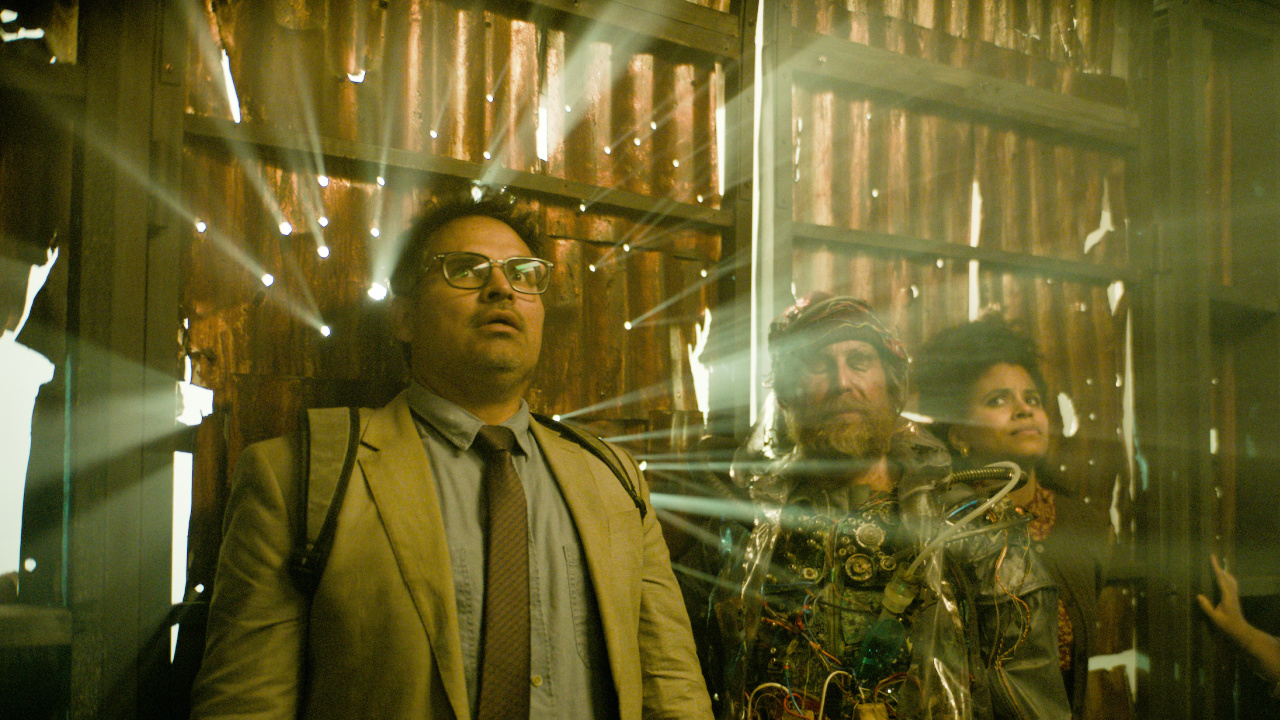
Perpetually thrilling, often thought-provoking, and consistently hilarious, Good Luck, Have Fun, Don’t Die is a delightful cinematic delight that never fails to entertain. A phenomenal return to the fold for director Gore Verbinski, I can’t recommend this one enough. Put your phone down and step into this world for a couple of hours. I guarantee you won’t regret it.
My rating system:
1 God Awful Blind Yourself With Acid Bad
2 Straight Garbage
3 Bad
4 Sub Par
5 Average
6 Ok
7 Good
8 Great
9 Excellent
10 A Must See
Masterpiece
Good Luck, Have Fun, Don’t Die: 9/10


![Top 10 Creepy Cryptids [by Bea Harper]](https://i0.wp.com/houseofgeekery.com/wp-content/uploads/2016/10/cryptid.jpg?fit=1200%2C675&ssl=1&resize=40%2C40)


