A Doubter Grapples With ‘The Chosen’
“The opposite of faith is not doubt, but certainty.” – Anne Lamott
After re-reading the title of this article, I realize I may have violated the Ninth Commandment. Or more specifically, the title is incomplete and misleading. I am also a believer. Yet after many decades, I’ve come to believe that it’s my doubts that help inform my beliefs.
You know what? Hold up. Let me back up a second before we go much further.
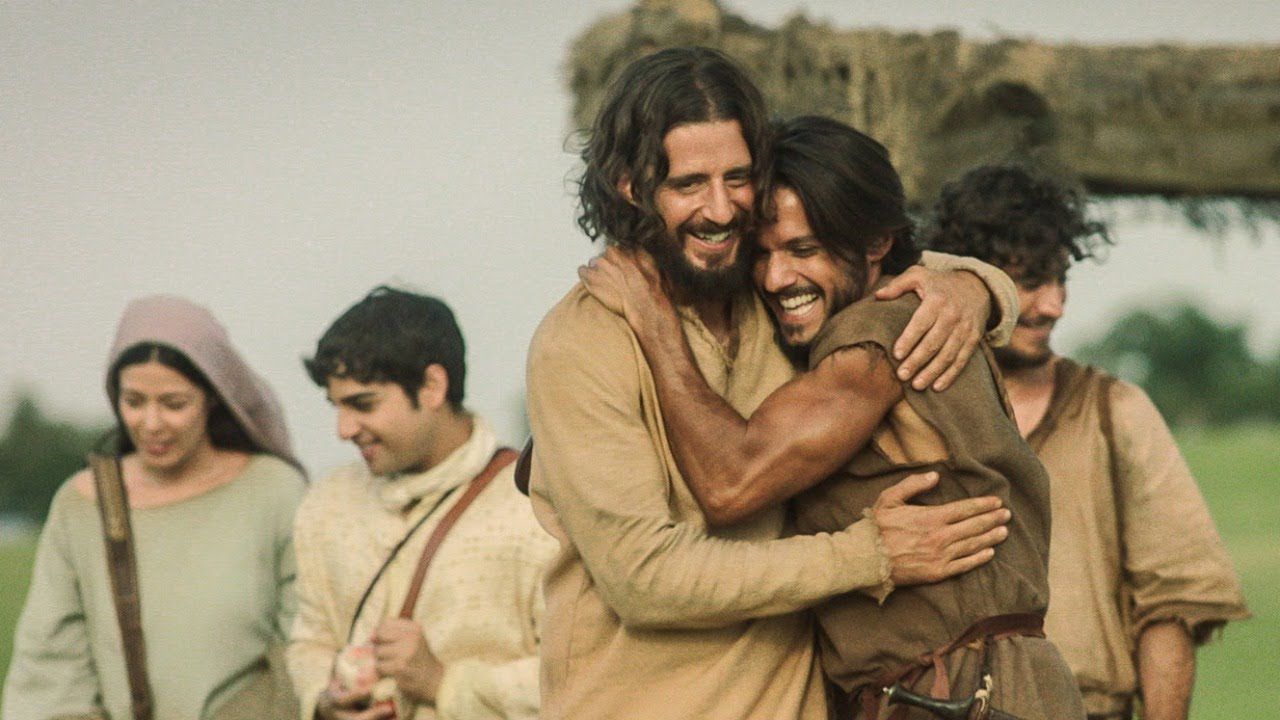
This particular post is going to be a detailed critique of The Chosen. For those of you unaware, The Chosen is a Christian historical drama television series created by Dallas Jenkins and starring Jonathan Roumie as Jesus. The series depicts the ministry and life of Jesus of Nazareth through the lens of his disciples, the masses and individuals he preached to, the Jewish Sanhedrin, and the Roman Empire.
While I will endeavor to highlight the creative and technical aspects of The Chosen, it will be impossible for me to analyze this program without addressing my own Christian upbringing and personal beliefs. Moreover, as a doubter who’s struggled with his own beliefs for decades, I can’t overstate how profoundly The Chosen moved me on a spiritual level. My intent with this post is not to preach, proselytize, or convert, but rather to express how deeply this show touched me. All great art, whether secular or religious, contains within it that power. Having said that, I fully understand if you want to skip out on this one and wait for my Supergirl review. Trust me, as someone who’s been involuntarily preached at on more than one occasion, I get it. All the same, I hope you’ll stick around.
Still with me? Alright! Moving on.
Before I continue, I think it is vital that I give a little background on my religious upbringing and current position. This isn’t meant to saddle you with some long-winded backstory, but rather to provide sufficient context as to how I approached The Chosen.
I was born into a Catholic household with a deeply religious but open-minded mother. Communion, confession, the Eucharist, Sunday School, and the liturgy were as integral to my life as He-Man, Indiana Jones, the Buffalo Bills, and Cinnamon Toast Crunch. I was an altar boy, sang in the choir, and was even a liturgical reader.
Yes, Jesus was a part of my life, but I mostly took my religious cues from my mother. As the years progressed, I saw my mom’s faith and devotion deepen. She went to mass daily, prayed the Rosary daily, and exemplified and lived the teachings of Jesus better than anyone I knew. I am still in awe of how she approached the cancer that would eventually claim her life with a dignity, grace, and faith that I can scarcely comprehend. When she told my sister and me, “I’m not afraid,” as her death approached, the conviction in her voice was palpable. Yet she also liked her wine, “enjoyed every goddamn cigarette she ever smoked” (her words), and had an incredibly sick sense of humor. (You haven’t lived until you’ve heard your 60-year-old Catholic Mom say “road head” while playing Cards Against Humanity.)
Yet even in the years before my mom passed away in 2016, I was beginning to have doubts. Deep, pervasive, even pernicious doubts. Were Muslims, Jews, Buddhists, et al, condemned to darkness because they didn’t believe in Jesus? My heart said no. Were members of the LGBTQ+ community in the same boat? My heart said no. Did Jesus actually perform all those miracles? Was he in truth the Son of God? I wasn’t sure. Was the Pope infallible? That felt wrong. And the worst one, the one that kept me up at night, the one that hid in the dark recesses of my heart: Did humans make all this up because we were scared that nothing lies beyond death but the void?
What made things even more complicated and painful was that I never allowed myself permission to voice these doubts out loud, because I felt it would be frowned upon and I would be judged harshly. So, I kept quiet, but all the while I was screaming inside. Eventually, I left the Catholic Church.
I struggled.
I drifted.
I lost faith.
It wasn’t until I discovered my current non-denominational church that I started to recover. It was the first time I felt my doubts were not only acceptable and natural but welcome. Slowly, I began to find my way out of the wilderness. Yet even then, I had my moments. Six months ago, I was having trouble sleeping, waking up in the night with persistent fears about what comes after death. At one point, I even thought I was having a heart attack. Turns out it had a lot to do with my own physical health and lifestyle at the time, something I’m happy to report I’ve course-corrected. But I digress.
Which brings me to The Chosen.
For the longest time, I avoided watching this show. I had my own complicated feelings about Angel Studios, whose motivations I’m still not entirely sure are altruistic. Additionally, I was worried the show would be overly didactic and tone deaf. However, ultimately, I resisted watching the show for the pettiest of reasons: people kept telling me how great it was. I began to feel like someone who had lived their entire adult life and never tried pizza. Everyone was telling me I had to watch it. So, like a child refusing to eat their vegetables, stubborn, recalcitrant me refused.
Then something very odd happened.
I began to feel a persistent tug to watch the show. It was like an itch I couldn’t scratch. Call it divine influence, call it my curiosity hitting critical mass, call it, as Ebenezer Scrooge would, a “fragment of an underdone potato.” Either way, just over a month ago, I relented and began to watch.
And watch.
And watch.
And watch some more, until just last week I caught up with the fifth and latest season, ending with The Last Supper and Judas’ betrayal.
I can honestly and candidly say without reservation that The Chosen is one of the best historical depictions of the life and times of Jesus of Nazareth I’ve ever seen. What makes The Chosen truly great is not the fact that the majority of people involved are Christians, but that they are experts in their particular field of expertise and care deeply about making a quality television show. I’ve seen depictions of Christian media that exhibit fraudulent creation. The Chosen is not one of those examples. There is a layer of authenticity and verisimilitude that shines through every frame. For example, whereas cinematographers like Caleb Deschanel (The Passion of the Christ) and Loyal Griggs and William C. Mellor (The Greatest Story Ever Told) are concerned with making the Jesus story epic, The Chosen’s primary cinematographer Akis Konstantakopoulos is concerned with making the Jesus story intimate and personal.
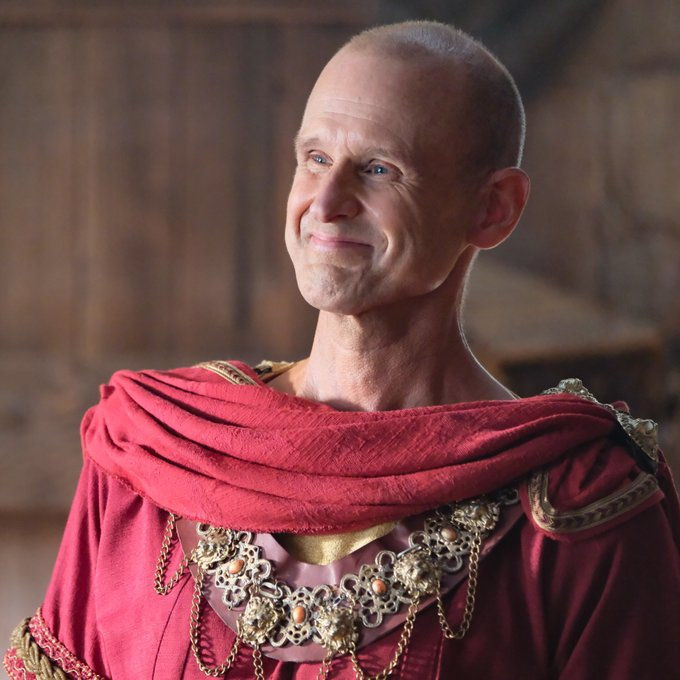
In fact, I’d argue that every facet of The Chosen strives to be as authentic as possible. Lead costume designer Leila Heise deeply researched 1st century wardrobes to ensure that the right fabrics for tunics were used, that Roman soldiers’ armor was correct, and even that out-of-place synthetic dyes weren’t selected. The same can be said for production designer James Cunningham, who oversees a crew that’s grown to over 100 members since season one. Everything from Peter’s dwelling in Capernaum, to Caiaphas’s house, to Pilate’s apartments is depicted beautifully. Similar productions on this topic are often too pristine, yet Cunningham’s work all feels lived in. It’s all complemented by a dynamic, beautiful, and moving score from Dan Haseltine (of the band Jars of Clay) and Matthew S. Nelson. Whereas I typically find religious scores to be so reverent that they border on grandiose, Haseltine and Nelson find that sweet spot. The music feels—as strange as this descriptor might sound—relatable. It also doesn’t hurt that Ruby Amanfu provides some pretty incredible guest vocals.
Then there’s the person steering the ship, Dallas Jenkins, the creator, director, co-writer, and executive producer of The Chosen. Now listen, I fully understand that many people have issues with the Evangelical Church (I count myself among them), and even others take issue with the Left Behind series that Jenkins’ father, Jerry, wrote. However, in researching this article, I discovered an anecdote that I believe informs Dallas Jenkins’ approach to The Chosen. Whenever Dallas’ father Jerry, is asked what denomination of Christianity he belongs to, he always responds with “Jesus Christ.” That stance bleeds through the entire show. I never once felt there was a single denominational bent or perspective. Rather, Dallas Jenkins utilizes the Gospels and recorded history as a basis for The Chosen.
Furthermore, what surprised me about The Chosen was how much Dallas Jenkins imbues true authorship throughout the program. Yes, this is a show centered around the life of Jesus, but it’s also a drama, and The Chosen steadfastly never loses sight of that fact. Everyone in The Chosen feels like real, relatable people. They have personalities, foibles, flaws, and—refreshingly—senses of humor. Whether it’s Peter’s (Shahar Isaac) domestic and marital dynamics with his wife Eden (Lara Silva), Nathaniel’s (Austin Reed Allerman) perpetual bluntness, or Matthew’s (Paras Patel) neurodivergent but endearing qualities, they all combine to create 1st century lived in circumstances that still feel relevant in 2026. Heck, Nick Shakoour’s Zebedee, the father of James (Abe Bueno-Jallad) and John (George H. Xanthis), is one of the most hilarious and charming characters in the entire show, and he’s barely mentioned in the Gospels!
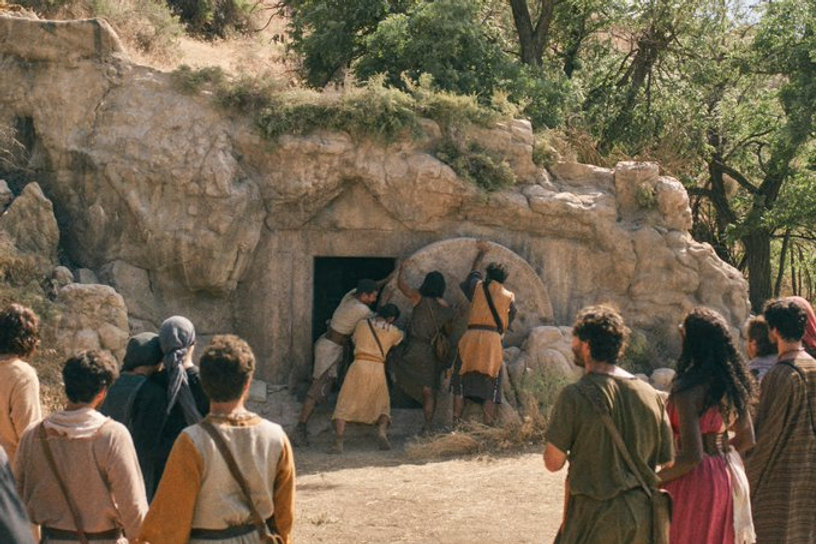
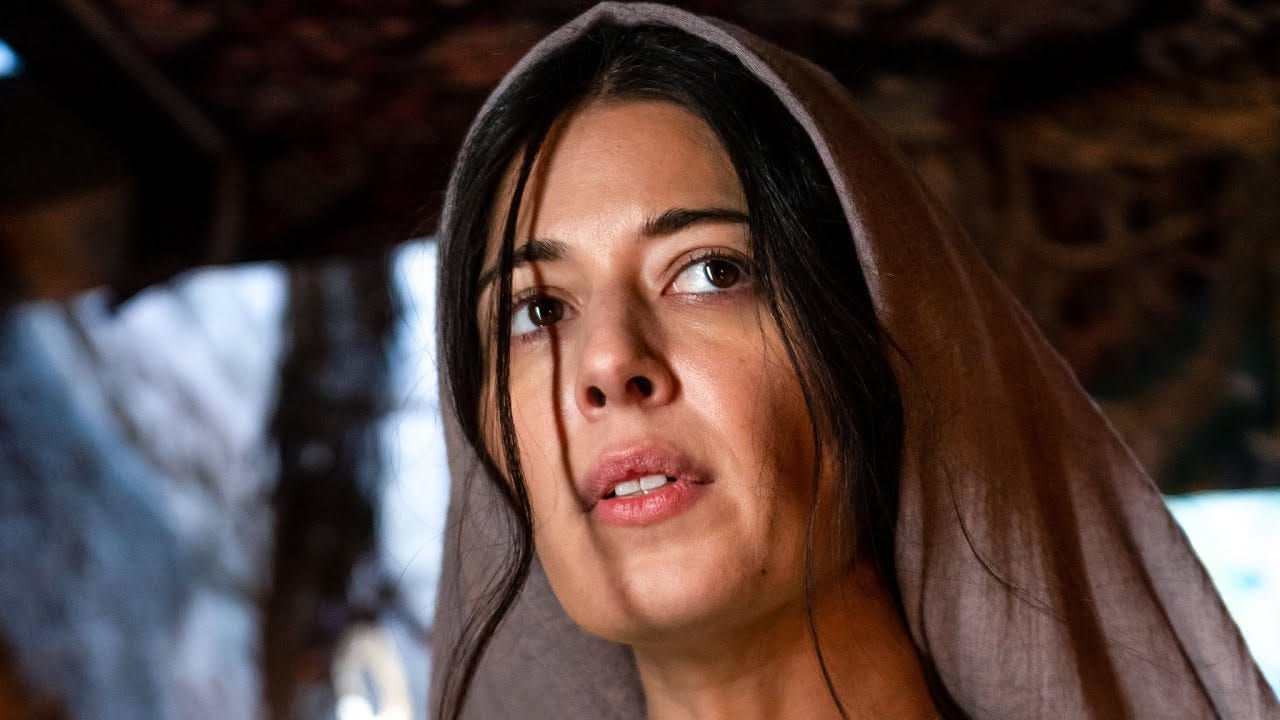
Additionally, I appreciated the prominence of the women characters in The Chosen. Listen, I’m not a babe in a manger. I know that for the greater portion of Christian history, the hierarchical structure has leaned heavily toward the patriarchy. So, it was refreshing to see the substantial role that characters like Eden, Mary, the Mother of Jesus (Vanessa Benavente), and especially Mary Magdalene (Elizabeth Tabish) play in The Chosen. Tabish is especially excellent as Mary Magdalene, with her character having a distinct arc. Jenkins even added a fictional character named Ramah (Yasmine Al-Bustami) who serves as a love interest for Thomas (Joey Vahedi), among other things. On paper, it shouldn’t work, but it totally does. Jenkins’ interweaving of these women into the overarching story of The Chosen is masterfully done and speaks to the level of diversity in the program.
Inevitably, however, the strength of The Chosen hinges on the performance of the man playing Jesus of Nazareth. As cliché as it sounds, Jonathan Roumie was born to play this role. His charisma, empathy, compassion, and kindness shine through in every frame. Roumie’s Jesus actually has a personality and a distinct sense of humor. Watching Jesus joke about how Andrew’s feet smell, or pretending to forget something he said from the Sermon on the Mount, or absolutely stinking at what I can only describe as a 1st century Judean version of hackeysack was a delight.
While I was watching The Chosen, it took me the better part of two seasons to realize why Roumie’s performance works so well, why it’s unique among other portrayals of Jesus. One of the tenets of the Christian faith is that Jesus Christ was both fully divine and fully human. This is the first iteration of the story of Jesus where I felt the “fully human” aspect of Jesus was at the forefront of the narrative. That’s the secret ingredient in the unleavened bread of The Chosen. As much as I love Robert Powell in Jesus of Nazareth, he comes off so divine as to be almost alien in nature. Roumie’s Jesus is the most relatable depiction of the Messiah I’ve ever seen. This is especially true in the fifth season as Jesus comes closer and closer to what will ultimately be his crucifixion. Roumie’s Jesus becomes more emotionally unhinged and paranoid. It exemplifies what the weight of carrying such a burden would do to the human psyche. It carries an element of verisimilitude I wasn’t expecting.
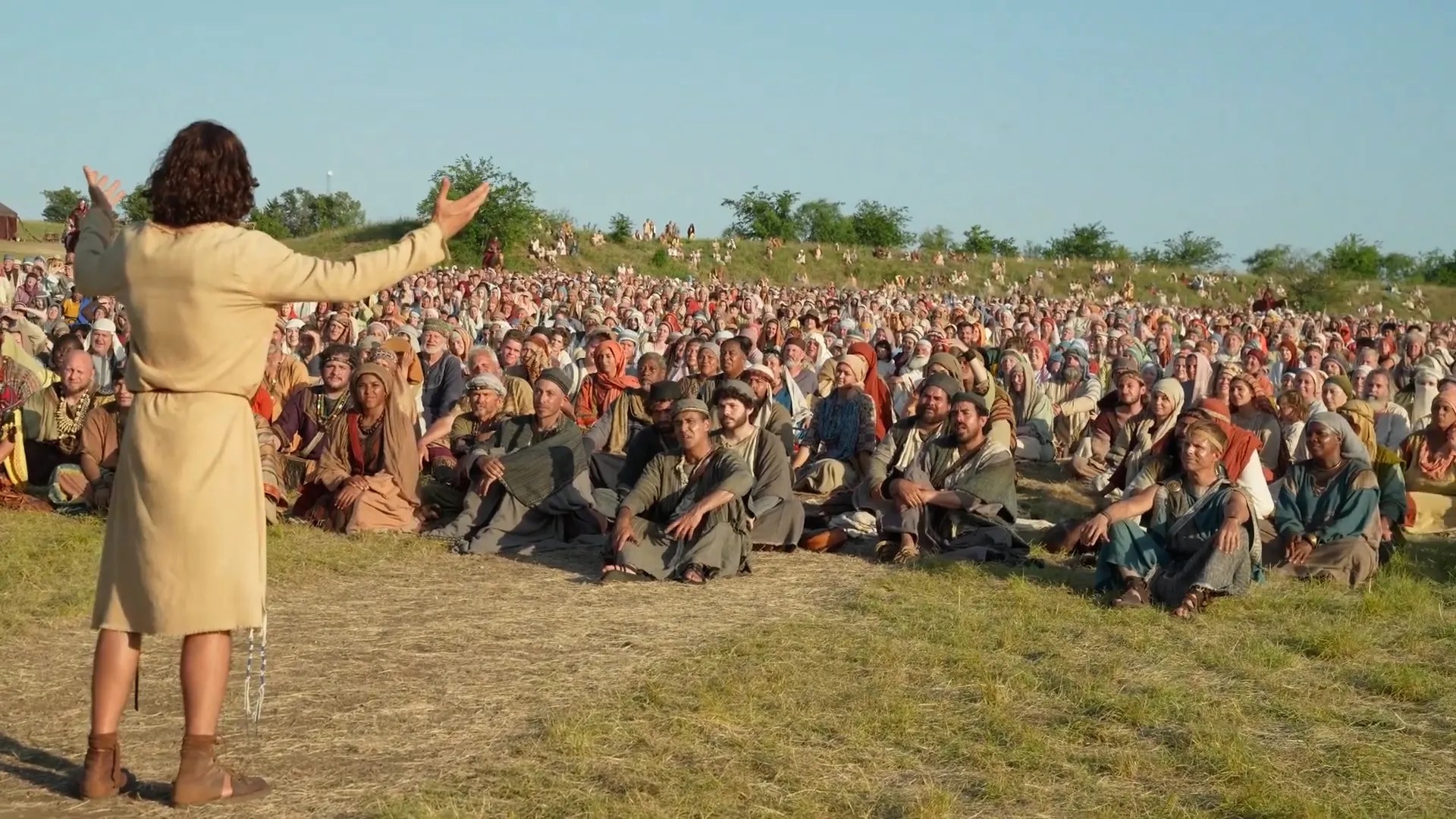
Yet while I appreciate all of the aforementioned cinematic elements of The Chosen, ultimately, it boils down to how this show makes me feel. I lost count of the number of times this show made me cry. Truly, I tell you, this show had a profound impact on me both emotionally and spiritually. It began in the first episode, “I Have Called You By Name,” when Jesus heals and restores Mary Magdalene. It continued when I saw Matthew the tax collector reconcile with his parents. I wept when Peter finally forgave Matthew for the pain he caused him. I rejoiced when Gaius the Centurion’s (Kirk B.R. Woller) servant was healed. The Sermon on the Mount, the washing of the disciples’ feet, the raising of Lazarus, and the Last Supper—they all affected me in a way no show ever has. To put it clearly, The Chosen was like cool spring water for my parched faith. I daresay I could feel the presence of Jesus more closely than I have in almost 30 years.
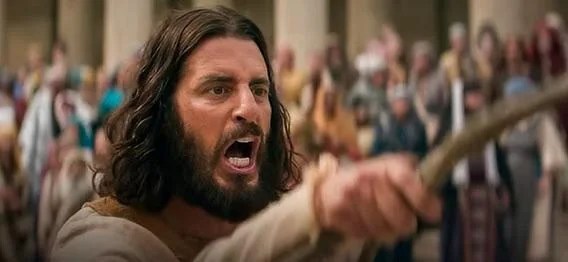
Two moments in particular have really stuck with me. One involved Jesus’ confrontation in the temple with the Pharisees, wherein he admonishes them for being hypocrites and starts flipping tables. I couldn’t help but be reminded of some of the abhorrent Christian fundamentalism in my own country (USA), particularly when it comes to the cancer of Christian Nationalism. I’m appalled by the hypocrisy of these people saying, “All are welcome to the table of the Lord,” and then aggressively choosing the guest list based on their own bigotry. It fills me with the same kind of righteous anger Jesus must have felt when confronting the Jewish high priests. When I see daily how a certain segment of Christianity has co-opted and perverted the teachings of Jesus into something unrecognizable, how can I not be angry? 2000 years later, and we are still dealing with this nonsense. And yet, as a follower of “The Way,” how can I not love my enemies and pray for those who persecute others? It was hard then, and it’s just as hard now.
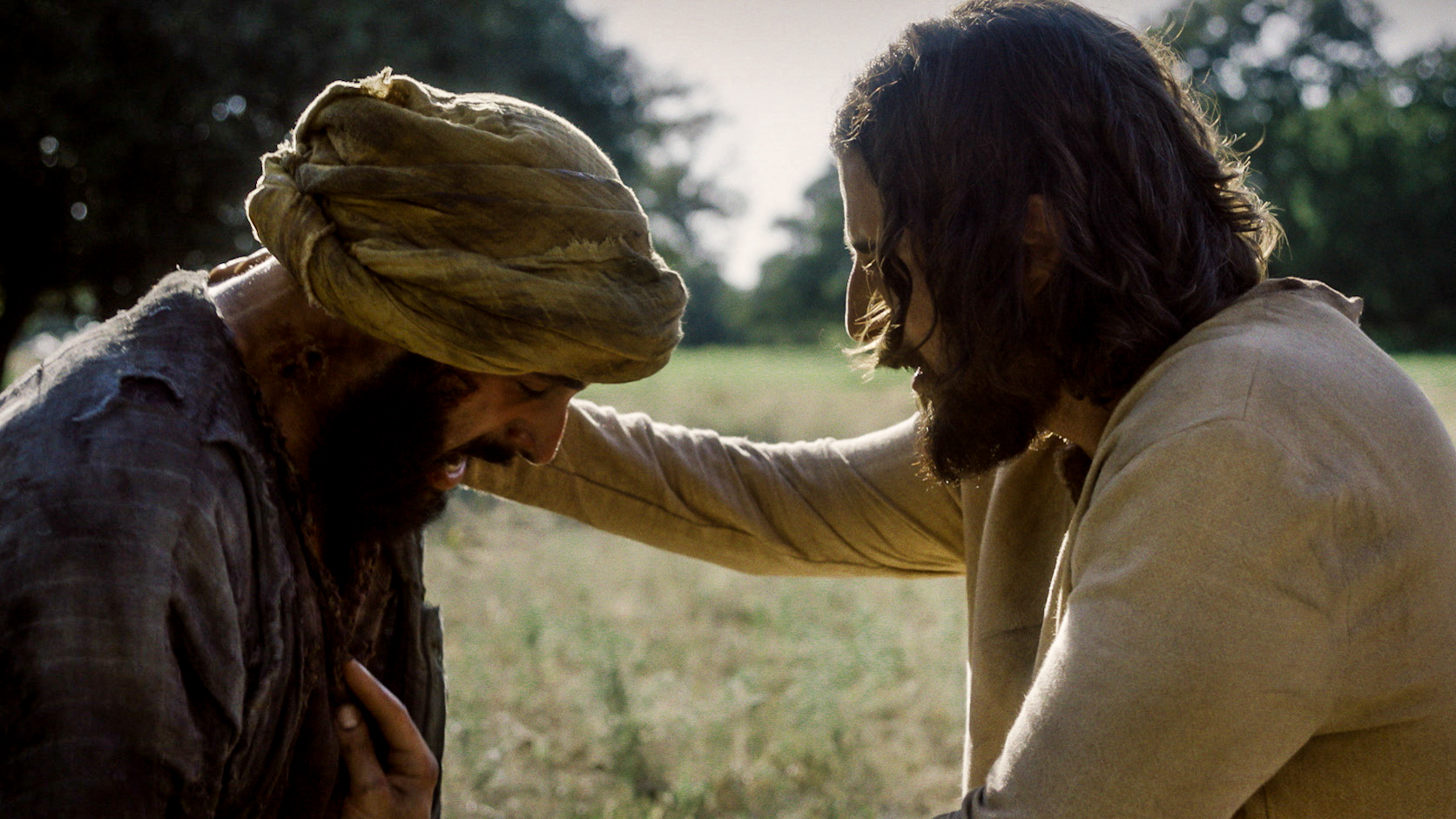
The other moment involved the last meaningful conversation between Jesus and Judas Iscariot (Luke Dimyan) before the Last Supper. To watch Judas misunderstand the ultimate purpose of Jesus, from a position of good intentions, was gut-wrenching. To watch Jesus react with genuine sorrow once the conversation was concluded was equally so. Yes, Judas did betray Jesus, yet he was also a disciple who was a friend, a confidante, and someone Jesus deeply loved. I don’t know if any iteration of the story of Jesus has captured that relationship in such an emotionally resonant way.
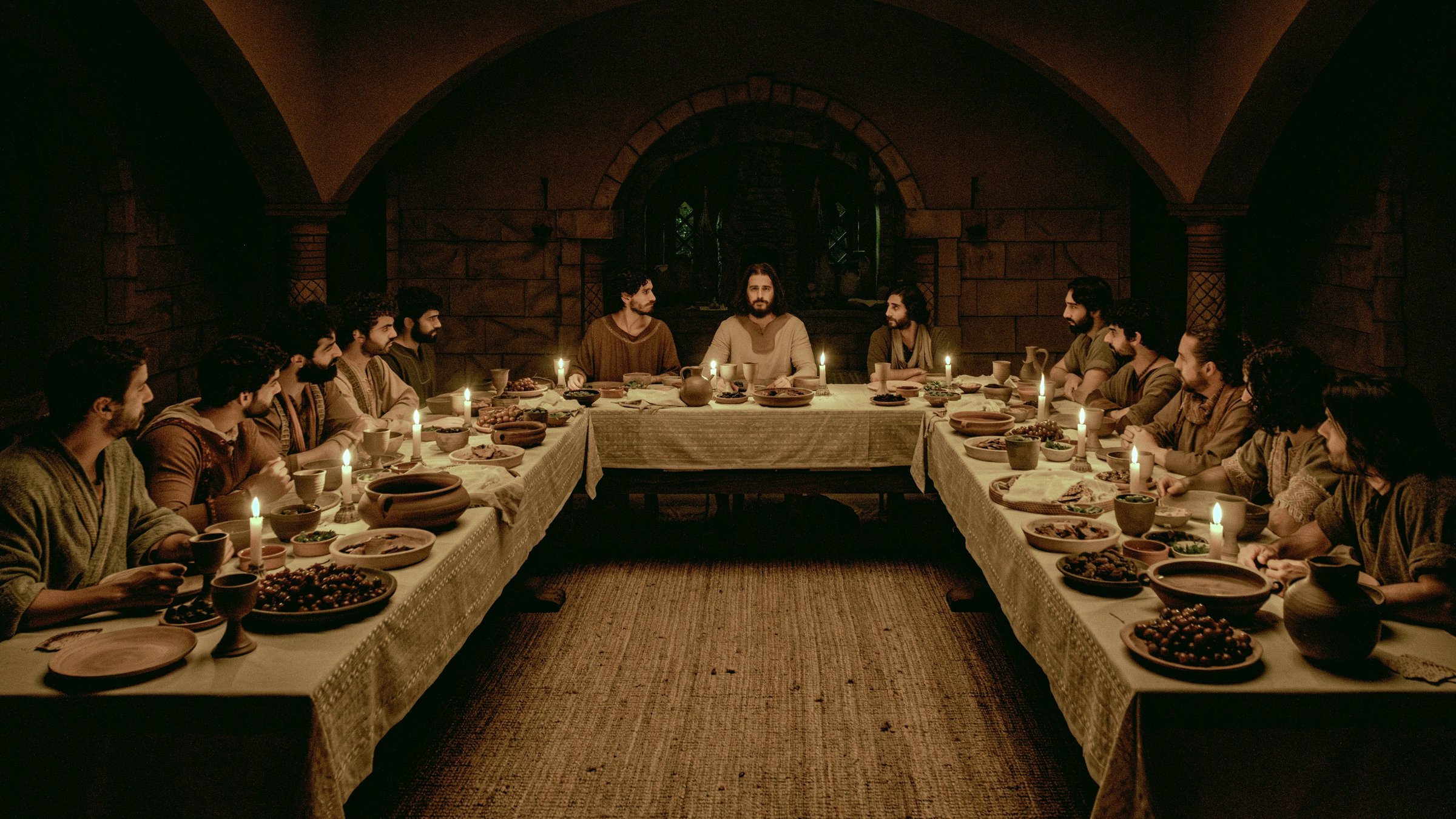
Suffice it to say, I can’t recommend The Chosen enough. It works as both a compelling drama and a satisfying depiction of the life of Jesus Christ. Whether you are a devout Catholic, a Buddhist, a Sikh, a staunch atheist, or a logical empiricist, there’s something here for everyone, something that cuts to the heart of what it means to be human. You don’t have to be a believer to enjoy this show. To paraphrase the quote I began this article with, faith is belief, not certainty.
And The Chosen has proven to be a balm to this weary soul’s complicated faith.


![Top 10 Creepy Cryptids [by Bea Harper]](https://i0.wp.com/houseofgeekery.com/wp-content/uploads/2016/10/cryptid.jpg?fit=1200%2C675&ssl=1&resize=40%2C40)


