Movie Review: ‘Indiana Jones and the Dial of Destiny’

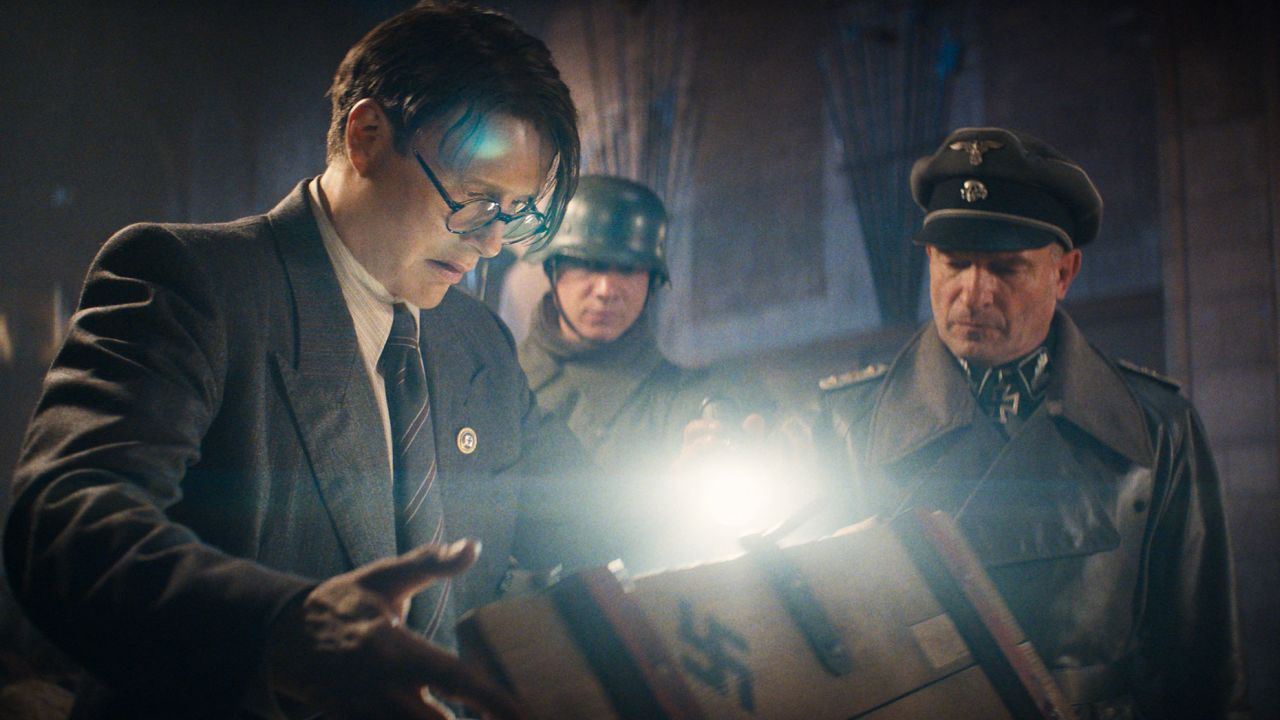
Plot: In 1944 Nazis capture Allied spies and archaeologists Indiana Jones (Harrison Ford) and Basil Shaw (Toby Jones). The two are attempting to intercept a Nazi cargo train that Hitler believes contains the mythical Lance of Longinus, the spear that pierced Christ’s side at his crucifixion. Unbeknownst to the pair, however, the train also contains a piece of the Antikythera mechanism, the fabled Archimedes’ Dial. It’s an artifact Nazi astrophysicist Jurgen Voller (Mads Mikkelsen) believes could help Germany win the war. Twenty-five years later in 1969, a seventy-year-old Jones struggles with the ravages of time. He’s being forced into retirement, his students no longer find him interesting, and worst of all his wife Marion (Karen Allen) has filed for separation. When Indy’s goddaughter Helena Shaw (Phoebe Waller-Bridge) unexpectedly shows up looking for the Dial, Indy is swept up into a final globe-trotting adventure that could alter the course of history.
Review:
If you’ve been following my work on this website over the last decade, you already know what a titanic Indiana Jones fan I am. Not only is Raiders of the Lost Ark my favorite all-time film, but Indiana Jones is also my all-time favorite movie character. I adore this franchise (yes even Crystal Skull) and when plans began for a fifth adventure, I couldn’t help but get excited. What would the MacGuffin be? What villains would Indy face? Would Harrison Ford still possess the vim and vigor to make this a whip-cracking addition to the franchise? I’ve followed Indiana Jones and the Dial of Destiny every day since cameras started rolling in June of 2021. Hyped? If Flavor Flav and Don King somehow had a love child, the resulting progeny couldn’t have gotten me more hyped than myself.
After having seen the film twice now, I’m ecstatic to report that Indiana Jones and the Dial of Destiny is fantastic. While by no means a perfect film that doesn’t compare to the 80s classics, it nevertheless possesses all the staples we love from an Indiana Jones flick while offering moments and plot choices that are fresh and invigorating. I’m confounded by the early reviews that referred to this film as soulless, dour, “woke”, and boring. I found DoD to be none of those things to the point that I felt like we watched two entirely different movies. My suspicion is that too many critics felt this movie needed to live up to the majesty of the originals. That’s lunacy. The Sankara Stones have already fallen into the river my dudes.
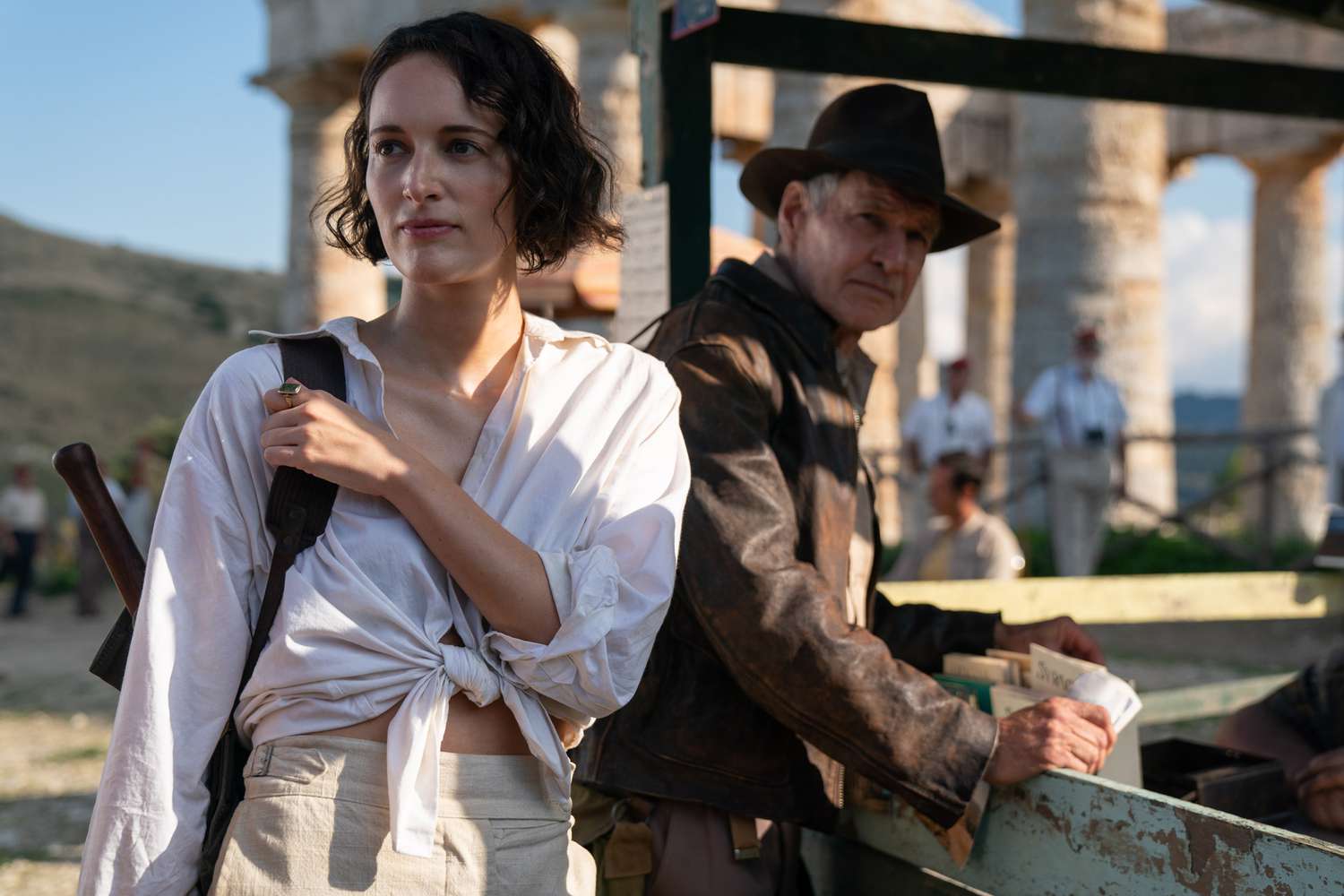
Since the joy of an Indiana Jones movie revolves around the mystery of the MacGuffin, I’m going to do my best to avoid spoilers in this review. Suffice it to say that director James Mangold’s effort looks and feels like an Indiana Jones movie from the jump. The punches, the Wilhelm scream, the narrow escapes, the chases, the booby traps, the exotic locales: it’s all there. His love of the character and the franchise bleeds across every shot. Within sixty seconds I was fully emersed again in the world of Indiana Jones. Believe me when I say that the opening 15–20-minute sequence ranks right up there with any of the other four movies. I mean trying to stop a moving train full of archaeological relics that’s crawling with Nazis and about to be bombed by the Allies? It doesn’t get much more Indiana Jones than that. My only minor gripes were that Mangold chose not to have any onscreen text that said “Nuremberg 1944” or “New York City 1969” and while the traditional crossfade with the map and the red line for travel was present, it went a little too fast for my liking.
What I really appreciated about Mangold’s entry was the use of practical effects and the decision to film on location. For the life of me, I don’t understand the criticism that DoD is lost in a sea of CGI. Yes, there is a decent amount of CGI in the film—particularly the de-aging of Ford which works about 90% of the time—but people are acting like this is the second coming of The Scorpion King. This is a movie that uses real motorcycles, a real train, real Tuk Tuks, real extras, real boats, and real underwater sequences. It was also filmed on location in England, Scotland, Sicily, and Morocco. The set pieces, particularly Archimedes’ tomb, felt authentic and lived in. This is in vast contrast to Kingdom of the Crystal Skull which never filmed outside of the United States and relied almost exclusively on CGI.
Additionally, while it’s important to have foundational Indy tropes, you must avoid sinking into a sea of nostalgia. Thankfully, James Mangold manages to avoid this by giving audiences things they haven’t seen before. This includes the opening sequence as I previously mentioned, a Tuk Tuk chase scene in the middle of Tangiers, and a deep-sea diving moment where Indy and Helena look for a graphikos tablet. Hell, even the Dial itself and its functionality aren’t mystical but mathematical. Although just like every other major Indy artifact, its function is never quite what you expect. Granted the script could have been tighter (there are four different people credited) and the runtime shortened, but every time the movie felt like it was slowing down it picked right back up. A word of warning, however, the third act is a BIG SWING that not everyone will be down with but I happened to love.
Indiana Jones and the Dial of Destiny sports a phenomenal supporting cast as well. Ethann Isidore’s Teddy, a Moroccan pickpocket, could have come off like a cheap knock-off of Short Round but he’s anything but. (Aside from how he hooked up with Helena.) Going into DoD I thought I was going to hate his character, but he turned out to be funny, engaging, courageous, and wily. Phoebe Waller-Bridge also crushes it as Helena Shaw. An archeological mercenary who’s seemingly only in it for the money (think Belloq light) Bridge is captivating every time she’s onscreen. Whether it’s the physicality of trying to recover the Dial from a moving car or trying to outwit and talk her way out of a desperate situation on a boat, you can’t take your eyes off of her. In many ways, she’s not a sidekick but a co-lead along with Ford. The always-solid Toby Jones also makes for a great addition. His endearing Basil Shaw feels right at home in the Indy universe. Franchise favorite Sallah (John Rhys-Davies) also shows up in a few key pivotal scenes as does Marion (Karen Allen) but I won’t say when or why. Suffice it to say that both of their returns were welcome.
Every Indiana Jones movie needs a strong, dynamic villain and thankfully James Mangold picked a great one in Mads Mikkelsen. His Jurgen Voller is a stand-in for the real-life Wernher von Braun, the ex-Nazi scientist who helped NASA land a man on the moon. Unlike Braun however, there’s nothing “ex” about this Nazi. Voller seeks to use the Dial to correct the mistakes of the past and is willing to kill anyone that stands in his way. Trust me when I tell you his goal is not at all what I was expecting. His staunch belief in the ideals of fascism makes him dangerous and malevolent, a concept made patently obvious by a scene between Voller and a black bellhop. As Mads’ character states early on, “You didn’t win the war. Hitler lost it.” While I reserve the right to change my mind with subsequent viewings, right now Mads’ Voller is my third favorite Indy villain behind Belloq and Molo Ram.

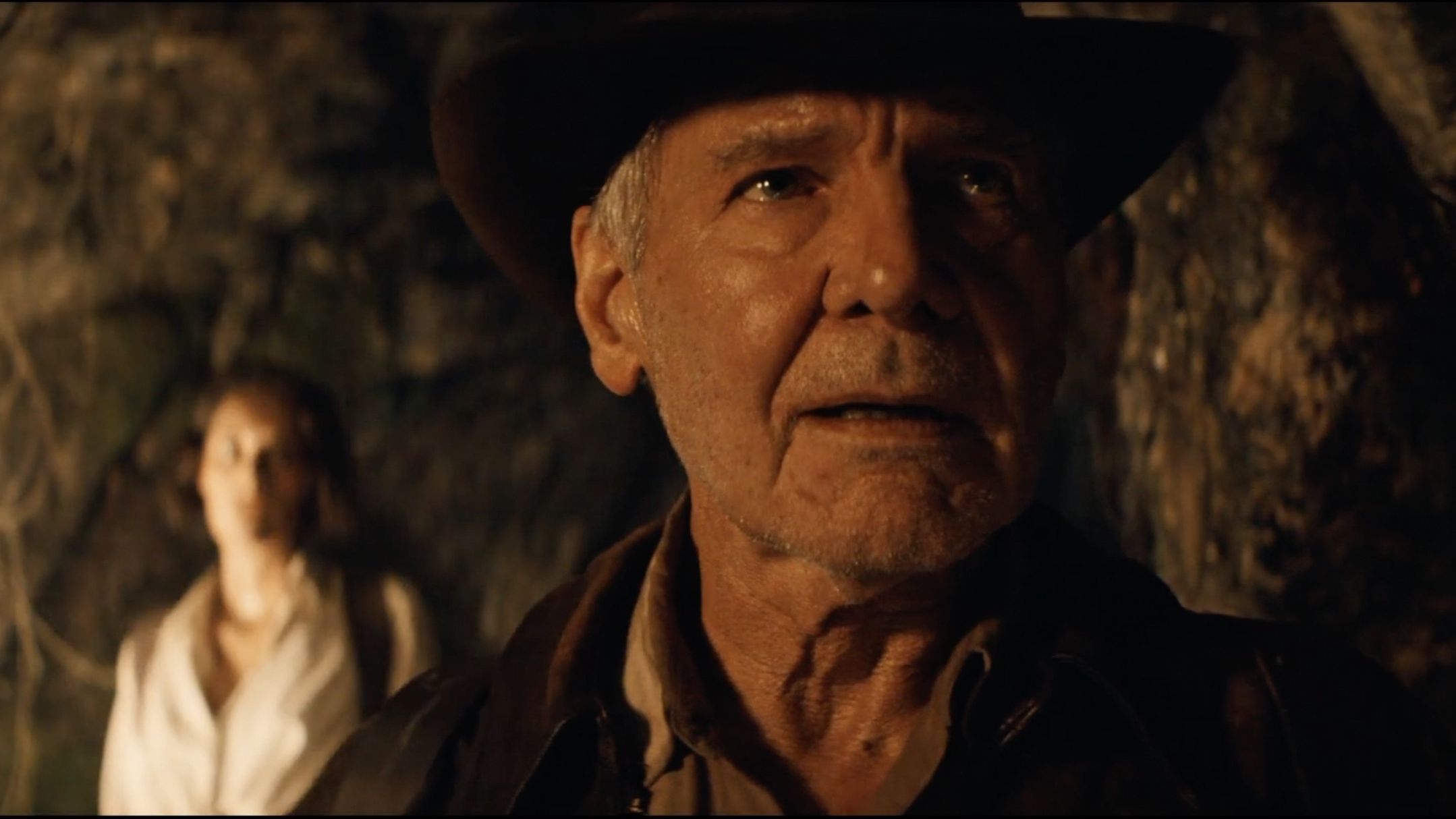
Then there’s Harrison Ford. While Ford’s famously shown indifference (sometimes outright disdain) to his other iconic role, Han Solo, you can never say the same thing about Indiana Jones. He absolutely adores this character and playing him. And he was all in. Ford’s clearly having the time of his life and at seventy-nine (at the time of filming) wears the whip, the jacket, and the hat like an old pro. Ford knows how much this character means to others and as always Indy remains the iconic hero we have come to know and love. Ford leans into the fact that this is an older Indiana Jones and his mobility issues are often offset by being on horses, Tuk Tuks, boats, planes, and in scuba gear. He still looks like a badass doing it though.
Yet Ford and Mangold don’t shy away from examining the humanity of Indiana Jones and how the ravages of time have changed him. In a movie where the theme of time is prevalent, Indy himself has become a man out of time. His students find him boring, the global landscape of 1969 is morally grayer than the black-and-white-good-guys-versus-bad-guys world of 1944, and grief and time have caught up to him. There’s a scene on a boat involving the fate of his son Mutt and another scene late in the third act that had me tearing up. Yet for all this examination of humanity, Indiana Jones remains every ounce a hero.

Ultimately, Indiana Jones and the Dial of Destiny makes for a thrilling conclusion to one of the greatest movie characters in the history of cinema. If you’re looking for fortune and glory with his one, believe me, you will find it.
1 God Awful Blind Yourself With Acid Bad
2 Straight Garbage
3 Bad
4 Sub Par
5 Average
6 Ok
7 Good
8 Great
9 Excellent
10 A Must See
Indiana Jones and the Dial of Destiny: 9/10


![Top 10 Creepy Cryptids [by Bea Harper]](https://i0.wp.com/houseofgeekery.com/wp-content/uploads/2016/10/cryptid.jpg?fit=1200%2C675&ssl=1&resize=40%2C40)


