Movie Review: ‘Oppenheimer’ (Second Opinion)
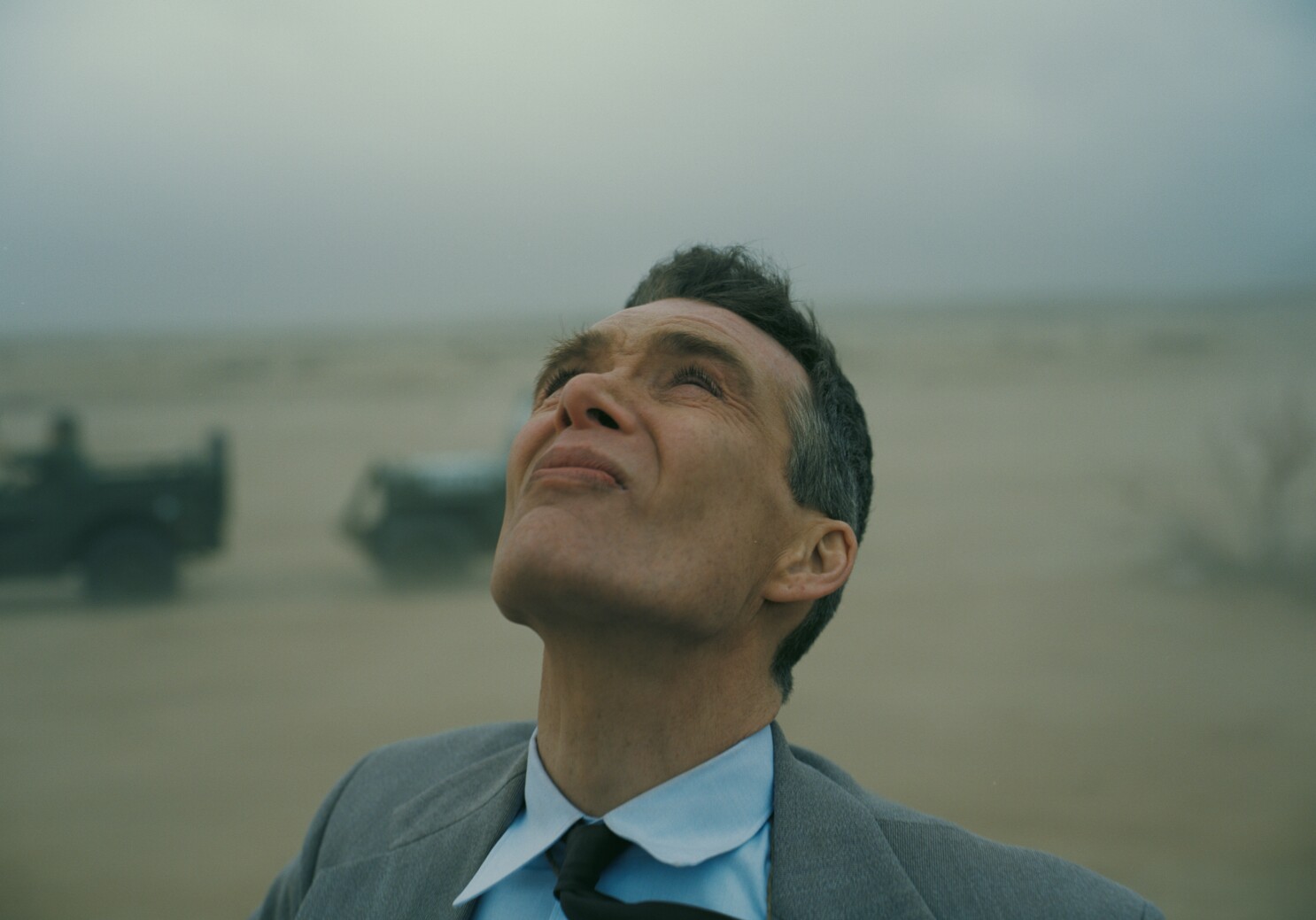
Plot: Based on the Pulitzer Prize-winning biography by Kai Bird and Martin J. Sherwin, director Christopher Nolan’s latest magnum opus examines the life of J. Robert Oppenheimer (Cillian Murphy), the head of the Manhattan Project and the father of the atomic bomb. Beginning with Oppenheimer’s early years as an academic and continuing on through WWII, his influence with the Atomic Energy Commission, and the eventual revoking of his national security clearance, Nolan’s film offers a nuanced and detailed look at the man and the significant people in his orbit including his wife Kitty (Emily Blunt) and rival Lewis Strauss (Robert Downey Jr.). A dense and compelling work, Oppenheimer delves into the philosophy of the man, including his connections to communism. Moreover, it examines the consequences and moral complexities of creating the weapons of mass destruction that heralded in the nuclear age and the Cold War.
Review: If you examine the history of cinema over the last 120 years, most decades contain director legends whose films echo down through the years. In the 1940s it was Ford, Huston, and Capra. In the 1970s it was mavericks like Coppola, Scorsese, and Spielberg. The 1990s saw the rise of gnarly auteurs like Tarantino, Fincher, and Spike Jonze. The first two decades of the 21st century have also seen its share of titans whether it’s visionaries like Alfonso Cuaron and Denis Villeneuve or unique voices like Bung Joon-ho and Greta Gerwig.
Yet out of all of them, the director that stands head and shoulders above all others in my opinion, is Christopher Nolan. His movies aren’t just pieces of cinema, they are events. For moviegoers, the name Christopher Nolan is more than enough to get them into a movie theater. It’s a testament to the man’s ability that when he releases a film the expectation isn’t greatness, the expectation is cinematic nirvana. A daunting legacy to live up to, to say the least.

So where does that leave Oppenheimer? Where does the film stack up in the pantheon of Nolan movies? While Oppenheimer isn’t my favorite of Nolan’s works, I do believe it is his best. As I was watching the masterpiece that is Oppenheimer unfold, something struck me like the blast wave from the Trinity test. Every film prior to Nolan’s latest, in hindsight, now feels like whetstones. Tools he was using to carefully craft a cinematic sword to thrust into the beating heart of audiences worldwide. A sword bearing the name Oppenheimer.
Complex, nuanced, profound, dense, and absolutely staggering, Christopher Nolan’s Oppenheimer is a testament to a brilliant director in full control of every cinematic technique at his disposal. Oppenheimer succeeds at every single conceivable cinematic level. Editing, cinematography, score, acting, screenplay—pick one and you’ll find perfection. To use a sports analogy, Nolan remains the cinematic equivalent of the NFL’s Bill Belichick or the NBA’s Phil Jackson, a man able to get not excellence but greatness out of everyone who comes into his orbit.
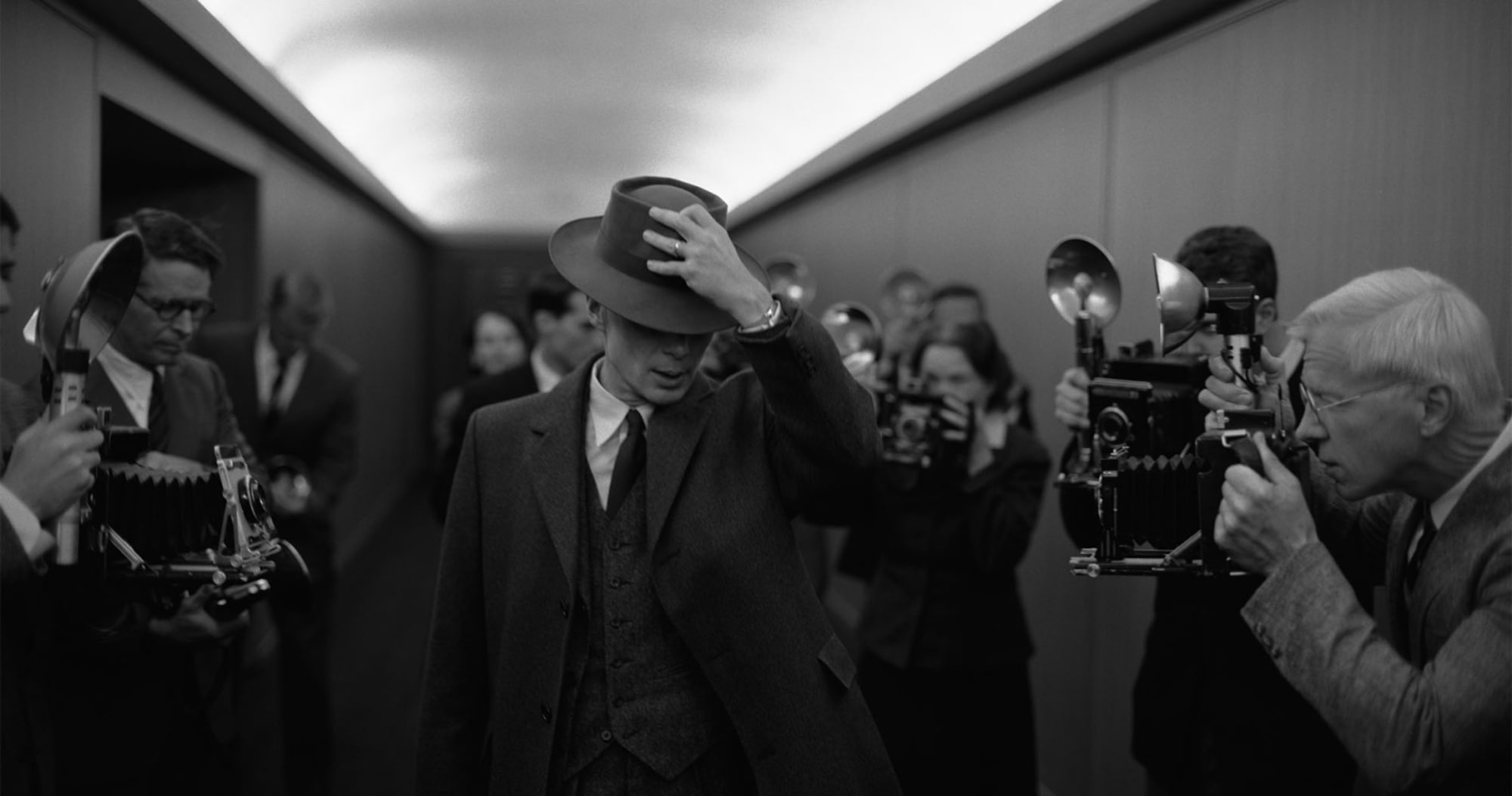
What makes Oppenheimer work so well is the way Nolan structures the film based on three fundamental pillars: editing, score, and cinematography. This is a movie that deals with heavy subjects like quantum physics, moral relativism, and communism. Yet Nolan shoots this biopic like a thriller, with a center focus on Murphy himself. The film has been compared to Oliver Stone’s JFK and I honestly can’t think of a more apt description. Jennifer Lame’s scintillating editing echoes Joe Hutshing and Pietro Scalia’s brilliant work, giving Oppenheimer a constant pulse-pounding forward momentum. It’s complemented by a harrowing and brilliant score from Oscar winner Ludwig Goransson where violins feature heavily. The music makes you feel a profound sense of wonder one moment and abject horror the next. The score possesses a There Will Be Blood flavor that I relished. Goransson’s score fits hand in glove with Hoyte van Hoytema’s camerawork, one of this generation’s best cinematographers. Every conceivable shot is on display here with Hoytema’s cinematography provoking the gamut of human emotions, whether it’s the horror in a gym after the bombs are dropped, the courtroom-esque drama of Oppenheimer and Strauss’ hearings, or the anxiety-laced moments leading up to the Trinity test.
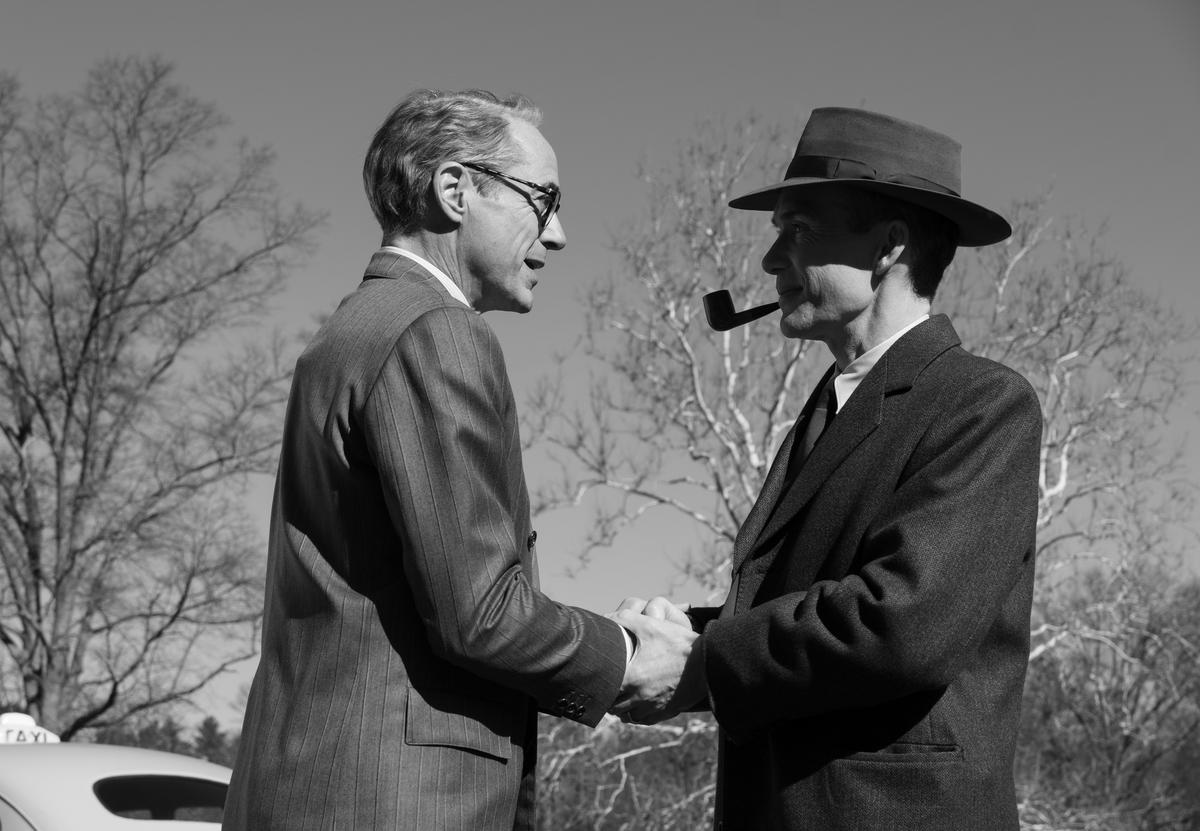
One of the consistent criticisms I hear from Nolan’s detractors is that while he may be a phenomenal director, he’s a sub-par writer. Can Nolan get up his own ass sometimes? Absolutely. Does he struggle with writing women characters? Yes, he does. But after watching Oppenheimer, anyone who quantifies Nolan as a mediocre writer needs to sit down and cease speaking for a bit. Oppenheimer brilliantly relays a non-linear story that jumps around but is never confusing. I’ve always admired Nolan’s ability to respect the audience’s intelligence and it holds true here. I never felt I needed to know the finer points of quantum physics or the nuances of Soviet communism and the 1930s American Communist movement in order to understand this movie. Moreover, Oppenheimer sports some of Nolan’s best dialogue work ever. It’s damn near Sorkin-esque in some regards. Lines like “Amateurs chase the sun and get burned. Power stays in the shadows” or “You don’t get to commit sin and then ask us all to feel sorry for you when there are consequences” land with the power of a Mack truck to the solar plexus.
More than anything, Oppenheimer sports a tour de force of acting prowess. It seems like every ten minutes there was an Oscar winner showing up for one scene, dropping the mic, and then walking off the stage. Florence Pugh’s Jean Tatlock makes for a sexy and brilliant foil for Oppenheimer while David Krumholtz’s Isidor Rabi offers welcome doses of warmth and levity when needed. Matt Damon remains his usually reliable self as General Leslie Groves and Josh Hartnett reminds audiences what he’s capable of with his stalwart and pragmatic approach to Oppenheimer’s colleague Ernest Lawrence.
Yet of all the supporting players, Blunt’s Kitty and Downey’s Strauss stand out from the crowd. A strong, intelligent, and confident woman, Blunt’s Kitty proves an excellent foil for Oppenheimer. While Oppenheimer often comes off as non-confrontational and reserved, it is Kitty who is the fighter, prone to heavy drinking and passionate outbursts. Her tete-a-tete with Jason Clarke’s Roger Robb is a sight to behold. And Downey? Man, it is so great to see him in a role other than Tony Stark/Iron Man. With a complex, egotistical, and Machiavellian performance, Downey reminds us all how talented he is and how mesmerizing he can be. I have no doubt both actors will be nominated in the supporting category at the Oscars next year.
Cillian Murphy however won’t just be nominated next year; he will win the award for Best Actor. This is Larry Bird walking into the three-point contest in 1986 saying, “Who’s playing for second?” Murphy’s performance is nothing less than staggering. What he does with a soulful tortured look or a change in inflection while trying to explain the context of his life at a hearing boggles the mind. J. Robert Oppenheimer was a complex, complicated human being, and Murphy’s able to convey all of those things while simultaneously getting to the humanity of the character. The best compliment I can give is that for three hours, I never once saw Cillian Murphy. All I saw was J. Robert Oppenheimer.
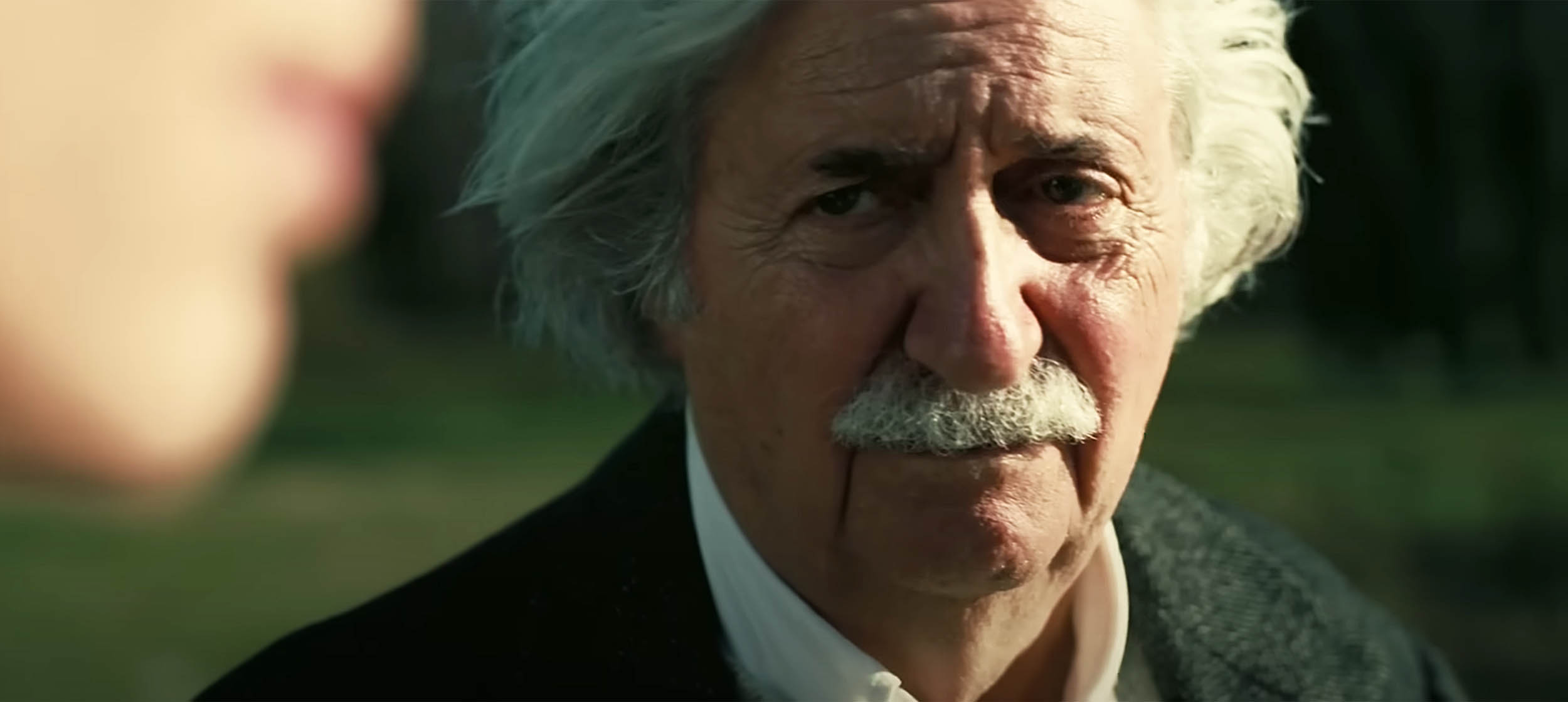
What makes a filmmaker great is their ability to stir your soul, to bring you to an emotional level that you didn’t expect. Most of Nolan’s films build toward something profound and in the case of Oppenheimer, it is the final scene between Oppenheimer and Tom Conti’s Albert Einstein. This is a scene whose final moments left me emotionally devasted, to the point where I wasn’t alright for about an hour and had to fight back a desire to collapse into existential sobs. I found myself questioning whether humanity was going to make it, whether or not my son was going to grow up to have children of his own. I haven’t felt like this since Saving Private Ryan. What makes this ending stand apart from other Nolan endings over the last two decades is that it is completely lacking in hopefulness. Not since Insomnia has Nolan been this cynical with an ending. Yet I think that’s the point. Sometimes optimism or hopefulness isn’t the answer. Sometimes it must be a warning. Sometimes the message must be, “Wake the fuck up before it’s too late.”
I hope we do.
God in heaven, I hope we do.
1 God Awful Blind Yourself With Acid Bad
2 Straight Garbage
3 Bad
4 Sub Par
5 Average
6 Ok
7 Good
8 Great
9 Excellent
10 A Must See
Oppenheimer: 10/10


![Top 10 Creepy Cryptids [by Bea Harper]](https://i0.wp.com/houseofgeekery.com/wp-content/uploads/2016/10/cryptid.jpg?fit=1200%2C675&ssl=1&resize=40%2C40)


