Movie Review: ‘Megalopolis’
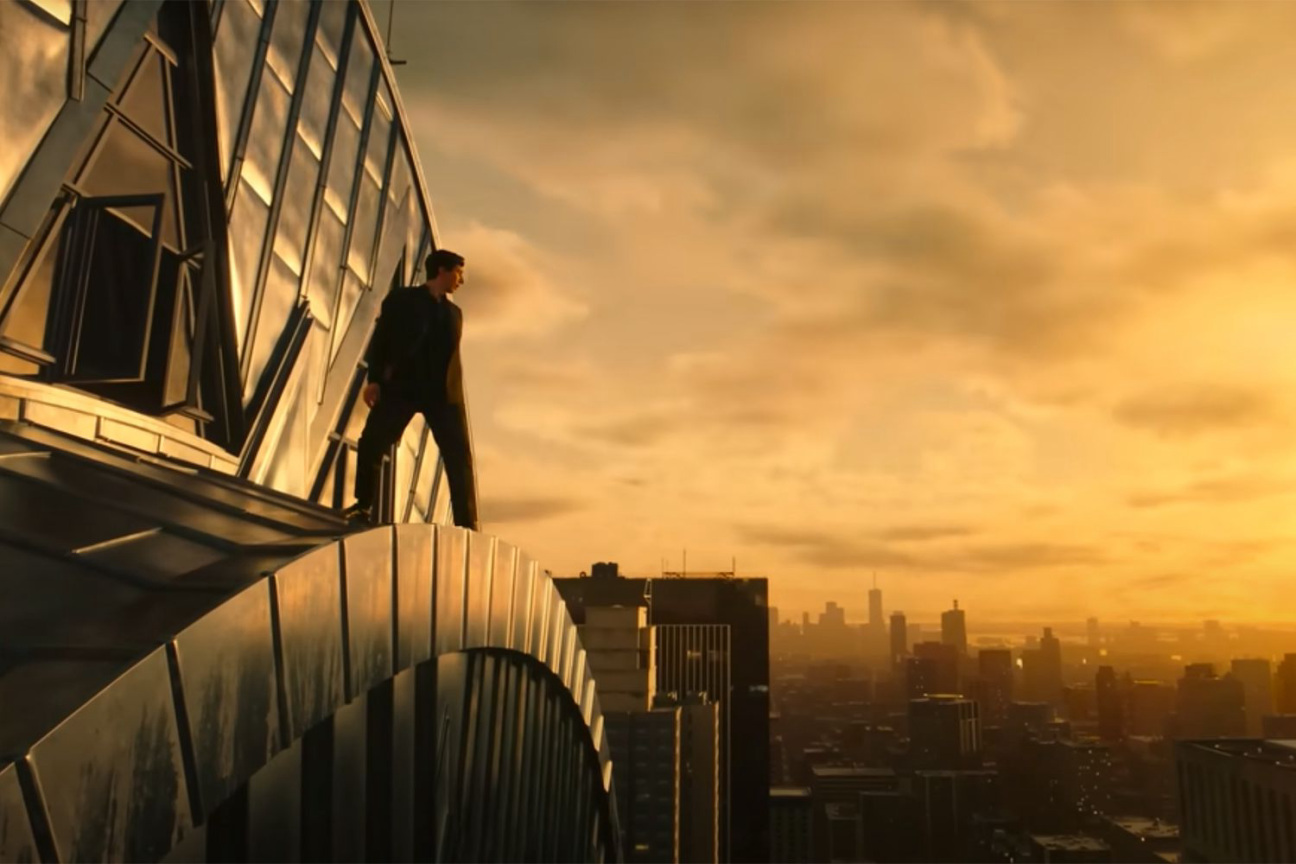
Plot: In an alternative United States, patrician families dominate the city of New Rome (a stand-in for New York City). These families lead a hypocritical life of decadence while claiming to live by a strict moral code and disregarding the people they govern. However, architect Cesar Catalina (Adam Driver) remains a sole leading light in New Rome. Convinced that human beings can live a more productive, virtuous, and fulfilling life than they have been, Cesar sets out to build “Megalopolis,” a utopian urbanist community using a revolutionary building material known as Megalon. However, he will have to combat a corrupt government steeped in avarice and led by arch-conservative mayor and Cesar’s fierce rival Franklyn Cicero (Giancarlo Esposito). Cesar must also contend with his jealous cousin Clodio Pulcher (Shia LeBeouf), his wealthy Uncle Hamilton Crassus III (Jon Voight), and his power hungry ex-mistress Wow Platinum (Aubrey Plaza). With new found love interest Julia Cicero (Nathalie Emmanuel) at his side and his mysterious ability to stop time his only aid, Cesar races to save the future of humanity.
Review: When I hear the term “passion project” the cinephile inside of me instinctively tenses up. More often than not audiences end up with Paradise Alley and Battlefield Earth rather than Mad Max: Fury Road and Silence. Megalopolis‘ director Francis Ford Coppola has dealt with bringing a passion project to the big screen before, with his 1979 masterpiece Apocalypse Now a notorious endeavor to produce. Arguably Coppola’s Megalopolis has been even more difficult to come to fruition than his Vietnam War epic, with the Oscar winning director conceiving the film over forty years ago.
People often associate the word “passion” with excitement, intensity, vigor, and vitality. Yet the word itself derives from the Latin word “patior” which means “to suffer.” While undoubtedly, Coppola suffered to bring Megalopolis to life, I wish with every fiber of my being that he had not. The cinematic suffering that I endured watching Megalopolis I thought only reserved for the likes of Showgirls and Beyond the Valley of the Dolls. At multiple times during this 138 minute exercise in pain, I wondered if Cesar Catalina himself had somehow bent time to make the film actually last six months. If I had had the misfortune to see Megalopolis in the theater, I would have walked out an hour in and demanded my money back. And I never walk out of films.
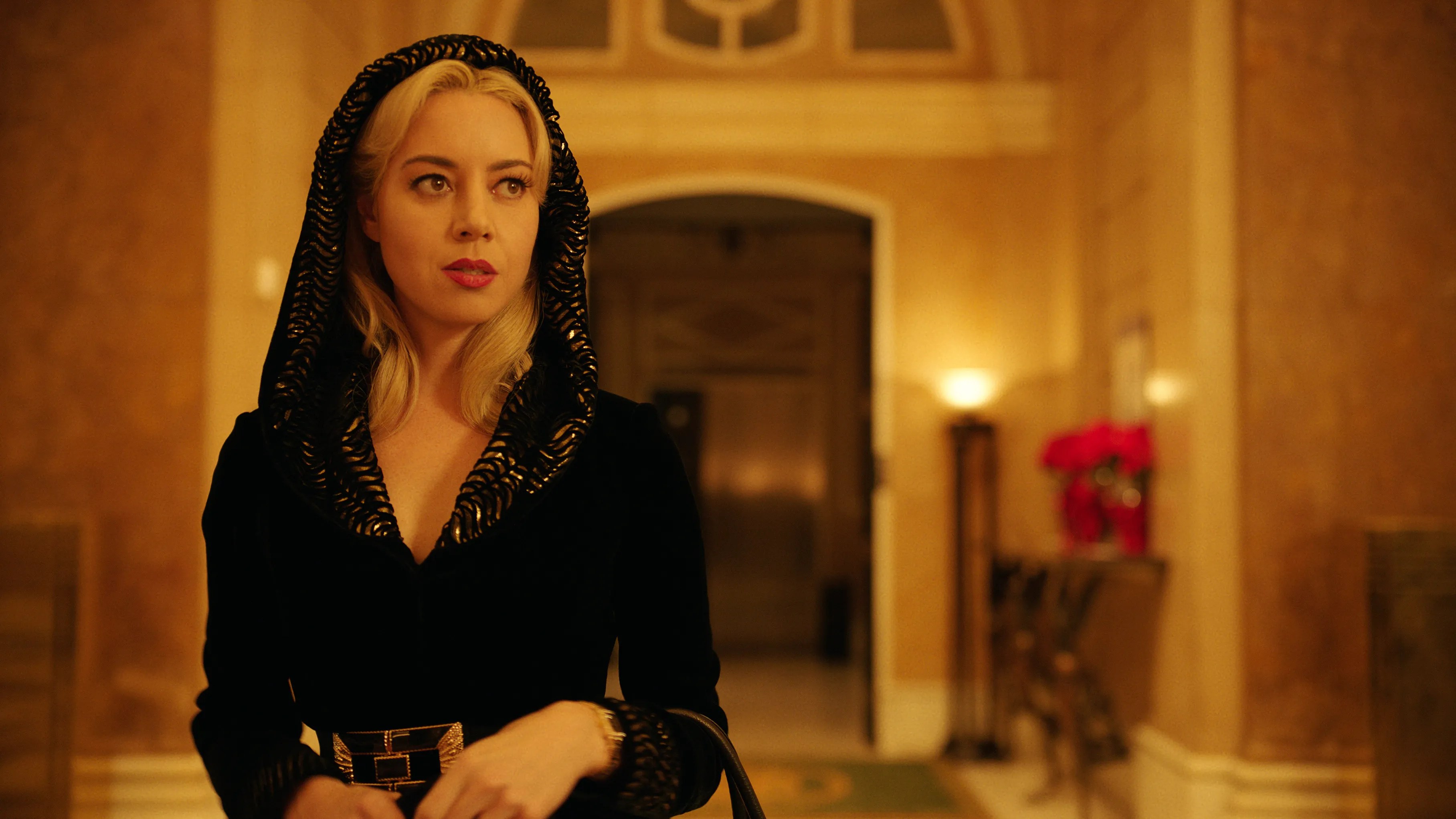
It’s damn near impossible to describe how catastrophically awful Megalopolis is. Vapid, pompous, tonally chaotic, and with the directorial focus of the Tasmanian Devil on meth, I’m astounded this movie ever saw the light of day. Francis Ford Coppola sank over $100 million of his own fortune into Megalopolis and I can’t think of a worse investment. It’s almost inconceivable that the same man who directed The Godfather, The Godfather Part II, The Conversation, Apocalypse Now, The Outsiders, and Bram Stoker’s Dracula also directed this picture. Megalopolis makes The Godfather Part III look like Rear Window by comparison. It’s that atrocioius.
Coppola’s script is so scattershot and dense that the term “incomprehensible” doesn’t begin to cover it. At times the world of New Rome seems to mimic our own, with conspicuous consumption ruling the day. This is exemplified by a Coliseum-like event halfway through the film replete with sexual debauchery, chariot races, and drugs. The metaphor of a crumbling empire rotting from within is front and center in Megalopolis, and the unsubtle comparison to the contemporary United States is as blatant as a pimple on a thirteen-year-old boy. Every message in Megalopolis comes off so ham-fisted, obvious, and pretentious that it might as well come with a free ethics class at Columbia. There’s also zero explanation as to why Cesar can stop time, with his Megalon material just as mysterious, capable of everything from self-sustaining architectural marvels to facial reconstruction. This movie also contains some of the weirdest and jarring sex scenes ever conceived, with one such scene between Aubrey Plaza’s Platinum Wow and Shia LaBeouf’s Clodio Pulcher so awkward it felt like an apex cringe moment from The Office.

Furthermore, this script contains some of the worst dialogue I’ve ever heard. Characters quote Shakespeare one moment and spout ridiculous lines like “Revenge is best in a dress” and “Hey, I like trees as much as the next guy, but we’re not here to discuss trees” the next. What’s worse is that Coppola sincerely believes lines like “Don’t let the now destroy the forever” and “You think one year of medical school entitles you to plow through the riches of my Emersonian mind” are actually deep and meaningful, when they are in fact profoundly pretentious. If these lines were meant to distract from how completely off the rails Megalopolis goes in the last hour, I’m here to say that the endeavor failed miserably.
Moreover, for a director known for creating some of the most enduring and stunning images in the history of cinema, Megalopolis‘ visuals are as memorable and interesting as finger paintings by five-year-olds. Coppola worked with some of the great cinematographers of the last sixty years, legends like Gordon Willis, Bill Butler, and Vittorio Storaro. However, director of photography Mihai Malaimare Jr, shoots Megalopolis like it’s a sequel to Spy Kids with special effects to match. Malaimare’s work is complimented by a score from Osvaldo Golijov that’s as vapid, uninspired, and tiresome as the rest of the movie.
As for the performances in Megalopolis, I’m astounded by the amount of high caliber actors that agreed to be in Coppola’s (hopefully) final film. Yet talents like Talia Shire, Jason Schwartzman, and Dustin Hoffman are regulated to throwaway characters with finite amounts of screen time. For God’s sake Hoffman’s character Nush Berman offhandedly comments about how he’s afraid of thunderstorms and is subsequently killed by one ten minutes later. Shire meanwhile plays Constance Catalina, Cesar’s mother, who despises Cesar for no apparent reason. Jon Voight gets the most screen time of the Hollywood royalty as a Warren Buffet-like billionaire whose most “memorable” scene involves the line “What do you think about this boner I’ve got” before subsequently murdering a major character with an arrow.

However, for better and mostly worse this is Adam Driver’s film. Driver does his best to imbue his Cesar Catalina with a modicum of humanity and idealism. However, Driver’s efforts are undermined by a script that has him spouting ostentatious lines about the unstoppable, unbreakable force of love or telling his love interest Julia to “Go back to the cluuubbbbb.” He also inexplicably initiates strange body movements that look a prompt exercise from a bad improv class. Picture a full-body dry heave and you’ll be mostly there. Unfortunately, Driver’s Cesar is so riddled with faults, so pompous and arrogant, that it’s impossible to root for him, no matter how noble his endeavors. It makes his rivalry with Esposito’s Franklyn Cicero irrelevant, and his relationship with Julia meaningless.
Listen, I fully recognize how difficult it is to get a movie, any movie, made in Hollywood today. It’s increasingly run by venture capitalist, anti-art, ignorant troglodytes who think Akira Kurosawa invented Godzilla and that John Ford is the current CEO of a car company. I truly cherish cinema and believe the theatrical experience needs to be preserved. Having said that I haven’t detested a movie like Megalopolis in a long, long time. It easily moves into my top five list of worst films I’ve ever seen. At the end of the day I think legendary critic Roger Ebert’s thoughts on the movie North, sum up my feelings about Megalopolis:
“I hated this movie. Hated, hated, hated, hated, hated this movie. Hated every simpering, stupid, vacant audience-insulting moment of it.”
Avoid this one at all costs.
My rating system:
1 God Awful Blind Yourself With Acid Bad
2 Straight Garbage
3 Bad
4 Sub Par
5 Average
6 Ok
7 Good
8 Great
9 Excellent
10 A Must See
Megalopolis: 1/10



![Top 10 Creepy Cryptids [by Bea Harper]](https://i0.wp.com/houseofgeekery.com/wp-content/uploads/2016/10/cryptid.jpg?fit=1200%2C675&ssl=1&resize=40%2C40)


