Movie Review: ‘One Battle After Another’

Plot: “Ghetto” Pat Calhoun (Leonardo DiCaprio) and his lover Perfidia Beverly Hills (Teyana Taylor) are members of the far-left revolutionary group the French 75. Determined to take down a United States government that has descended into authoritarianism, the duo along with their fellow revolutionaries, attack immigration centers, politicians’ offices, and even the power grid. Upon giving birth to their daughter Charlene, Pat finds himself unable to get Perfidia to settle down. When one of the French 75’s own gives the organization up to the government, Pat and Charlene are forced to go into hiding. Sixteen years later living under the names Bob and Willa (Chase Infiniti), Bob struggles with alcohol and drug addiction as well as raising Willa on his own. When a nefarious past enemy in Colonel Steven Lockjaw (Sean Penn) threatens their well-being, Bob is forced out of retirement to save himself and more importantly his daughter.
Review: If you’ve been following my movie reviews for any length of time now, you recognize my technical organization: plot, review, rating. If the plot description above sounds uniquely bizarre, I ascribe it to the fact that this is a Paul Thomas Anderson film. I had a difficult time trying to crystalize the plot of One Battle After Another into just a few lines. But it occurs to me that most of PTA’s films defy description. Boogie Nights at its most simplistic is about the porn industry in the 1970s, but anyone who’s ever seen the movie knows it’s much more than that. There Will Be Blood ostensibly follows the exploits of a cutthroat and pragmatic oil man, but that merely scratches the surface. And Magnolia? Good luck trying to whittle that down to a book flap summary.
It’s not an accident that I chose those three particular examples either. I consider Boogie Nights, Magnolia, and There Will Be Blood, PTA’s best films. As such I can confidently state that One Battle After Another falls into that category. While it’s not my favorite Paul Thomas Anderson film, this may be his best work to date. A cinematic feast of a film that is technically flawless, rife with stellar performances, and thematically deep and nuanced, One Battle After Another is PTA’s Oppenheimer. A masterpiece of movie making magic, I am in awe that this movie even exists considering the risk averse industry we currently reside in. This is especially pertinent considering One Battle After Another cost upwards of $175 million to make (PTA’s most expensive film to date), takes very firm sides on a variety of topics, and is unlikely to turn a profit. Then again, when you’ve had a banger of a year like Warner Bros. has had, you can afford to take the financial hit, especially with a film that’s a critical darling and bound to garner a ton of Oscar nominations.

From a technical standpoint, Anderson’s One Battle After Another possesses zero weaknesses. Shot in VistaVision, a widescreen version of 35mm that’s been out of vogue for decades, the format gives One Battle After Another a unique visual flavor. Despite it being set in modern times (albeit in an alternate America), the VistaVision element gives it a distinctly 1970s flair. Tonally it feels much more in line with The French Connection and Dog Day Afternoon than say The Fugitive or Mission: Impossible. I mentioned The French Connection and Dog Day Afternoon intentionally because make no mistake, PTA has made a propulsive, action thriller that had me on edge for damn near three hours. While One Battle After Another is thematically hefty (which I’ll get to) it works on its own as a great action flick.
When I said One Battle After Another is PTA’s Oppenheimer, I meant it in the sense that OBAA feels like the movie Paul Thomas Anderson’s has been building towards for three decades. This film is PTA using all his experience, every film trick, every writing technique, as a whetstone to create a cinematic sword to thrust into the heart of his audience. To quote Mortal Kombat, it’s a “flawless victory.” Anderson I consider to be a true auteur in that he writes and directs his own material. Whether it’s Dirk Diggler, or Frank T.J. Mackey, or Daniel Plainview, Anderson always manages to create dynamic, often morally ambiguous characters that we like in spite of ourselves. Such is the case here with DiCaprio’s Bob and Taylor’s Perifidia falling squarely into that category, whereas Willa and Lockjaw are much easier to root for and against respectively.
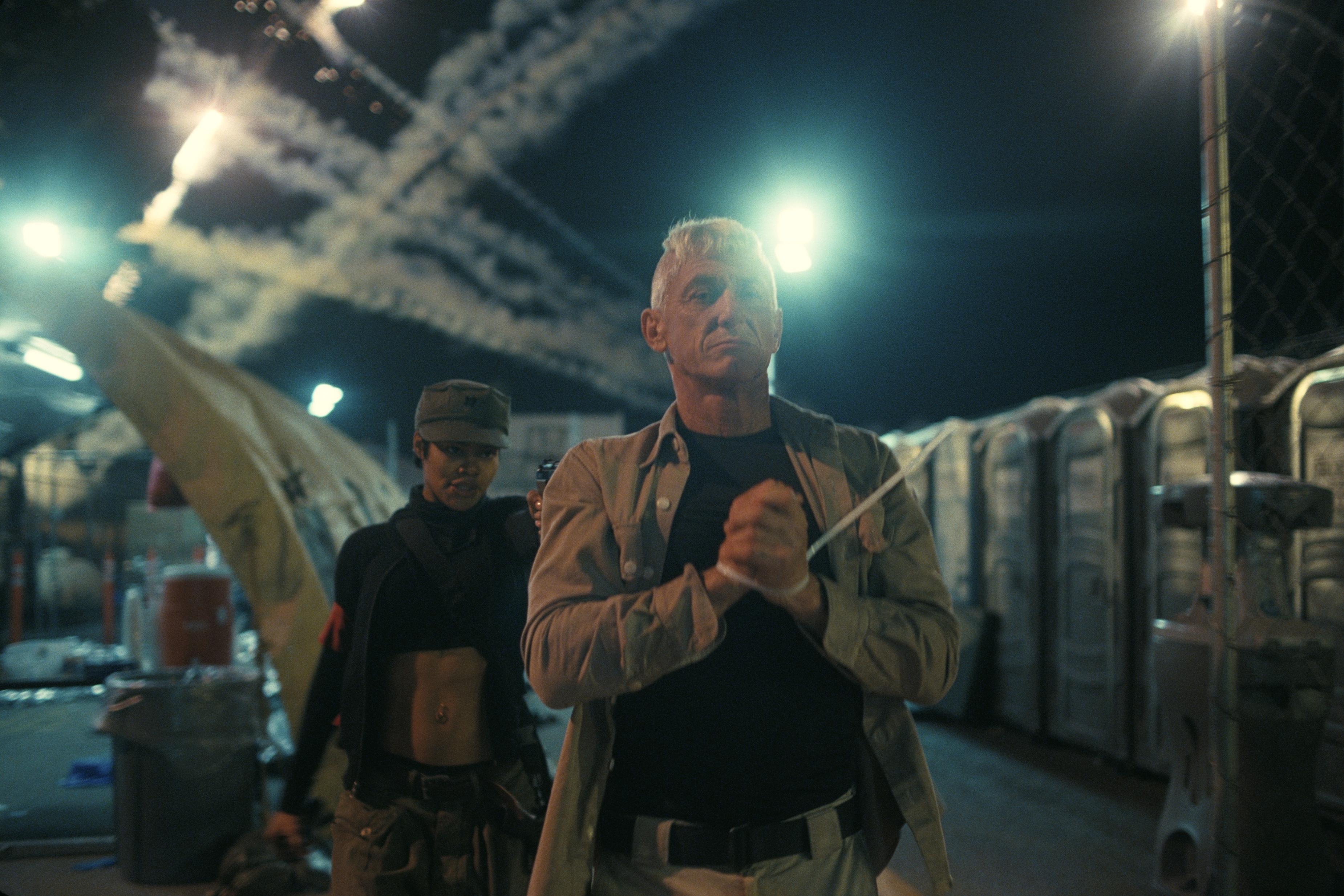
One Battle After Another‘s screenplay operates on multiple levels. It’s very much a movie of our times that chooses a side when it comes to immigration and human rights. While this may put some people off and many on the right will write this off as “woke, leftist, garbage,” keep in mind that Anderson has been writing this movie for over ten years and it was filmed 18 months ago. If it strikes a particular rough note with people about the current state of America, well, that’s very much by design. It’s risky filmmaking at its finest that forces the viewer to examine their own stances on vital topics. OBAA also critiques revolutions as a whole in that some revolutionaries, especially Perfidia, are actually not in it for the cause but because it fuels their own narcissism. Taking down the patriarchy and white nationalism is an excellent theoretical concept, but what happens when you put theory into action? What happens when innocents become collateral damage? Or what if that collateral damage consists of those closest to you? How do you rebuild after you blow up and what do you put in its place? These are hard questions with no easy answers.
PTA’s film also works as an intimate portrait of the relationship between fathers and daughters. DiCaprio’s Bob is trying to do his best as a father given the circumstances, but he’s also clearly not doing enough and Willa knows it. Their strained relationship exemplifies the strained generational relationship between Millennials and Gen Z. Yet, One Battle After Another demonstrates that when people come from a place of positive intent, when relationships win out over ideology, that’s where healing and growth happens. This is fully realized in a devastating but heartfelt moment between Willa and Bob toward the end of the movie that had me choking up. Secret handshakes and key verbal passcodes should never trump compassion and empathy.
Moreover, One Battle After Another operates as a skewering take down of what’s vitally important versus what we choose to focus on. I was absolutely floored by a scene where Bob desperately tries to charge his phone while immigrants are rushing to hide from an oncoming attack. It leads into a hilarious phone conversation where Bob attempts to reconnect with the French 75 but is unable to remember the appropriate passwords due to his drug addled brain. If this seems reminicent of the average person trying to remember their passcode and dealing with a difficult service representative, it should. Humans gatekeep to a ridiculous degree and it often prevents us from doing the vital work.

However, even if you threw out all of the heavily thematic elements of One Battle After Another, it works as a thrilling actioner and a black comedy all by itself. I’m not sure if my sphincter unclenched once during the entire movie. Watching as PTA’s characters are consistently put in and escape from lethal situations again and again was nerve wracking. It culminates in a stunning car chase in the final third act that had my heart in my mouth not my throat. Moreover, One Battle After Another is the very definition of a black comedy. There were multiple times where I laughed out loud at some truly dark things and then looked around to see if anyone else was too. (Thankfully they were.)
Yet it is also the way Anderson shoots One Battle After Another that lets you know you are in the hands of a master craftsman. Michael Bauman’s stunning cinematography gives every shot purpose and intent, with Anderson and Bauman relying heavily on close ups and tracking shots. It’s an intentionally intimate choice that puts you up close and personal with our main characters and demands you participate in their story. This is radical cinematic empathy that’s compounded by a propulsive, ear worm of a score from Jonny Greenwood that never lets up. I never thought that someone striking a xylophone in a metronome like fashion could cause me anxiety, but here we are. These elements lend to the propulsive pacing of One Battle After Another. It’s a 162 minute film that feels like 30 minutes. Simply sensational.
Additionally, three stellar performances anchor One Battle After Another with Leonardo DiCaprio, Sean Penn, and Chase Infinity leading the way. We’ve seen DiCaprio be heroic (Titanic), amoral (The Wolf of Wall Street), and downright sadistic (Django Unchained), but this time audiences can bask in his ability to be paranoid, terrified, and downright hilarious. There’s a scene just before Bob goes into hiding where the look on his face while he’s being told multiple, intricate instructions, reminded me of my 76-year-old Dad’s face when I tell him how to download an app. Hysterical. The generational divide between Willa and Bob also make for some hilarious moments. Yet despite Bob’s fear and drug addled paranoia, you never once doubt his devotion or love for Willa. Sean Penn also delivers his best performance in decades with his racist, hypocritical Colonel Lockjaw someone you love to hate. There’s a scene where Penn’s character is being considered for a position in a white supremacist old boys society called the Christmas Adventurers Club (I shit you not) that is as disturbing as it is blackly funny. Only Penn could pull something like this off. Last but not least, is Chase Infinity’s performance as Willa. Willa is probably the most innocent and put upon of any character in One Battle After Another, yet she never sees herself as a victim. She’s strong both mentally and physically but also emotionally vulnerable. As much as I loved DiCaprio’s Bob, it was Infinity’s Willa that I rooted for the most. I’d be shocked if Infinity doesn’t get a Supporting Actress nomination and I can’t wait to see where her career takes her.

Ultimately, One Battle After Another proves to be another monumental artistic achievement in the lexicon of Paul Thomas Anderson films, and one that may finally garner him Oscar gold. It’s quite simply one of the best films of 2025, a true triumph, and a movie I highly recommend you charge into the fray.
My rating system:
1 God Awful Blind Yourself With Acid Bad
2 Straight Garbage
3 Bad
4 Sub Par
5 Average
6 Ok
7 Good
8 Great
9 Excellent
10 A Must See
Masterpiece
One Battle After Another: Masterpiece


![Top 10 Creepy Cryptids [by Bea Harper]](https://i0.wp.com/houseofgeekery.com/wp-content/uploads/2016/10/cryptid.jpg?fit=1200%2C675&ssl=1&resize=40%2C40)


