Movie Review: ‘Frankenstein’
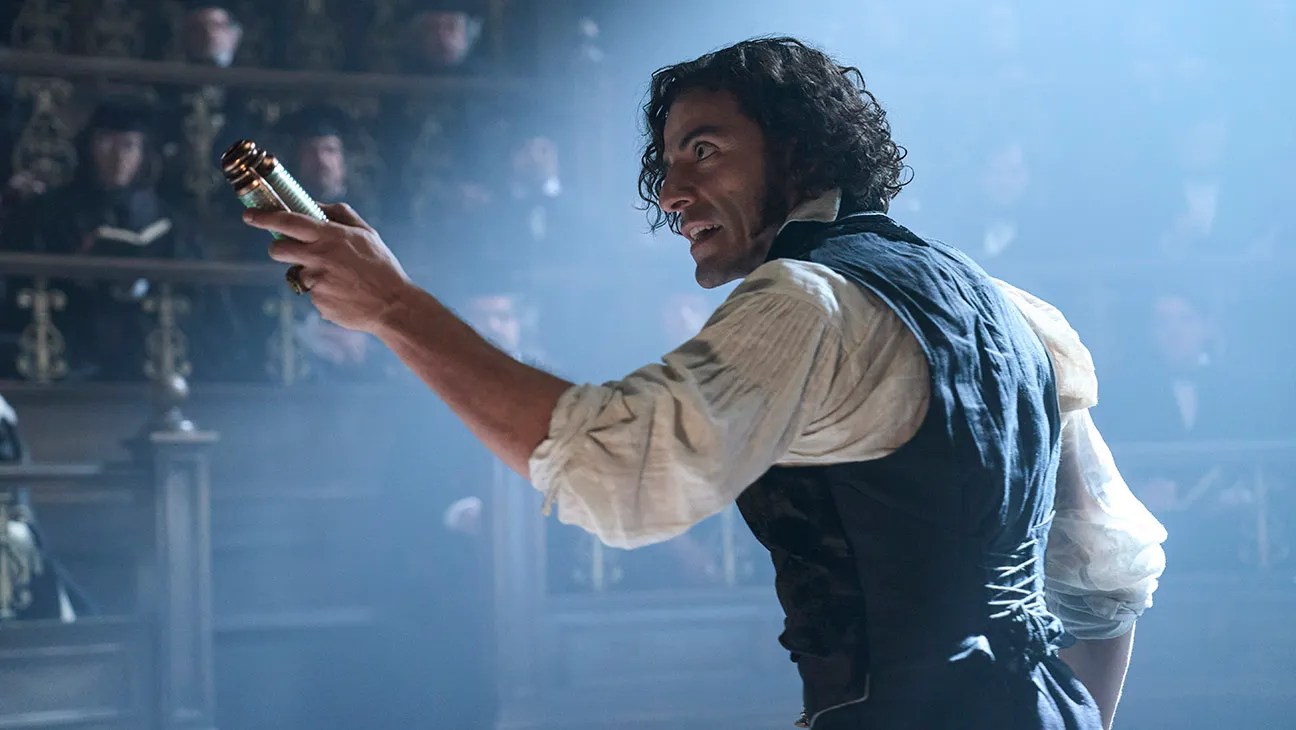
Plot: A retelling of Mary Shelley’s Frankenstein from acclaimed director Guillermo del Toro, the gothic tale follows the scientific exploits of Victor Frankenstein (Oscar Isaac). Determined to discover the secret of life, Victor, with the assistance of benefactor Henrich Harlander (Christof Waltz) sets out to create a man from the corpses of the deceased. However when Victor succeeds, he soon abandons the Creature (Jacob Elordi) and leaves him for dead. Cast out into the cold, cruel world, the Creature eventually discovers who he is and sets out to find his creator. Yet the resulting confrontation could spell doom for Victor, his brother William (Felix Kammerer), and Victor’s love interest Elizabeth (Mia Goth).
Review: It’s been over 200 years since a 19 year old Mary Shelley published her seminal gothic novel Frankenstein. In that time there have been no less than 423 feature films, 204 short films, and 78 television series based off of her tale. There’s something about the story that endures, that audiences keep coming back to time and again. While many look at is as just a simple science fiction/horror novel, the truth is that it is so much more. It’s a romance, an examination of the boundaries of science, a philosophical discussion about mankind and God, a feminist critique of patriarchal society, a scathing takedown of male violence against women, an existential look at the nature of life, and a cautionary tale about ambition and hubris.
With Guillermo del Toro’s latest rendition of the classic work, the director and screenwriter examines Frankenstein through a different perspective. Broken into three segments: a Prelude, Victor’s Tale, and The Creature’s Tale, del Toro recounts Frankenstein through the lens of fathers and sons and the obligation parents have to their children. It’s clear from the outset where Victor’s father Leopold (Charles Dance) is shown to be an abusive, domineering, manipulative, and cold-hearted parent, through the final conversation between Victor and the Creature, that this is a deeply personal film for del Toro. Netflix gave him carte blanche and final cut to make the movie he wanted. The result is an auteur’s singular vision for mostly better and occasionally worse. In many instances, critics have stated Frankenstein feels like the movie Guillermo del Toro was always destined to make. Considering he’s been trying to produce this film for over a decade, I’d say that’s a fair assessment.

As with most del Toro films, Frankenstein is a visual feast. So much so in fact that it’s tragic that Netflix didn’t give this a wider release. I would’ve loved to have seen this on the big screen. Regardless Tamara Deverell’s production design is flawless. Whether it’s the weather blasted ship of the Horisont, the opulent Frankenstein estate in Geneva, the abandoned tower where the Creature comes to life, or the isolated forest cabin where the Creature befriends an old blind man (David Bradley), Frankenstein‘s look and feel transports you into the apotheosis of gothic Europe. The fact that del Toro filmed on location throughout Scotland and in North Bay, Lake Nipissing lent an air of verisimilitude you can’t get on a back lot. Deverell’s production design perfectly compliments Kate Hawley’s outstanding costumes. Every piece of cloth is resplendent.
Additionally, del Toro makes a concerted effort for Frankenstein‘s look and feel to be lush, vibrant, and colorful. Oscar nominee Dan Laustsen (The Shape of Water, Nightmare Alley) actualizes del Toro’s vision with aplomb. Multiple scenes evoke beauty and horror at the same. The segment where the Creature comes to life jumps immediately to mind but I also found a scene where Victor confronts the Creature in the Arctic just as arresting. Laustsen is also able to capture quieter, more heartfelt moments as well, such as when Elizabeth encounters the Creature for the first time or when the Creature sadly discovers the Blind Man viciously slaughtered by wolves. Multiple times I had to stop and ask myself, “Is this the best shot I’ve seen in any movie this year?” There’s an unfulfilled longing for knowledge and human connection that permeates the entirety of Frankenstein. The always reliable composer Alexandre Desplat enhances this vibe with a heartbreaking and harrowing score.
Where Frankenstein occasionally faulters lies with certain narrative choices as well as pacing issues. For the life of me I don’t understand why del Toro switched the name (Walton to Anderson) and nationality (English to Danish) of the explorer Frankenstein encounters in the Arctic. Del Toro also advances the period setting from the 1790s to the 1850s. Moreover, he includes a new character named Henrich Harlander (Christof Waltz) who serves as Victor’s benefactor. Waltz is fine in the role but the character felt needlessly unnecessary and his secret reason for funding Victor’s experiments landed with a thud to me. Also as much as I enjoyed del Toro’s film, the first quarter of this movie was decidedly ponderous. It takes a good 40 minutes for Frankenstein to find its footing but once it does it crescendos into an explosive and dynamic second half.
Thankfully any pacing or narrartive choice issues are made up for by the exemplary acting in Frankenstein. Oscar Isaac proves to be a perfect Victor Frankenstein. Brilliant, callous, arrogant, and narcassistic, he’s not a likeable character for a majority of this film. Much like other absent fathers, he never “considers what comes after creation.” He even repeats the mistake of his own father and resorts to physical abuse, in an attempt to make the Creature learn. Yet his ultimate arc evokes an empathy and compassion I wasn’t expecting.
Mia Goth also gives audiences a different version of Elizabeth than we’ve ever seen. Rather than a standard Victorian lady looking for a husband, she’s an intelligent and scientifically inclined woman. She proves to be more than a match for Victor intellectually. Moreover, she serves as the moral compass of the film, questioning the boundaries of science and the arrogant men who try to cross those boundaries. Elizabeth’s relationship with the Creature also differs from any I’ve ever seen, with her much more romantically attracted to the Creature and his innocence than in previous iterations. This adds a welcomed additional nuance and wrinkle I wasn’t expecting.

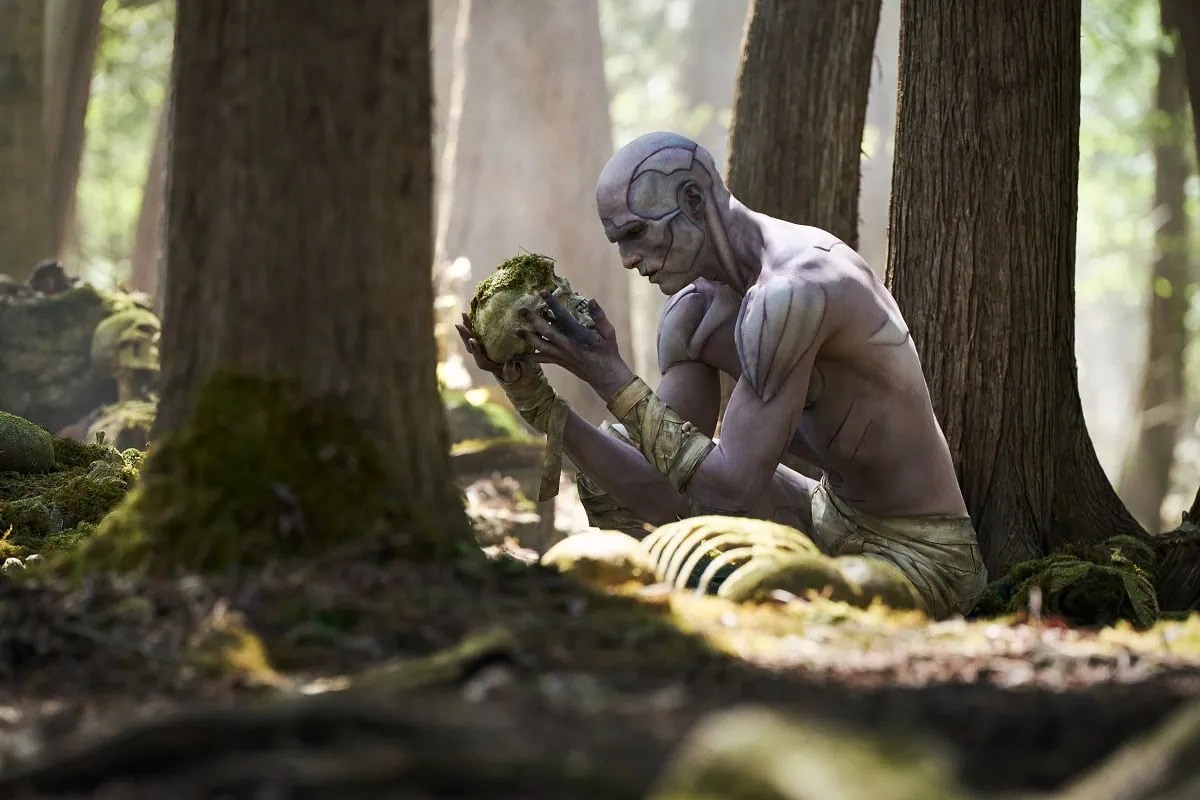
However, it’s Jacob Elordi’s (Saltburn, Wuthering Heights) layered, empathetic, and physically and emotionally tormented Creature that really stands out. I was captivated and entranced by Elordi’s performance. It was stunning to watch him progress from a timid newborn, uncomfortable with his movements to an intimidating and domineering force of nature. Elordi’s performance is just as physical as it is emotional. You sincerely empathize with a Creature who wants no more than what all humans desire: dignity, love, respect, and acceptance. The fact that he can’t receive that from his own creator is heartbreaking. The Creature also has to deal with the added element that he simply cannot die. He’s an immortal creature cursed with life. It transforms Elordi into a distinctly tragic character. I adored this performance and I can’t wait to see where Elordi’s career goes.
Overall, I thoroughly enjoyed del Toro’s iteration of Frankenstein. While it’s not my favorite version, there’s certainly a lot to love and appreciate.
My rating system:
1 God Awful Blind Yourself With Acid Bad
2 Straight Garbage
3 Bad
4 Sub Par
5 Average
6 Ok
7 Good
8 Great
9 Excellent
10 A Must See
Masterpiece
Frankenstein: 8/10


![Top 10 Creepy Cryptids [by Bea Harper]](https://i0.wp.com/houseofgeekery.com/wp-content/uploads/2016/10/cryptid.jpg?fit=1200%2C675&ssl=1&resize=40%2C40)


