If the Future of Movies is AI, I’ll Happily Live in the Past
The path to the realm of enlightenment begins in the dungeon of ignorance. I say this at the outset because I believe relatively self-aware people can admit the topics where they lack knowledge. When it comes to the subject of AI, I freely confess that I’m firmly on the second step that leads out of my metaphorical dungeon. What I don’t know about AI could fill several hundred acres of server farms. I’m not a coder, I’m not a prompt specialist, and I don’t write for Wired magazine. Hell, I don’t even own stock in ChatGPT.
What I do know is that I’m a cinephile. I’ve been in love with films ever since I saw Henry Thomas kiss Erika Eleniak in E.T. when I was three years old. Technology has always helped push the boundaries of filmmaking to the bleeding edge. It was true when audiences experienced their first “talkie” with 1927’s The Jazz Singer. It was true when The Wizard of Oz took the use of color to another level. It was true when the world experienced the first CGI character in Young Sherlock Holmes. It was true when Windhorse became the first film shot using digital cameras.
It’s still true today.
The latest technology to enter the chat is AI. Its expansion has become exponential, its uses legion. AI has infiltrated virtually every facet of our daily lives. It impacts how we think, how we work, how we order food, and even how we conduct romantic relationships. It’s even impacted how we create and, by extension, how we make movies. Over the last several weeks, we’ve seen some revelatory and dynamic examples of AI movie scenes, albeit short ones.
And what I’ve seen terrifies me. It makes me horrified for the future of filmmaking and filmmakers. It’s the kind of visceral, creeping dread Ari Aster makes movies about, and Bo Burnham sings songs about.
Before I expound upon my fears, I want to make something crystal clear. I’m no Luddite. I own a cell phone, a 4K television, an Xbox, and a myriad of other modern-day technical doodads and accoutrements. (I also own a lot of books, but we’ll get to the relevance of that statement in a bit.) I fully recognize that AI is a tool that can be a force for good, and in numerous ways it already is. It’s assisted in the earlier diagnosis of cancer and identified biomarkers for Alzheimer’s Disease. It’s shaped new models for satellite imagery to track deforestation. It’s even helped first responders coordinate more efficiently during natural disasters. I’m not refuting AI’s potential to be a net positive for humanity. But you know what’s also a tool? A butcher knife. Something that can be used to prepare a five-star gourmet meal or brutally murder someone in cold blood. Believe me, it is of paramount importance that we give just as much, if not more, consideration to the latter as we do the former.
I want to explore three specific recent examples of AI in the film industry that’s taken my existential dread from a mild shiver to a full-body convulsion.
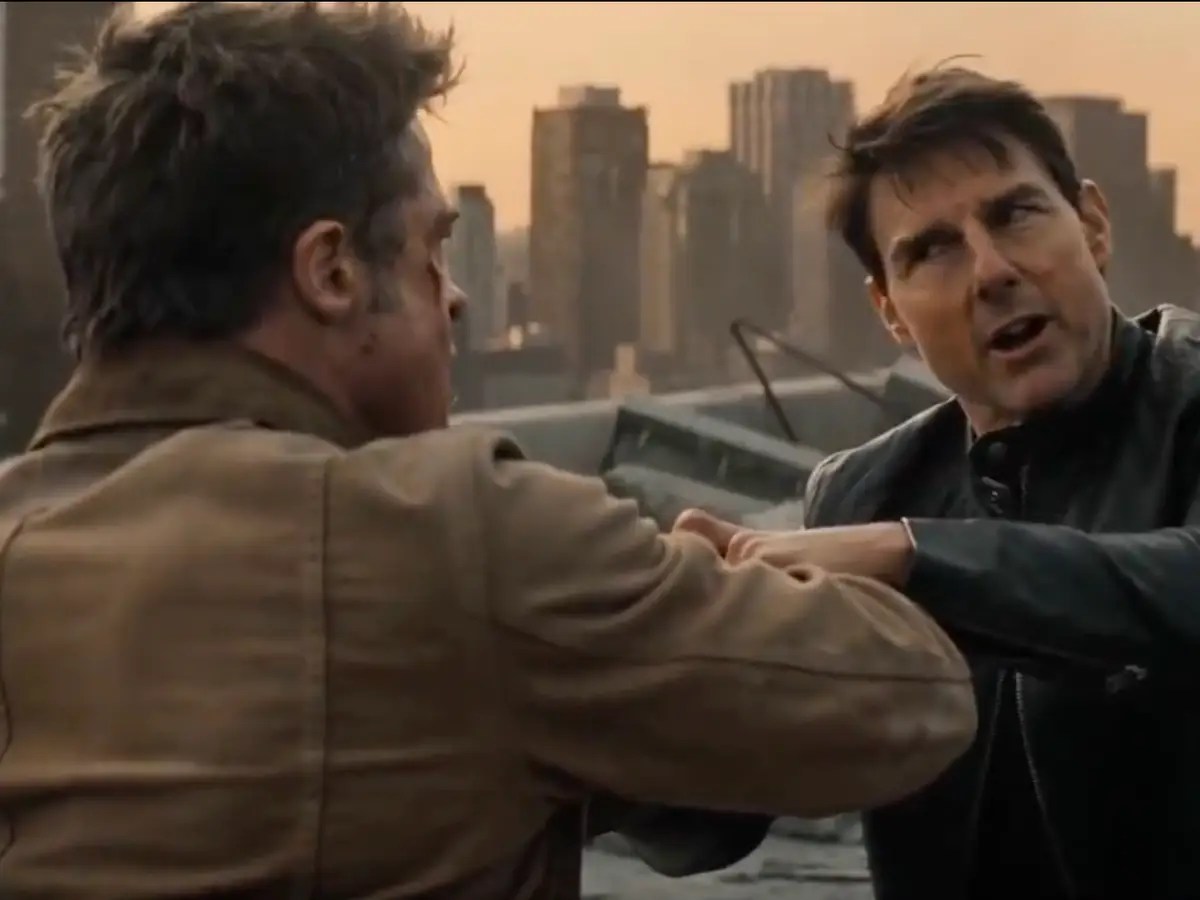
The first involves the most recent videos making the rounds on the Internet, courtesy of Seedance 2.0, developed by Niobotics ByteDance, the same organization that spearheaded TikTok. In an X post from user Ruairi Robinson, he used a two-line prompt to create a series of short videos wherein Brad Pitt fought Tom Cruise in what resembled an action film. In a bizarre twist, it even involved dialogue about how Tom Cruise had to kill Jeffrey Epstein. Not only were the likenesses and mannerisms of both actors spot on, but so were the voices. I must admit that even the fight choreography was solid if not pristine. Another video showed Thanos fighting Darth Vader. Not surprisingly, both Disney and Paramount hit back hard, sending cease and desist letters to ByteDance and threatening legal action.
What scares me here is twofold. One is that ByteDance was so brazen in its action. Make no mistake, they knew exactly what they were doing. They were pushing to see how far they could go, and the reaction they received was likely the one they expected. But the whole point was exposure, marketing the technology to the masses to see the level they’ve achieved. We’ve come a long way from a janky Will Smith eating spaghetti. Even if Cruise, Pitt, Disney, and Paramount drown ByteDance in lawsuits (which they should), the genie is out of the bottle. This forces the issue and is going to quickly bring to the forefront in a court of law what is considered copyrighted material, what’s fair use, how do you license likenesses and voices, what’s fair compensation, and who reaps the benefits? The second terrifying aspect is how good this actually looks. I must admit it’s piqued my curiosity. How far along will we be in just a year? Are we close to the point where soon you’ll be able to enter a few prompts and generate a two-hour action movie starring Tom Cruise and Brad Pitt based exclusively on an individual’s preferences? I think we are. And if so, where in the blue fuck does that leave the film industry?
The second example pertains to something I hold near and dear to my heart, namely, the preservation and sanctity of physical media. For quite some time, I joined the cavalcade that proudly touted that physical media was dead and the future was digital. Yet I soon discovered what so many of us have to come to know: just because you “purchase” a digital copy doesn’t mean you own it. You instead own the license to access it, and that can shift and change at any time. It can happen on a whim with no notification. Furthermore, multiple streamers have removed or changed scenes of movies in digital format. For these reasons – as well as the fact that I fell in love with 4K steelbooks – I switched back to physical media.
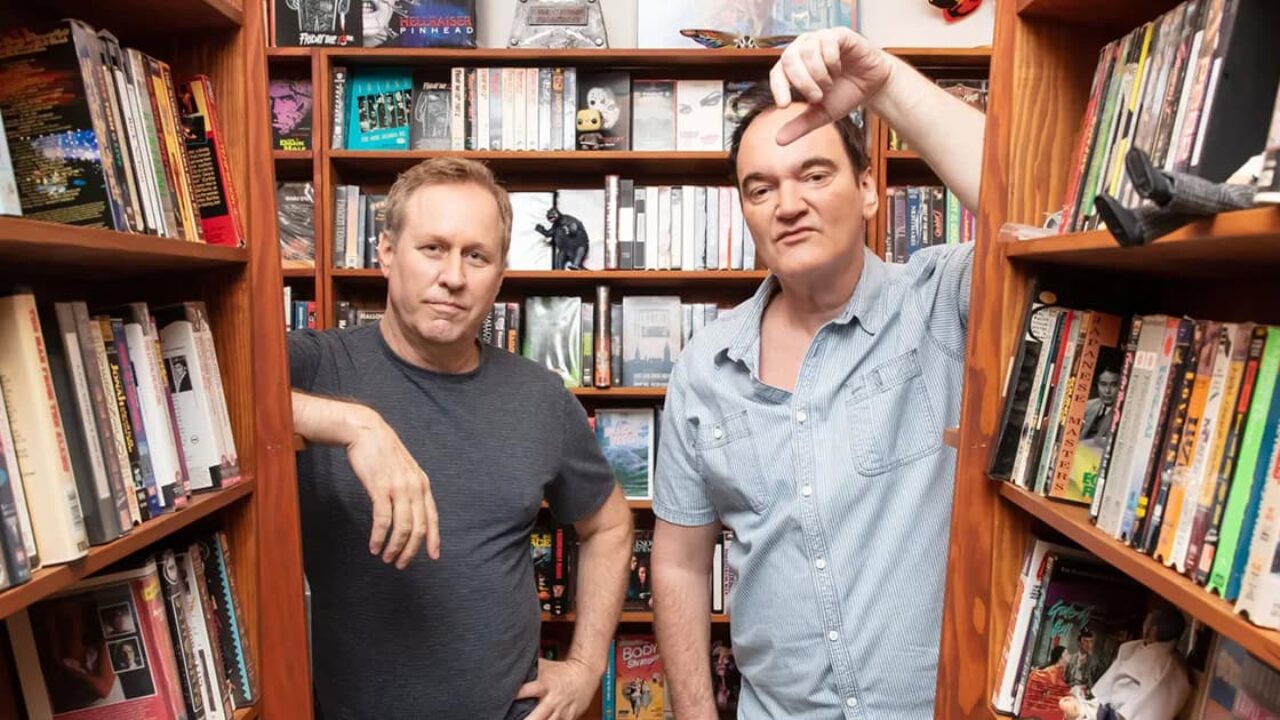
One of the true champions of film preservation has been the great Roger Avary, an Oscar-winning screenwriter who co-wrote Pulp Fiction. He also directed the criminally underrated adaptation of the Bret Easton Ellis novel The Rules of Attraction. In recent years, he’s hosted The Video Archives podcast with Quentin Tarantino, where the duo discuss preserving classic film culture and sing the praises of VHS, LaserDisc, and film prints. While not as generous toward DVDs, Blu-Rays, and 4Ks, the sentiment is still there — physical media matters and is a foundational pillar to the history of film.
You can imagine my unmitigated shock when, just recently on The Joe Rogan Podcast, Avary revealed he has not one but three AI films in the pipeline alongside his tech company Massive Studios. His reasoning? Money. In a scenario becoming all too common, Avary stated that getting a movie going through traditional means has been damn near impossible. The man who hasn’t had a film credit since 2019’s Lucky Day saw his fortunes drastically change when he brought AI to the table. “Just put AI in front of it and all of a sudden we’re in production on three features,” stated Avary. Suddenly, the light of truth couldn’t have been more focused than if it passed through the Crystalline Entity: this is the point where we are in the industry. An established name like Avary, a man who’s advocated for the sanctity of film harder than Vincent Vega depresses an adrenaline-filled syringe, has succumbed to the dark side. And in my secret heart, can I fully condemn a man who just desperately wants to make art any way he can? I honestly don’t have a solid answer.
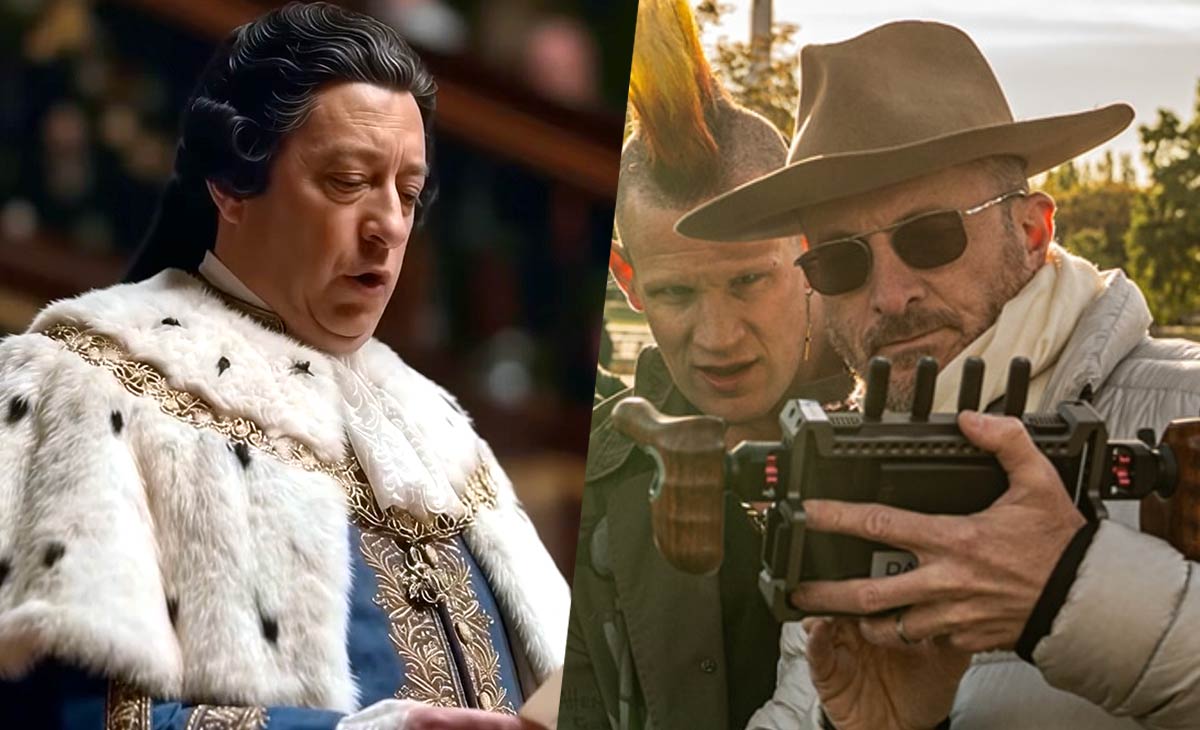
However, it is my final example that propelled me from mild cinematic ennui to full-blown major depressive film funk. That’s when I discovered that Darren Aronofsky, one of the great filmmakers of the last three decades, had partnered with Time Studios to create a television show called On This Day…1776. The show focuses on specific significant days of that year pertaining to the American Revolutionary War. The catch? Except for SAG-certified voices, the TV show, which he produced with his company Primordial Soup, is almost exclusively AI. And let me tell you, it is certified dreck. I could barely stomach two minutes before I had to turn it off.
Before long, my depression gave way to another emotion: rage. I could forgive Aronofsky for the atrocity that was Noah, but this, this abomination? Never in life. How could the man who made Requiem for a Dream, Black Swan, The Wrestler, and The Fountain have sold out? That a man who has spent his entire career plumbing the depths of humanity – albeit often the darkest parts – could embrace something this soulless was unfathomable. Yet here we were again, and again I came to the same conclusion: this is the point where we are in this industry. To quote the Joker in The Dark Knight, AI has “changed things. Forever. There’s no going back.”
Yet, like the Clown Prince of Crime, is AI also an agent of chaos? Are we now on the ferries in Gotham Harbor waiting to see if we get blown up? Should we be like Tiny Lister and throw the detonator out the window before we sacrifice our artistic and cinematic souls at the altar of progress?
I say Hell yes. Toss that fucker in the river where it belongs.
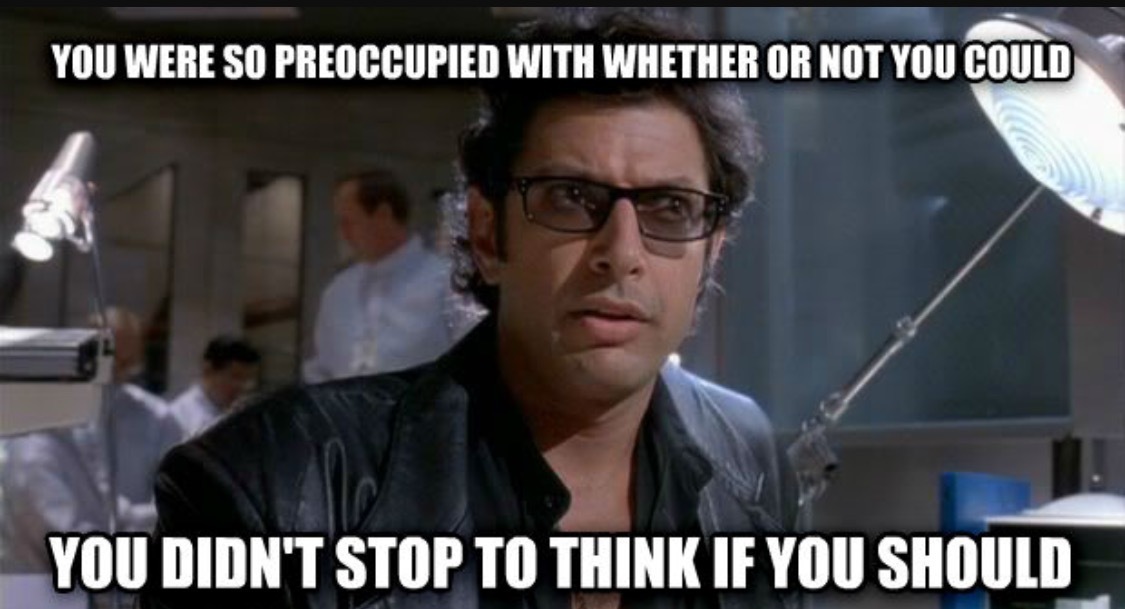
Aronofsky and others like him have not fully considered the ramifications of their choices. By making these decisions unilaterally, they risk jeopardizing every element of the film industry and decimating jobs at every conceivable level. There’s no point in designing elegant costumes or crafting dynamic sets or artistically applying makeup if AI can do it for you. This isn’t cutting off your nose to spite your face; this is willfully putting your head in the guillotine and letting the goddamn rope go.
And at the heart of all those categories I just mentioned: costumes, set design, makeup, and a myriad of others, lies the one element that AI just cannot replicate: humanity. There are real human beings behind all of those things. Remember those books I mentioned I owned? They aren’t just for show. My collection runs the gamut from dense biographies to splatterpunk fiction. They “contain multitudes,” as Chuck Krantz says. They are aspirational. They exemplify passion and a desire for excellence. In short, they are the very things I want from the human beings who spend their blood, sweat, and tears crafting the movies I love. AI can never replicate the pinnacle of greatness that can come from getting off your screen, going to your room, and becoming utterly obsessed. Thelma Schoonmaker didn’t become the editor GOAT by worshipping at the throne of Grok.
I’m under no illusions that Hollywood will suddenly reverse course and abandon AI altogether. Might as well try stopping up a raging river with a napkin. And I don’t discount the advantages AI presents for some elements of film production. Yet if the ultimate future of movies is total and complete AI, where every human element has been stripped away like Salma Hayek’s G-string in From Dusk Till Dawn, then I’m fully content to live in the past. I have thousands of movies to keep me company and thousands more I’ve yet to see.
It all depends on the hand that holds the metaphorical butcher’s knife I mentioned earlier. If we want to save the movie industry from total and complete AI domination, we’d better make damn sure it’s Julia Child and not Charles Manson.