The Top 5 Westerns of the 21st Century
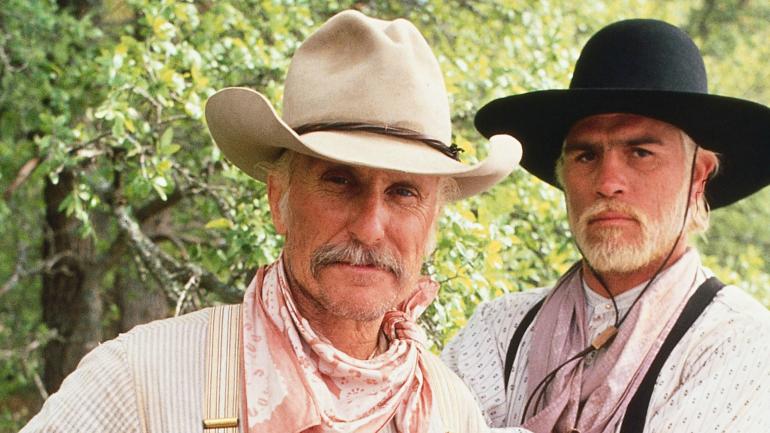
“By God Woodrow, you just don’t ever get the point, do you? It’s not dyin’ I’m talkin’ about, it’s livin’!” -Captain Augustus “Gus” McCrae –Lonesome Dove
Just over two weeks ago, the film world lost one of its true titans of cinema, as Oscar-winning actor Robert Duvall passed away at the age of 95. Duvall’s oeuvre ranged through a gamut of rich characters, everything from Boo Radley in To Kill A Mockingbird to Lieutenant Colonel Bill Kilgore in Apocalypse Now, to Max Mercy in The Natural. Yet the performance I will forever associate with Duvall did not occur on the big screen but on the small.
1989’s Lonesome Dove marked one of the last great television miniseries in the history of the medium. Over the following decade (with a few exceptions), the format began to fade away. It garnered an astounding 18 Emmy nominations, and if it hadn’t run into the juggernaut that was War and Remembrance, it would easily have won the award for Best Miniseries. William D. Wittliff’s polished script, Basil Poledouris’s brilliant score, and Simon Wincer’s impeccable directing all make for a marvelous achievement that stands the test of time over three and a half decades later. Yet it is the two-hander performances of Tommy Lee Jones as Captain Woodrow F. Call and Robert Duvall as Captain Augustus McCrae that make Lonesome Dove not just memorable but indelible. In fact, Duvall’s performance is so remarkable that upon his passing, the first thing that flashed through my mind was the quote I wrote at the beginning of this article and the man behind the performance.
It got me thinking that just as the great television miniseries has virtually vanished from the airwaves, so too has the Western genre. For decades, Westerns ruled the box office year after year. Yet like the storied Ranger careers of Call and McCrae, all things fade with time. Yet even though the output of Westerns has slowed to a trickle the size of a dusty well in southern New Mexico, there have been a few notable exceptions over the last 25 years. So without further ado, here are my top five Westerns of the 21st century.
HONORABLE MENTION: The Assassination of Jesse James by the Coward Robert Ford
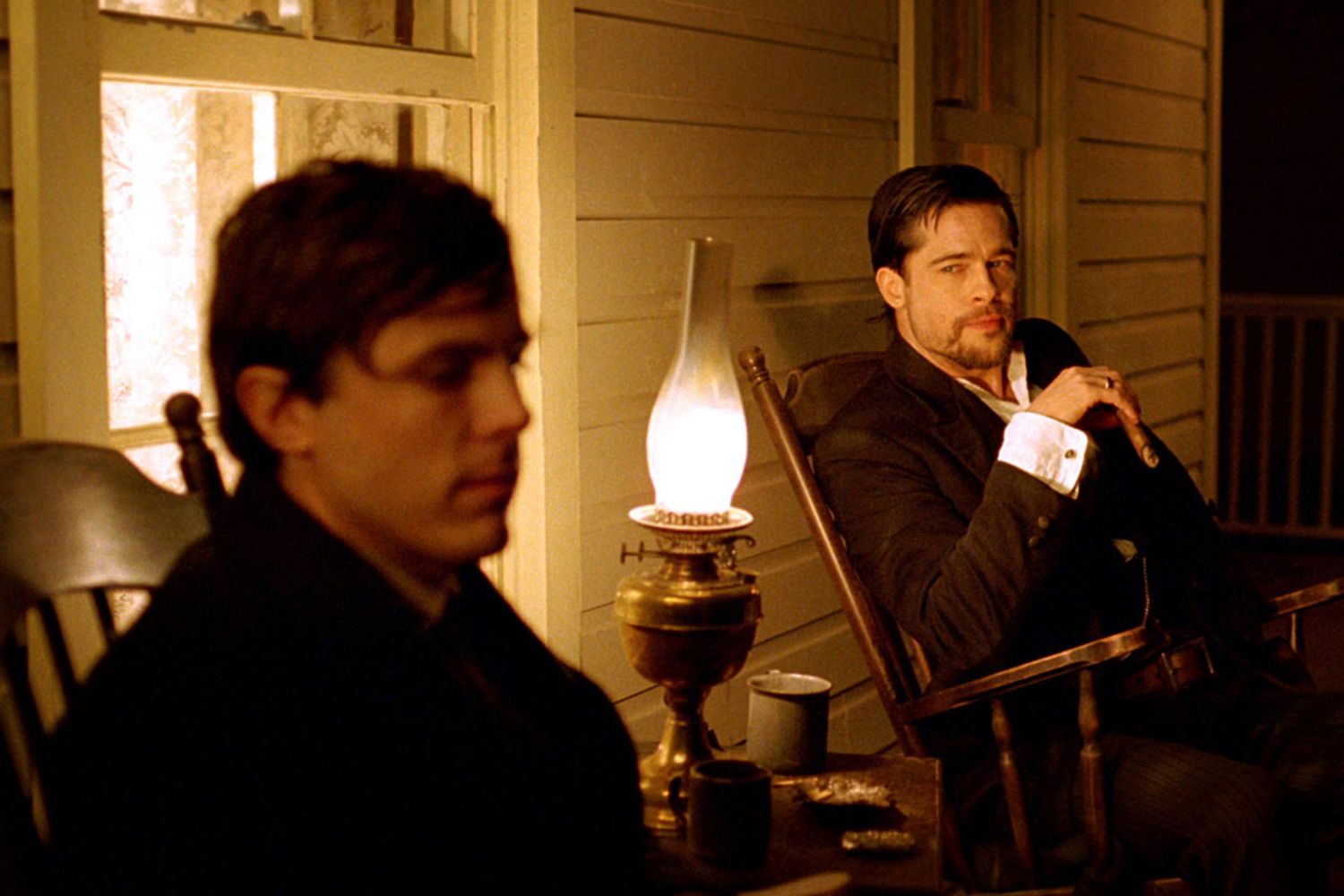
Director Andrew Domnik’s exquisite Western elegy often gets overlooked due to its verbose and cumbersome title. While I admit the title should have been shortened to just The Assassination of Jesse James, it’s no reason to dismiss what is truly a magnificent Western. While some consider the pacing ponderous and plodding, I see it as intentional, methodical, and precise. A deconstruction of the “outlaw as myth” trope, the film examines the consequences of a violent life after the shooting stops. What’s fascinating is how the film begins at the end of James’ storied career, with a train robbery that doesn’t pay out and James deciding to leave the gang for good. What follows is a tale of quiet desperation as James’ legend fades and Robert Ford obsesses over a hero of the American West. Sweeping yet intimate, with some high-caliber cinematography by Roger Deakins, Assassination delivers two astounding performances from Brad Pitt (Jesse James) and Casey Affleck (Robert Ford), the latter of which earned him an Academy Award nomination. Melancholy and somber but nonetheless beautiful and contemplative, The Assassination of Jesse James by the Coward Robert Ford remains one of the best Westerns the genre has to offer.
#5 Bone Tomahawk
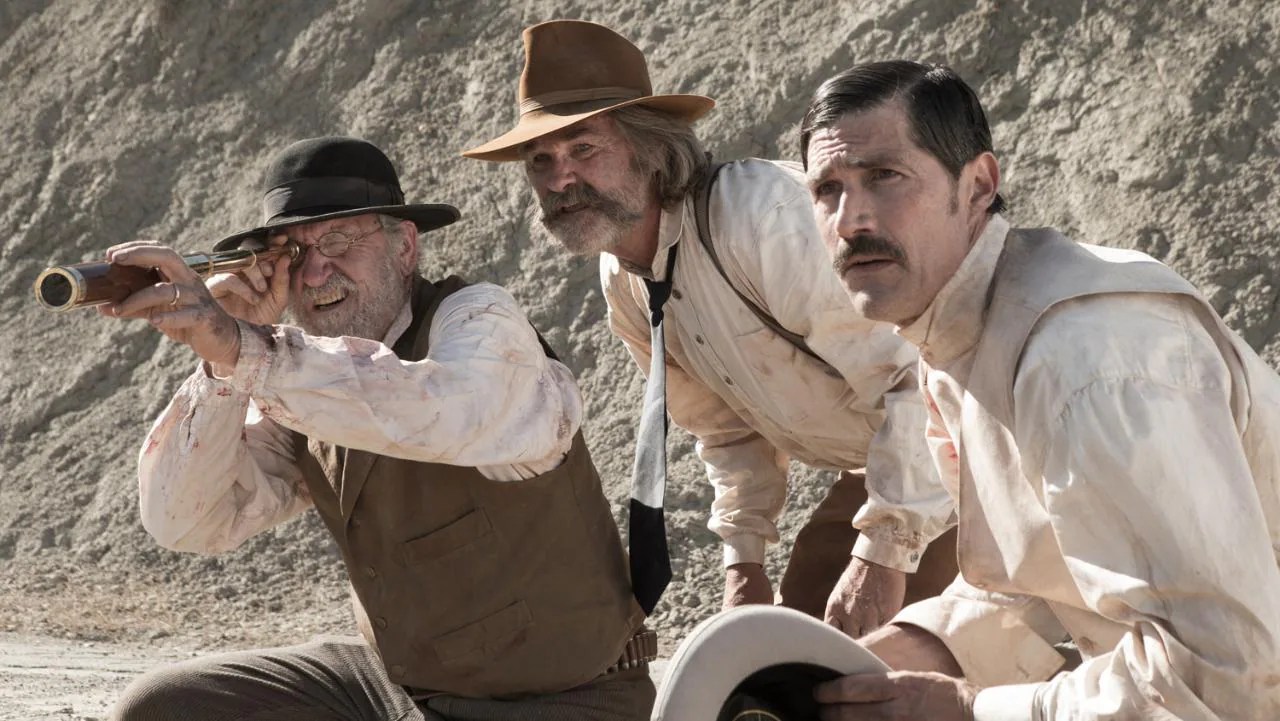
Bone Tomahawk sports just about every Western cliche you can think of. A grizzled, hardened local sheriff? Check. A very obvious and intentional local town name? Check. A mission to rescue a trio of kidnapped women from Indians? Check. A disparate possee that must work together? Check. But you know what? It doesn’t matter because this movie is fantastic, and director S. Craig Zahler proves you can have cliches galore, but if you’re flawless in your execution, it excuses any story shortcomings. The plot follows strict, tried and true Western tropes, but it is the chemistry between weathered Sheriff Hunt (Kurt Russell), reluctant but brave Deputy Chicory (Richard Jenkins), the moral and upright Dr. Arthur O’Dwyer (Patrick Wilson), and the talented but tortured gunman John Brooder (Matthew Fox) that makes this movie sing. Jenkins in particular is memorable with his Deputy Chicory, an excellent blend of Festus Haggen from Gunsmoke and Stumpy from Rio Bravo. However, it’s Lost’s Matthew Fox who mesmerizes with his John Brooder haunted by his past exploits but also trapped by his own talented legend. It all culminates in an unexpected and incredibly brutal third act. Critically acclaimed at the time of its release with comparisons to The Searchers, Bone Tomahawk nonetheless bombed at the box office due to its limited release. Thankfully, streaming has saved this underrated gem from obscurity.
#4 Django Unchained
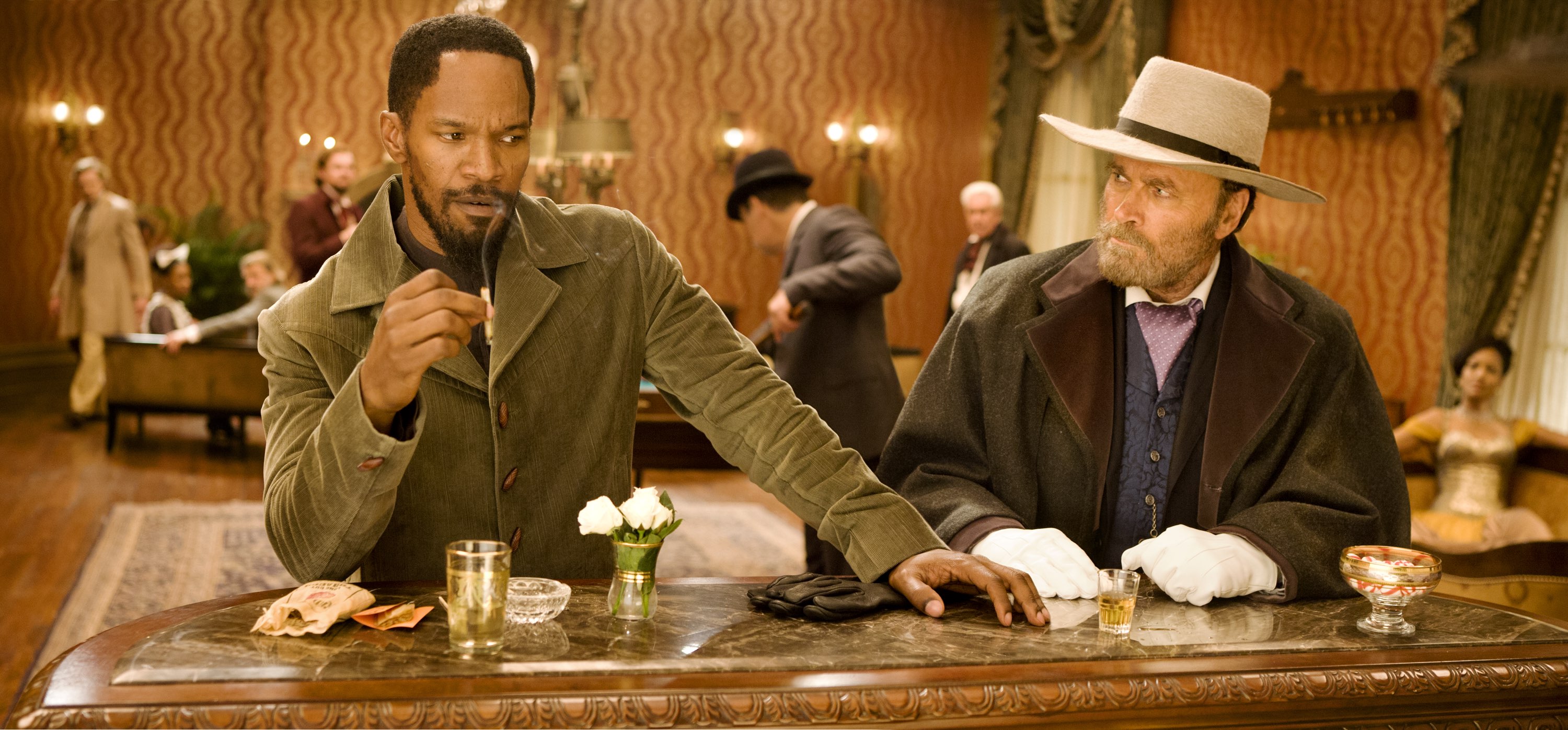
Quentin Tarantino is the king of genre filmmaking. Whether it’s blaxploitation films like Jackie Brown, martial arts flicks like Kill Bill, or revisionist WWII actioners like Inglourious Basterds, the man knows how to scratch a particular cinematic itch. It was only a matter of time before the masterful director delved into Westerns, and such was the case with 2012’s Django Unchained. While technically a “Southern” as Tarantino likes to refer to it as, it’s clearly a love letter to Sergio Leone’s “Man With No Name” trilogy (A Fistful of Dollars, For a Few Dollars More, and The Good, the Bad, and the Ugly) and Sam Peckinpah’s The Wild Bunch. Bombastic, operatic, sporting superb costumes, whipsmart dialogue, and hyper-stylized violence, Django Unchained is wildly entertaining from start to finish. Jamie Foxx makes for a heroic, hilarious, and likable lead, Christoph Waltz shines as Django’s bounty hunter mentor King Schultz, and Leonardo DiCaprio absolutely chews the scenery as the villainous Calvin Candide. With almost $450 million at global box office, Django Unchained also proves that Westerns can still be quite lucrative when guided by the right hands.
#3 Hell or High Water
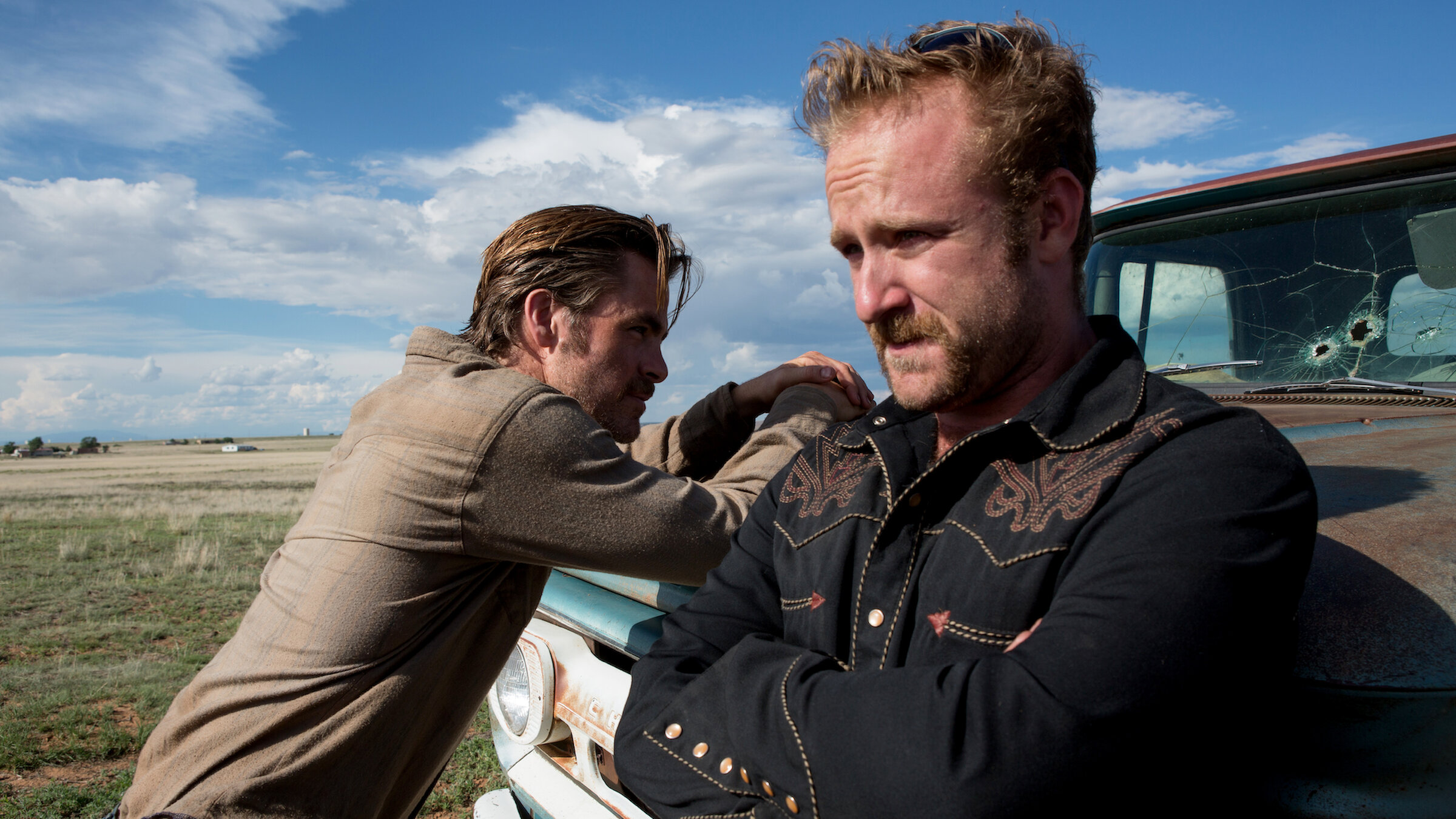
Screenwriter Taylor Sheridan’s (Yellowstone, Wind River) 2016 masterpiece proves you don’t have to set a Western in the 1880s for it to resonate with audiences. A modern story about two brothers in West Texas bankrobbing the same branch that swindled their late mother to save their ranch, it’s a commentary on the modern-day socioeconomic realities for rural middle-class Americans. It also just happens to be a Hell of a fun ride. Chris Pine’s Toby Howard comes off as the more stoic and responsible of the two, while Ben Foster’s ex-con Tanner is the loose cannon who takes desperate risks. While the duo’s disparate personalities cause conflict, you never doubt the love between the two or the justification behind their unlawful actions. Jeff Bridges’ Marcus Hamilton also makes for a nuanced and endearing character who believes in the letter of the law. The scene between Marcus, his partner Alberto (Gil Birmingham), and an ornery waitress (Margaret Bowman) is particularly memorable. However, it is the tension and subtext of Toby and Marcus’ final confrontation that lives rent-free in my head. What a masterful film, but what else would one expect from the man who created Yellowstone?
#2 3:10 to Yuma
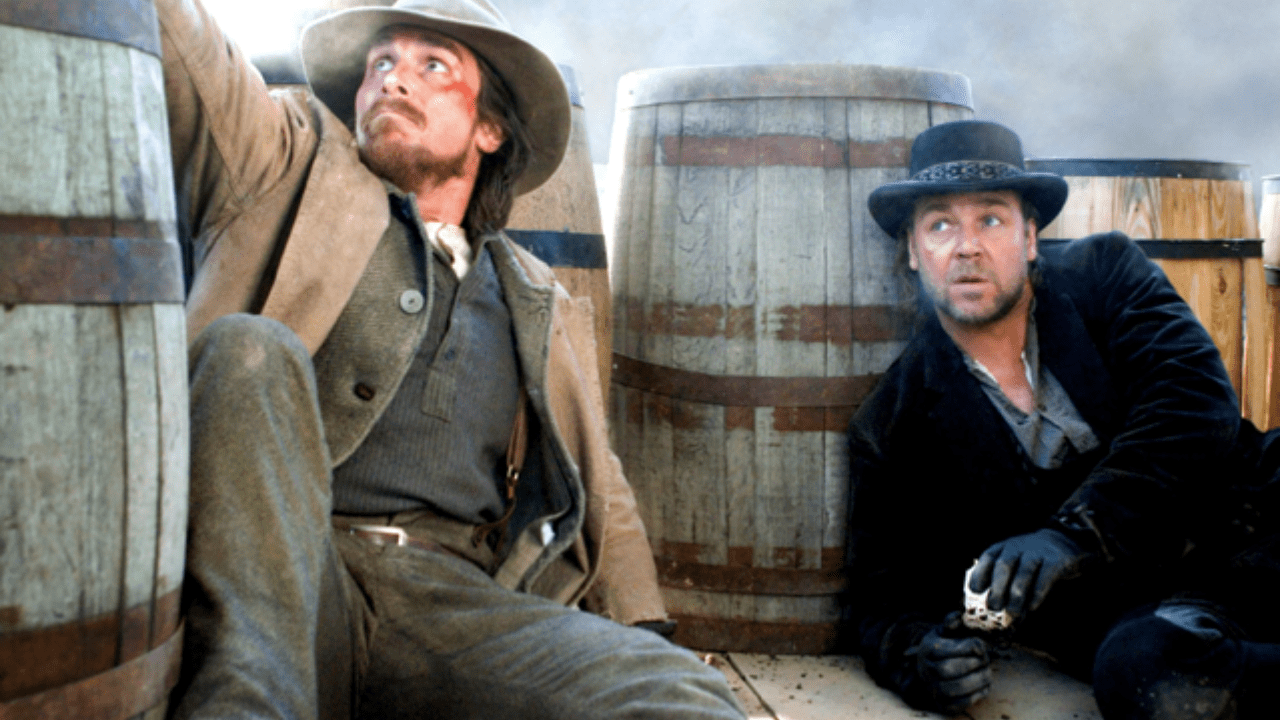
A remake of the 1957 Delmer Daves flick, director James Mangold’s 2007 version surpasses the original at every conceivable level. 3:10 to Yuma follows the exploits of struggling rancher Dan Evans (Christian Bale), who’s in hock to a local banker and on the verge of losing his ranch. When the opportunity presents itself to deliver notorious outlaw Ben Wade (Russell Crowe) into the hands of justice, Evans jumps at the chance, looking to redeem himself in the eyes of his family. While often adept at playing noble heroes, in 3:10 Yuma Bale delivers a vulnerable performance very against type. Dan Evans is a man seeking redemption and desperately trying to regain the respect of his son, William (Logan Lerman). Meanwhile, Crowe excels as the de facto bad guy (replete with a black hat), although his Ben Wade is more nuanced and layered than you might expect. And Ben Foster steals every scene as Wade’s ruthless, bloodthirsty, and psychopathic right-hand man, Charlie Prince. The scene where he threatens to burn a decoy stagecoach with everyone inside if they don’t tell him Wade’s whereabouts still gives me chills. It all culminates in a violent and harrowing climactic act that’s as satisfying as it is unexpected.
#1 Open Range
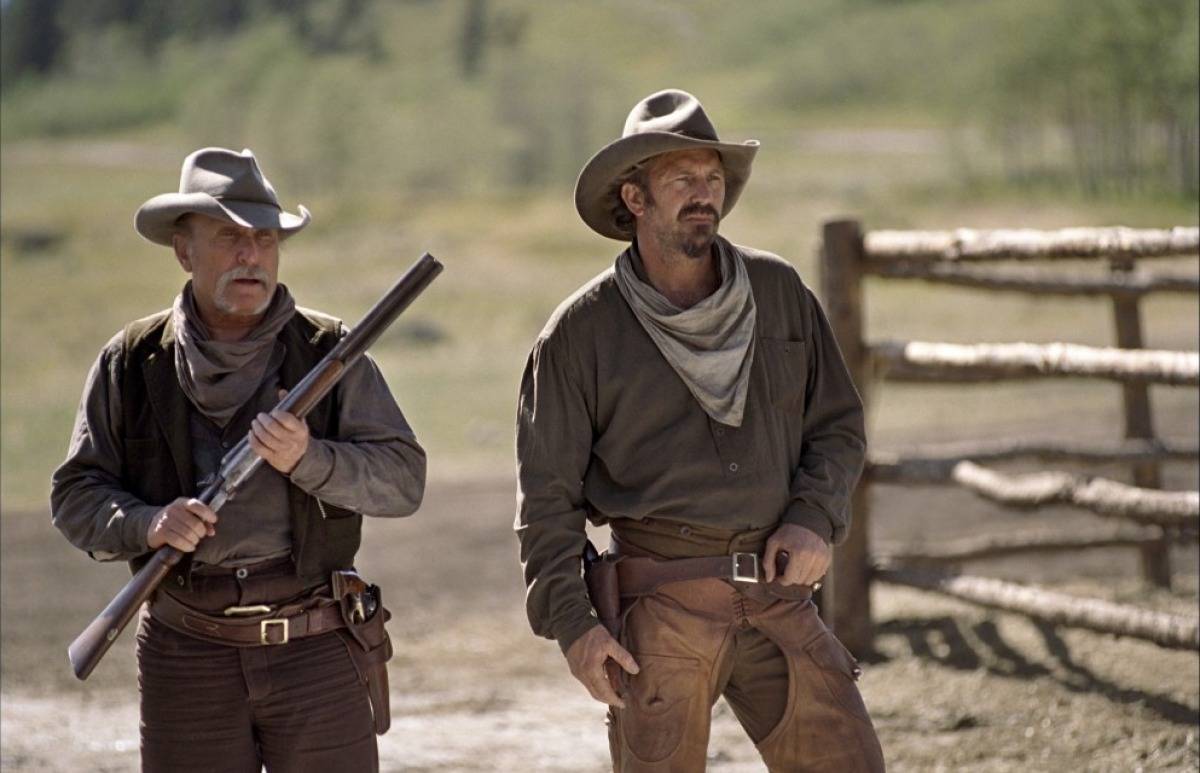
When it comes to Westerns, I think Kevin Costner is about the closest thing we have to a modern-day John Ford or Howard Hawks. The man just intrinsically understands the genre in a way none of his contemporaries do. While the director/actor may never get to complete his Horizon saga, he can at least rest easy knowing he’s made two of the best Westerns of the last fifty years. The first was Dances With Wolves. The second was Open Range. I will never understand the people who call this movie boring. It’s about as compelling as you can get, and what some call boring, I call meticulous and intentional. The story of two free grazers, Boss (Robert Duvall) and Charlie (Costner) are just looking to make their way in this world as cattlemen. Although the pair would rather be left alone, the world won’t let them be when local rancher Denton Baxter (Michael Gambon) kills their friend and threatens their way of life. It’s a classic Western about standing up to bullies and how doing so can sometimes inspire others. The climactic shootout that ranges throughout the entire town is brilliantly staged. Duvall and Costner possess great chemistry, and it’s the quiet moments between the two that are often just as interesting as the more intense and dramatic scenes. Annette Bening also makes for a great love interest as Sue Barlow, the sister of the local doctor. J. Michael Muro’s work behind the camera is nothing short of stunning, showcasing the sweeping vistas of Alberta, which serve as a stand-in for Montana. It’s complemented by a heartfelt score from composer Michael Kamen. Watching Open Range reassures one of the potential and promise of a genre that’s seen better days.
While the Western genre certainly doesn’t have the pervasiveness of yesteryear, these particular examples above prove it’s a category that, when handled correctly, can still prove to be pretty potent.


![Top 10 Creepy Cryptids [by Bea Harper]](https://i0.wp.com/houseofgeekery.com/wp-content/uploads/2016/10/cryptid.jpg?fit=1200%2C675&ssl=1&resize=40%2C40)


