Disclosure Day, The Grey, and the Curse of Ending Expectations

I’ve been thinking a lot about conclusions lately. Endings, by their very nature, can be painful things. There’s a certain amount of grief involved whenever circumstances inevitably run their course. That moment of melancholy when you step back into your house after a particularly memorable vacation. The emotional pain when a long-term romantic relationship ends. The hole that’s left in your heart when someone close to you dies. Even if that person lived a worthwhile and fulfilling life, the hole remains, a gaping wound that may never fully heal and a bitter testament to the fact that entropy is undefeated.
The same holds true with our stories. Whenever we read The Lord of the Rings and Sam returns to Bag End and says, “Well, I’m back,” we hurt because we must leave the Shire. When Lou, Mary, Murray, Sue Ann, and Ted watch their last broadcast together and share a tearful but positive goodbye in The Mary Tyler Moore Show, we hurt because we have to say farewell to our friends. When Red hugs Andy on a Mexican beach in the closing moments of The Shawshank Redemption, we hurt because we’ve gone on the journey with them, and we wish desperately we could share in that embrace.
In the three examples I just cited, they all share a common element, namely, that most critics and fans consider them to be excellent endings. However, there’s another kind of pain involved with endings, the pain of experiencing bad endings. When the British naval officer shows up at the conclusion of Lord of the Flies, and the story ends with a profound and abrupt whimper, we hurt. When the infamous on-screen title card appears in the final episode of Quantum Leap and reveals the line, “Dr. Sam Beckett never returned home,” we feel hurt and cheated by the creative bankruptcy. When the cannon fire interrupts the climactic battle between the Dead Rabbits and the Natives before it even begins in Gangs of New York, we hurt because a master director has been building toward something for two and a half hours that never pays off.
We feel hurt because, as imagination connoisseurs, we care deeply about these characters and these stories.
Yet, I’d also argue there’s a third form of pain when it comes to conclusions. It’s the pain of receiving a different ending than the one we expected. The key difference between this kind of pain and the pain of a poorly executed ending is that the fault lies not in the storytelling, but with us. Buddhists refer to this as “wanting mind,” or a craving that creates suffering by demanding reality match a mental script, rather than accepting what is true. Instead of meeting a story’s ending on its own terms, we insist that it meets us on ours.
I call this the Curse of Ending Expectations.

Let me give you a prime example. Although the pattern has slightly shifted in the last two decades, January primarily serves as the dumping ground for less-than-stellar film releases. If a studio knows a movie reeks worse than the Bog of Eternal Stench after a meal of week-old Indian takeout, you can rest assured that that movie is heading to the January landfill. Stuffed shirt Harvard business studio execs know that just like every woman they’ve ever been with, they won’t get anyone to come.
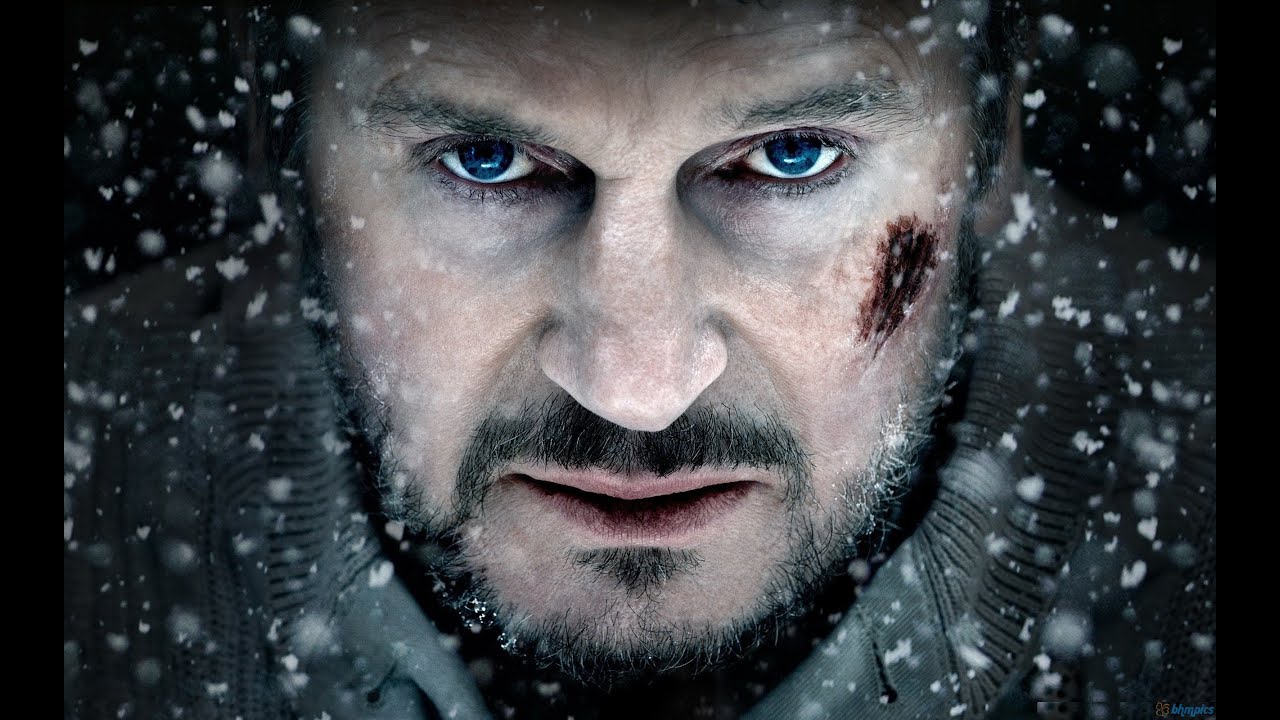
Maybe that’s why I was so surprised when I walked into my local Cineplex on January 27, 2012, and sat down to watch The Grey. I was astonished. For almost two hours, I was thoroughly riveted as Liam Neeson’s John Ottway and his band of brothers fought the cold Alaskan elements in an ultimately fruitless attempt at survival. Joe Carnahan’s masterful script and direction, Marc Streitenfeld’s haunting score, and Masanobu Takayanagi’s impeccable cinematography all contributed to a scintillating story about grief, regret, man vs nature, the complexity of faith, what it means to be alive, and how we often fight to the death to secure that one more moment of precious life. In the closing moments when Ottway tapes shards of liquor bottles to his knuckles, recites his father’s poem, and prepares to do battle with an alpha wolf, I knew in my bones I’d been on an existential journey. When the close-up shows John opening his eyes and the screen cuts to black, all I could think was, “perfection.” I didn’t need to see the fight because the story that had come before already let me know that the outcome was decided. Nature always wins. As I said previously, entropy is inevitable. The Grey is a film I still consider a masterpiece.
Yet I couldn’t help but notice as the screen cut to black, a collective groan from at least a dozen people in the movie theater. I didn’t know why. As I was walking out, I heard a gentleman loudly proclaim, “I waited for two hours to watch Liam Neeson cock punch a wolf, and it didn’t happen. What a fucking let down.” I was perplexed. Did this gentleman and other moviegoers not get it? Did they not see what I saw? They went through that entire journey, and their only takeaway was that they didn’t get to see the dude from Taken fist-fight a wolf?
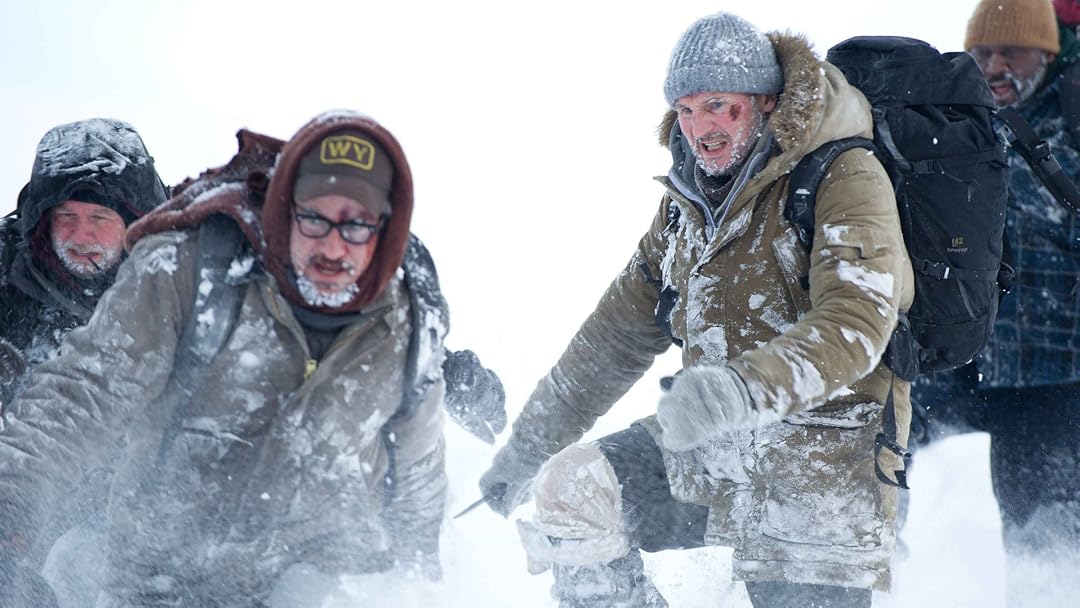
As I drove home, the reason finally dawned on me. Those people had “wanting mind.” Rather than meeting the movie on its own terms, they got caught up in what they wanted to happen. In other words, they were cursed by their own ending expectations. Whenever a conclusion doesn’t live up to what you want to happen, how can you ever be anything but disappointed?
Which brings me to Disclosure Day.
Now I know people have numerous issues with Disclosure Day, not the least of which being the script, inherent logic problems, and the absence of certain pieces of technology. (Hey man, when people say “Where are the drones? Where are the helicopters?” I get it. I see you.) Yet in spite of those issues, I thoroughly loved the film. It was a delight just to sit back and watch masters like Steven Spielberg, Janusz Kaminski, and John Williams work. I approached the film with the attitude that the number of times Spielberg is going to be able to do this is finite. In other words, someday it’s going to end. Everyone can bake a cake, but not everyone can bake a cake like Duff Goldman. Similarly, every director can do a oner but not everyone can do a oner like Spielberg. And the number of Spielberg oners we get to experience is running out.
But I digress.
What I really want to talk about is the ending of Disclosure Day.
I couldn’t help but marvel as the blindsided anchorwoman (played by former real-life news anchor Courtney Grace) attempts to narrate the barrage of footage proving that extra-terrestrial life is real. We watch as she experiences awe and wonder in what she sees. In that moment, her world is forever altered, and her place and the human race’s place in the universe undergo a radical transformation. She realizes that all of us are members of a galactic community. She is all of us; she is the audience, and at that moment, I couldn’t help but feel a profound sense of empathy. I teared up just as she did.
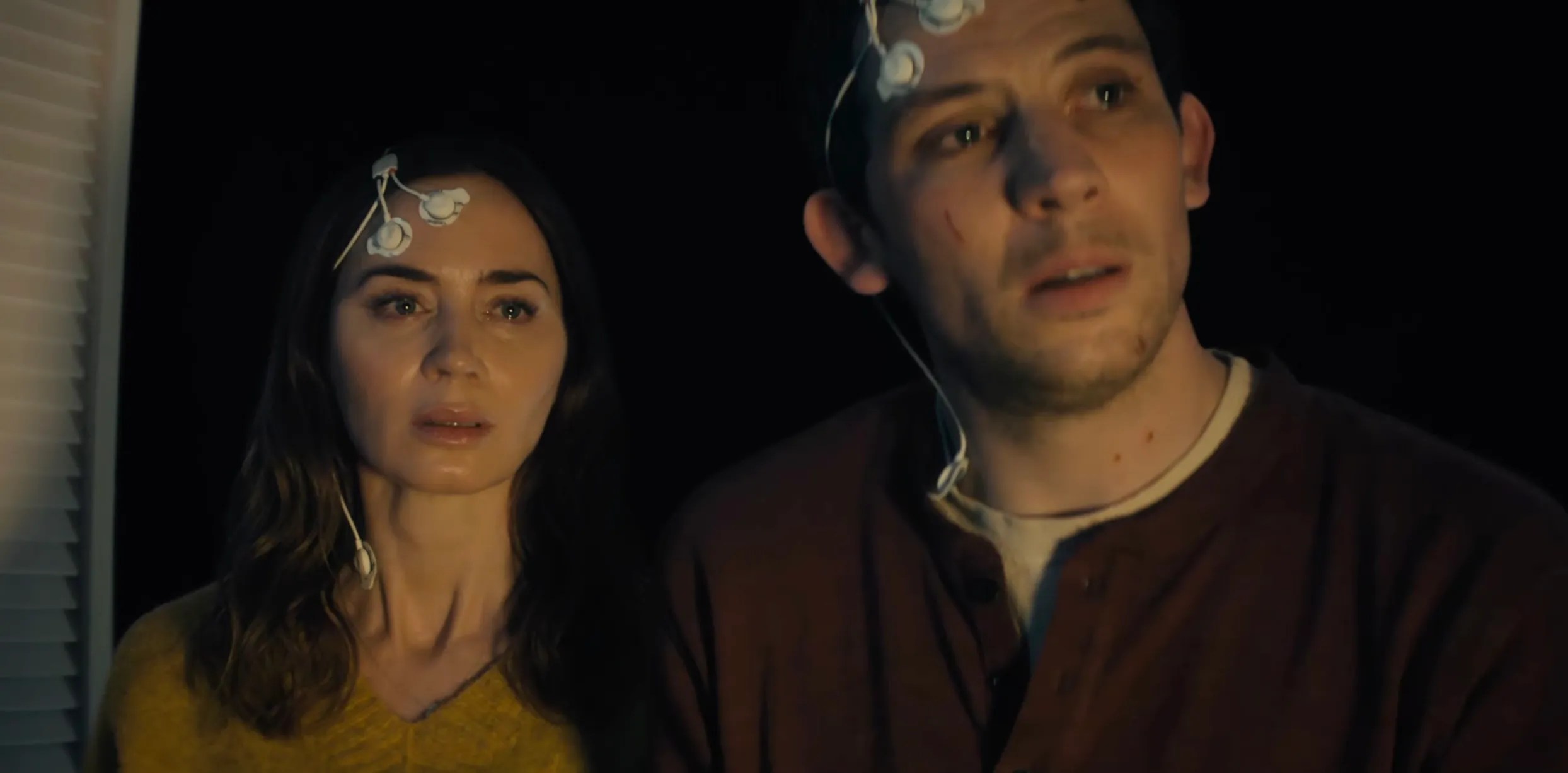
Then we watch in amazement as an alien is wheeled out and delivers a message to Daniel, who then relays it to Margaret. She begins with the simple imploration to “listen.” Then, just like The Grey, the screen cuts to black.
And, just like The Grey, people had deep-seeded issues with the ending. Again, we see the Curse of Ending Expectations played out. The masses expressed frustration at the fact that we didn’t receive some deep, profound message from the elderly alien. Moreover, I saw multiple people, both critics and regular moviegoers, cry often and loudly that Disclosure Day’s message of empathy and the final entreaty to “listen” were too simplistic. That somehow empathy (incidentally, not a made-up word by the left but coming from the ancient Greek word empatheia) and active listening were philosophies fit for five-year-olds. Are they? Seems to me that some of the most profound life lessons I ever learned were as a youngin’ at my Mother’s knee. Furthermore, the fact that I need only to go to reuters.com and see a distinct lack of empathy and active listening worldwide suggests that we aren’t following the most basic of teachings we learned as children. What good is a profound and complex message if we as humans haven’t even mastered the capacity to listen and feel deeply with our fellow human beings? In that light, the final message of Disclosure Day isn’t childishly simplistic but elegant in its simplicity.
Perhaps my feelings on the ending of Disclosure Day are best summed up by this X post from film fan Jamie Castro, who writes, “At the end of DISCLOSURE DAY, Steven Spielberg denies us the very thing we have been waiting the entire film to hear. Yet the cut to black is not a source of frustration; it is the true event. When Margaret says, “Listen,” the distance between fiction and the viewer vanishes. Humanity agrees to listen to something capable of changing everything. We do, too. The brilliance of the ending lies in realizing that the message itself is irrelevant. What mattered was bringing us to the point where we were willing to hear it.”
Moreover, maybe what matters when it comes to the Curse of Ending Expectations is the willingness to meet a movie on its own terms. Maybe, in the end, that’s the only way to break it.


![Top 10 Creepy Cryptids [by Bea Harper]](https://i0.wp.com/houseofgeekery.com/wp-content/uploads/2016/10/cryptid.jpg?fit=1200%2C675&ssl=1&resize=40%2C40)


