Movie Review: ‘The Brutalist’
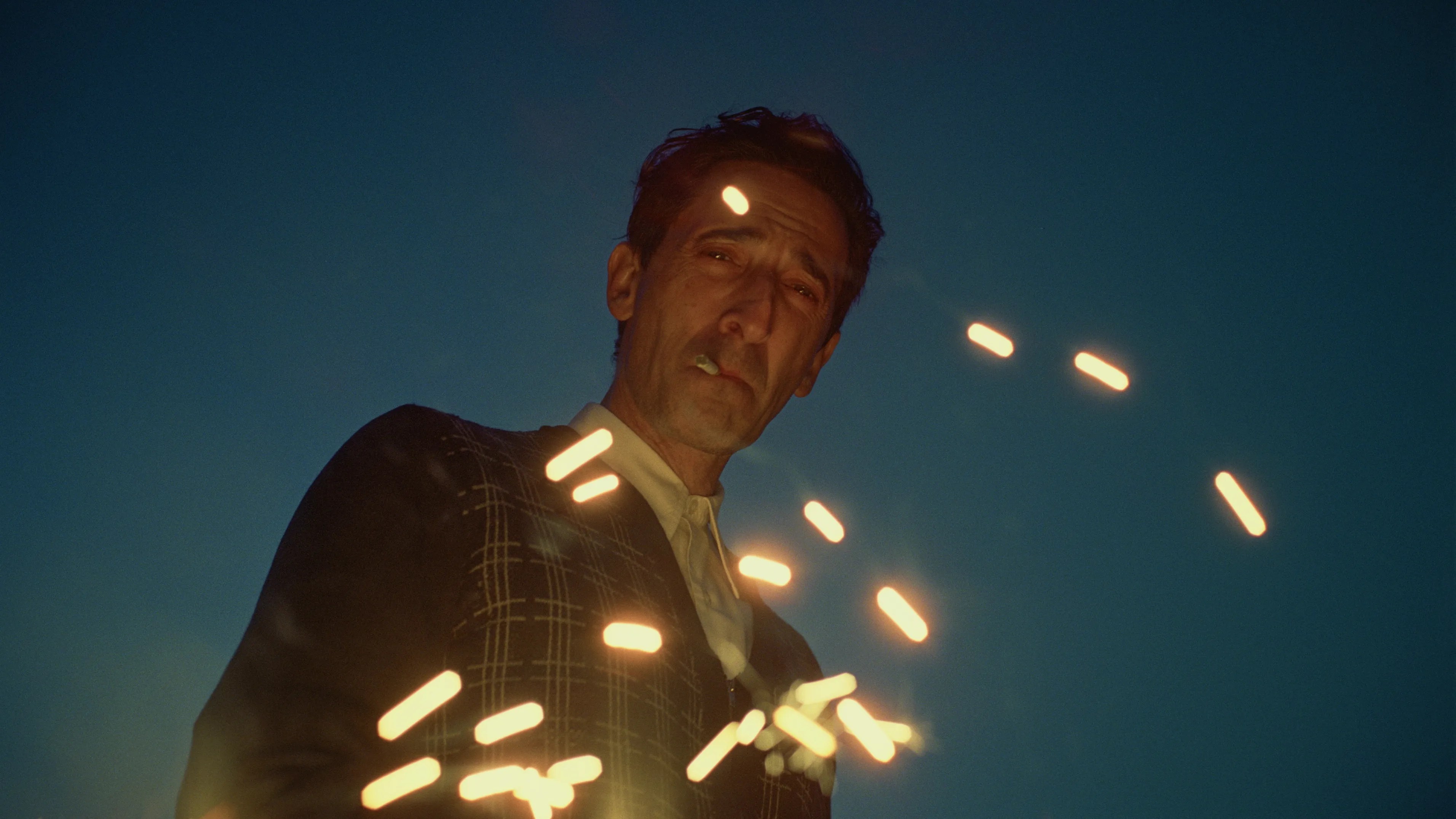
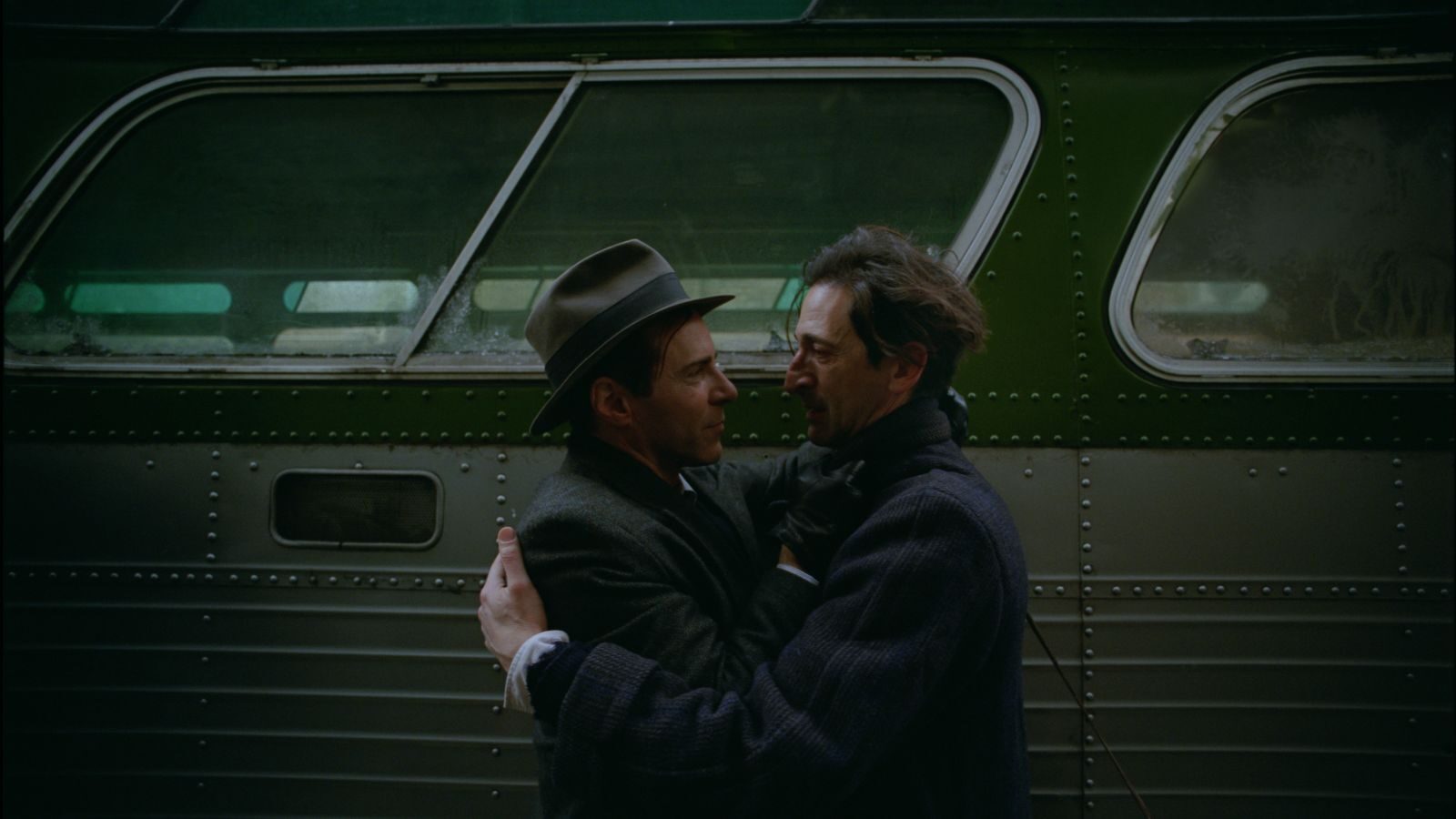
Plot: After surviving Buchenwald concentration camp during WWII, Hungarian-Jewish architect Laszlo Toth (Adrien Brody) immigrates to America hoping to find a fresh start. While working at his cousin Attila’s (Alessandro Nivola) furniture store, Laszlo is hired to renovate a library for wealthy industrialist Harrison Van Buren (Guy Pearce). Initially furious at Laszlo’s radical changes, Van Buren eventually comes to appreciate Laszlo’s genius and commissions him to build a community center in honor of his late mother. Although up to the task, Laszlo struggles to bring his artistic vision to fruition while dealing with critics, his supportive but physically disabled wife Erzsebet (Felicity Jones), and a severe heroin addiction.
Review: Every fourth Thursday in November, millions of my fellow Americans gather around the table to celebrate in the time honored tradition of Thanksgiving. From cranberry sauce to stuffing, from turkey to mashed potatoes, from three bean casserole to pumpkin pie, we indulge in arguably the largest feast of the year. As the credits rolled on director Brady Corbet’s The Brutalist, it occurred to me that I’d just witnessed the cinematic equivalent of a large Thanksgiving meal. There was a lot to process, yet rather than slip tryptophan induced nap, I found myself unable to turn off my brain.
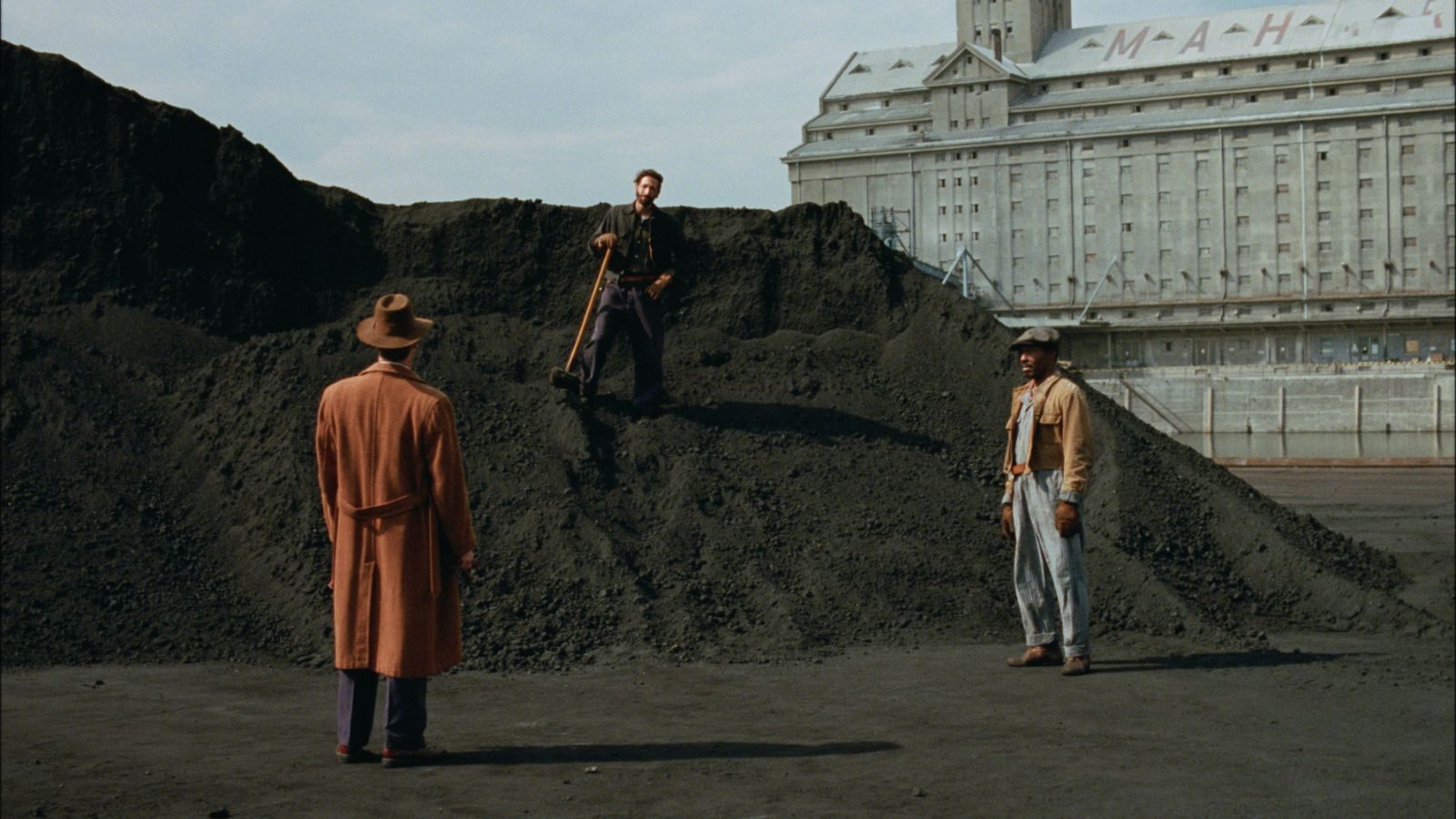
Powerful, moving, heavy in tone, and epic in scope, Brady Corbet’s The Brutalist is the type of aspirational film that harkens back to the dynamic 1970s cinematic undertakings of Coppola and Scorsese. In fact The Brutalist is exactly the type of movie either of those two legendary directors would have attempted during that bygone innovative film decade. A whopping 202 minutes in length, The Brutalist earns every single minute of its runtime. From the opening scenes of Laszlo emerging from a darkened immigrant ship on 1947 Ellis Island to a retrospective on his life’s work in 1980 Venice, I was fully captivated.
Many will consider The Brutalist as nothing more than Oscar bait. I couldn’t disagree more. In fact I find it laughable that critics have lambasted Corbet for trying for greatness. How ludicrous that society increasingly finds any attempt to be aspirational as nothing less than pretentious. This is art at its highest form. In a film landscape where every movie nowadays feels like it is ripped from the venture capitalist playbook, it is a breath of fresh air to see an artist like Corbet realize his ultimate vision.
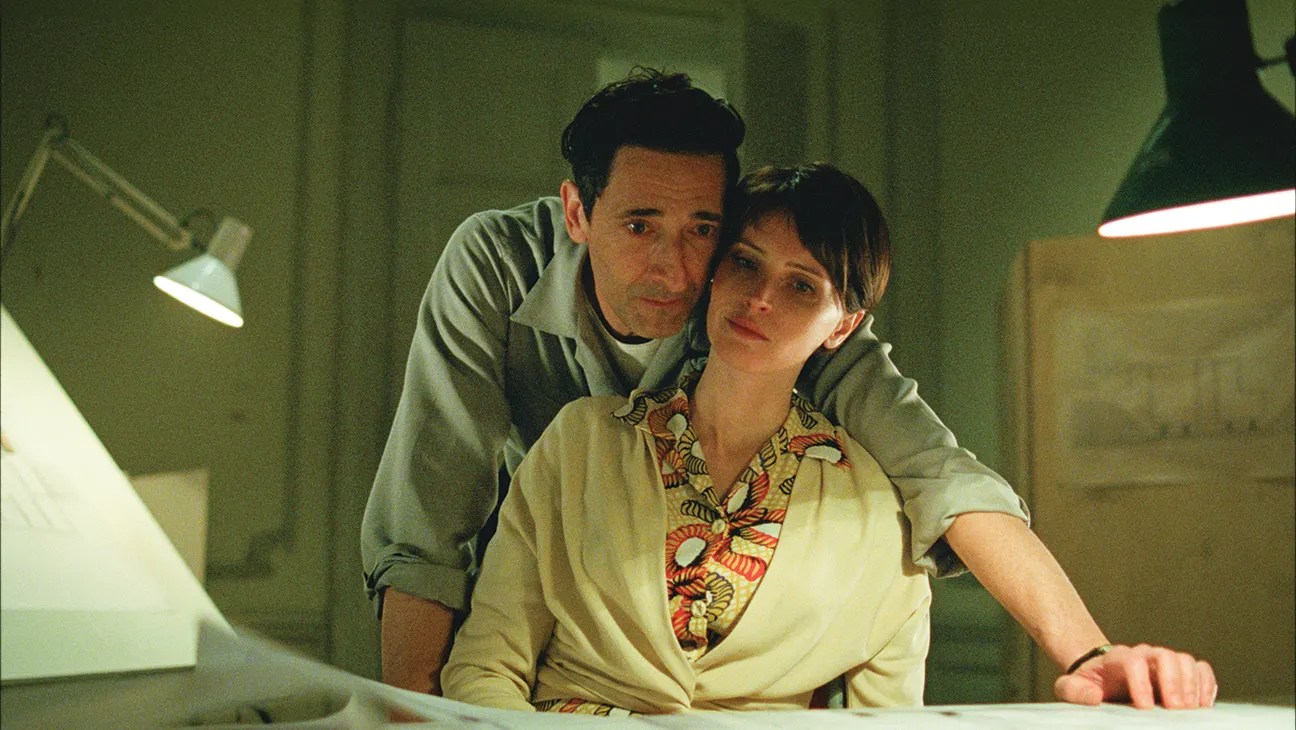
Cinematographer Lol Crawley does everything in his power to capture Corbet’s vision. Obviously the upside down shot of the Statue of Liberty is something we’ve seen in the trailers and is one of The Brutalist‘s opening shots. It’s nonetheless just as magnificent on the big screen. Crawley makes Corbet’s $10 million film look like a movie with ten times the budget. Whether it is the captivating beauty of an Italian marble mine, the assemblage of the Van Buren institute, or the intimate and heartbreaking moments between Laszlo and Erzsebet, Crawley’s work is one for the ages. It’s punctuated by a dynamic and searing score from Daniel Blumberg.
Incidentally, the upside down shot of the Statue of Liberty sets the tone for the entire movie. Screenwriters Corbet and Mona Fastvold’s film is a searing and critical examination of the American Dream. It’s an exploration of what it means to be an artist and to struggle for your vision. The Brutalist explicitly demonstrates how art and commerce interact and how artists (and people in general) are subject to the whims of the wealthy. It’s also a celebration of how art (specifically architecture) can be cathartic and instrumental in processing trauma. Additionally, it’s an immigrant story that explores how much you are willing to give up of your heritage and if relinquishing too much of where you come from fundamentally changes you as a person. Yet despite all these heavy themes, Corbet’s movie never comes off didactic or sentimental. The term “moving” gets thrown around a lot but I can’t think of a more fitting word to describe The Brutalist.
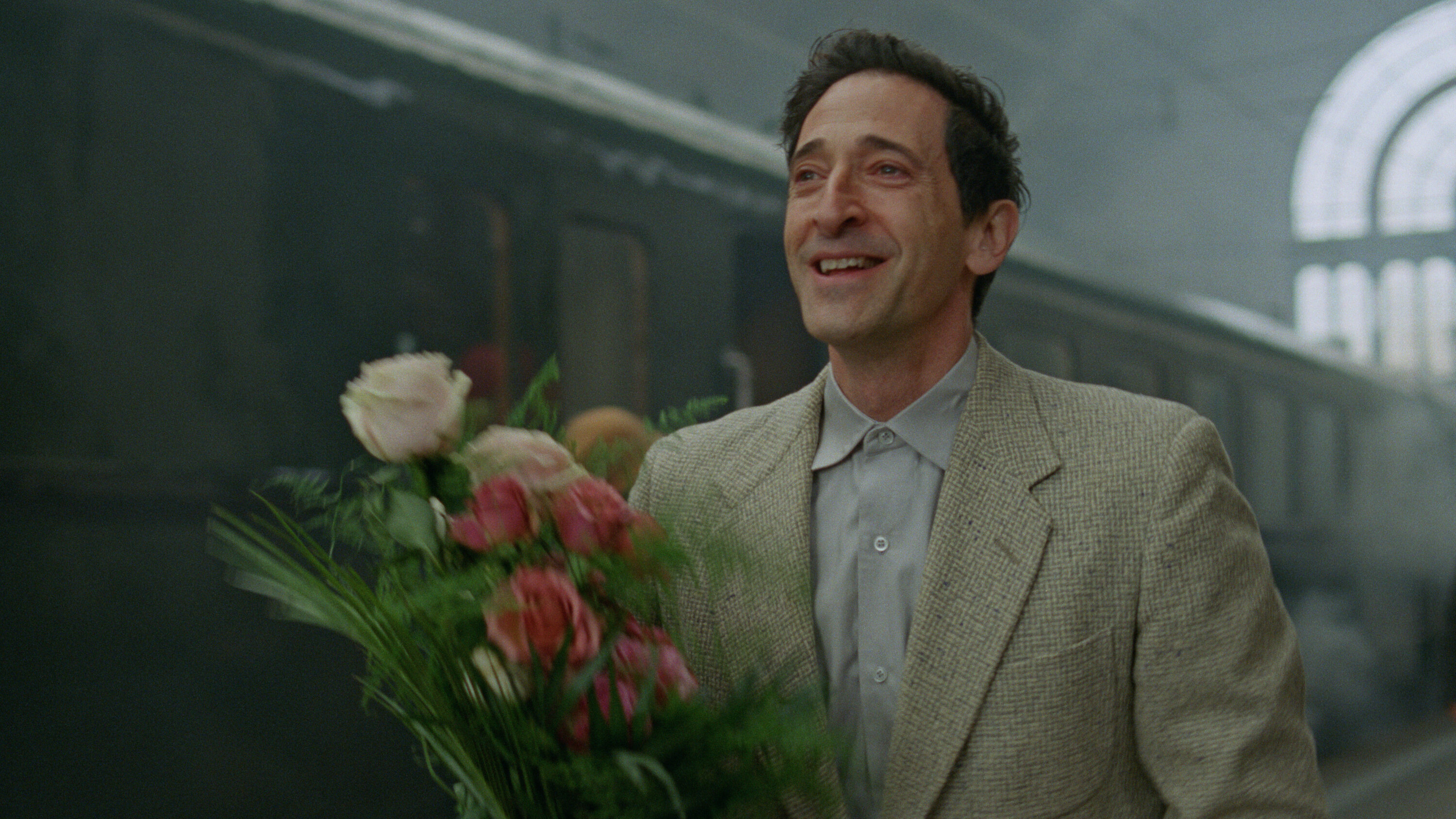
Not surprisingly, the performances in The Brutalist are top notch with Adrien Brody leading the way as Laszlo. It’s easily the most nuanced and layered character Brody has ever played. My feelings about Laszlo ran the gamut throughout The Brutalist. At times I felt great empathy and compassion for the things he endures. Other times disgust at his horrific drug habit and his occasional heartlessness toward his wife Erzsebet. Yet I also felt invigorated and triumphant to see Laszlo’s art and architecture come to life. Ultimately, Laszlo is the epitome of how human beings are complex, complicated creatures capable of great artistry, compassion, and cruelty. It’s Brody’s best performance since The Pianist and one that could easily net him his second Oscar.
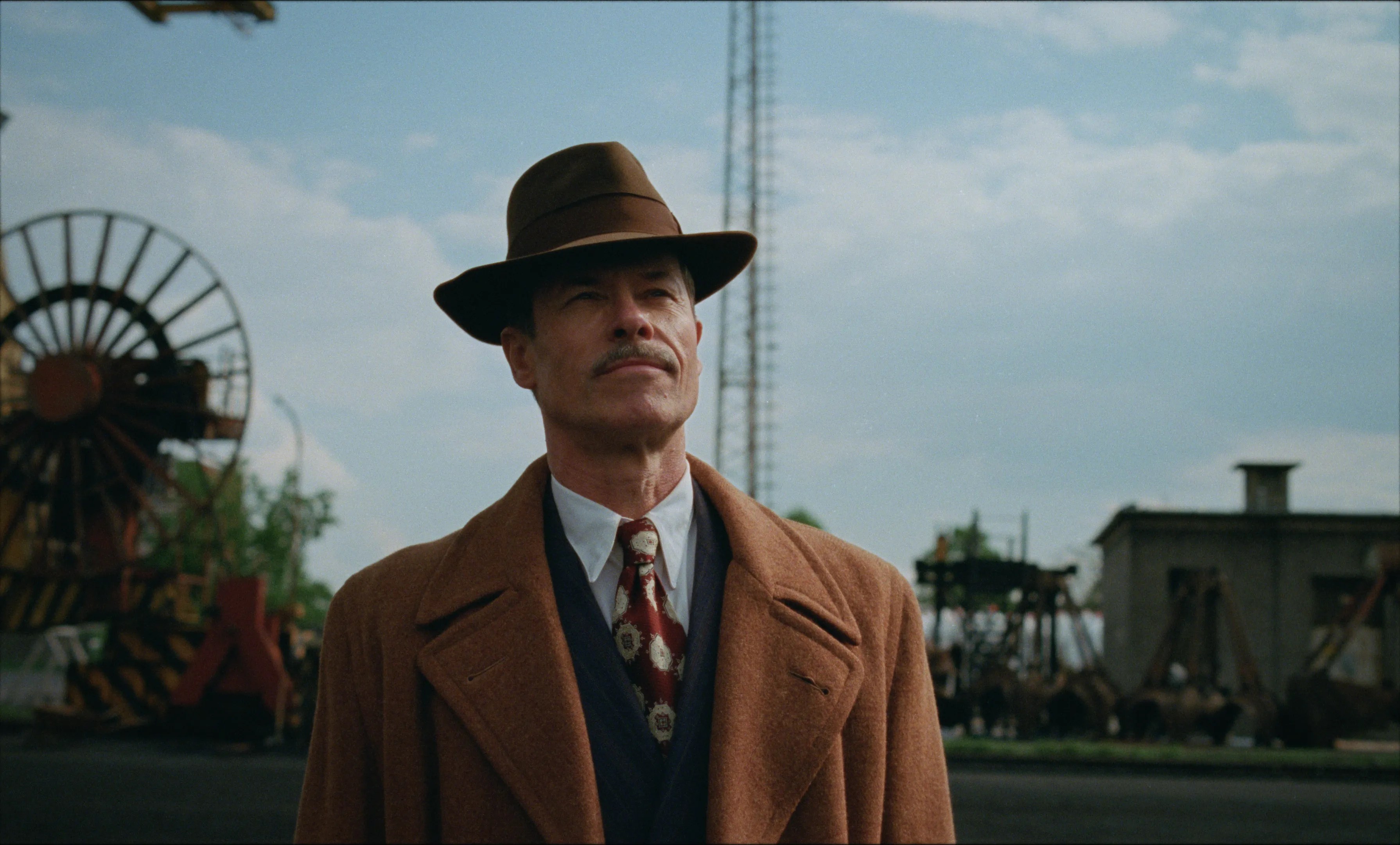
The supporting cast is just as strong with Guy Pearce’s Harrison a character you grow to loathe. He’s a man that appreciates good art and artists insomuch as they are useful to him. Everything seems transactional, everyone has a price, and wealth is an excuse to ridicule and look down upon anyone else as lesser mortals. Harrison’s relationship with Laszlo is at the crux of The Brutalist and a horrific scene late in the film serves as a brutal reminder of how the wealthy view the societal order of things.
Felicity Jones also stuns as Erzsebet despite not showing up until the second half of the movie. Confined to a wheelchair due to osteoporosis from the concentration camps, her physical limitations belie a fiery spirit. Educated and elegant, she nevertheless has a hard time adapting to life in America believing that those in power will always see her and others like her as second class citizens. Despite being a devoted wife, Erzsebet finds it hard to rise above the traumatic damage that the Holocaust has done to Laszlo and consequently their marriage. Again it isn’t until a near catastrophic experience that the two find a possible pathway into the light. Jones is also at the center of arguably the best scene in The Brutalist when she confronts Harrison at a dinner party.
I can’t overstate the greatness of The Brutalist enough. Brady Corbet’s film is a true testament to the power of cinema as a artform, and will undoubtedly be taught at film schools for years to come.
My rating system:
1 God Awful Blind Yourself With Acid Bad
2 Straight Garbage
3 Bad
4 Sub Par
5 Average
6 Ok
7 Good
8 Great
9 Excellent
10 A Must See
Masterpiece
The Brutalist: 10/10


![Top 10 Creepy Cryptids [by Bea Harper]](https://i0.wp.com/houseofgeekery.com/wp-content/uploads/2016/10/cryptid.jpg?fit=1200%2C675&ssl=1&resize=40%2C40)


