Movie Review: ’28 Years Later’
Director: Danny Boyle
Cast: Jodie Comer, Aaron Taylor-Johnson, Ralph Fiennes, Alfie Williams, Jack O’Connell
Plot: 28 years after the Rage Virus ended modern civilisation on the island of England, small groups of survivors manage to isolate themselves the infected. On a small island connected to the mainland by a causeway, twelve year-old Spike is about to enter the world for the first time.

Review: Of all the horror franchises we expected to see resurrected this year, this was not one of them. Least of all, seeing Danny Boyle and Alex Garland return to nightmare they created more than two decades ago. When we last saw the Rage Virus, it was spreading its wings and travelling to Paris. This thread has been dropped, instead the world has completely given up on the UK and left them to fend for themselves. A second generation of survivors are now growing up in a world detached from the comforts of modernity.
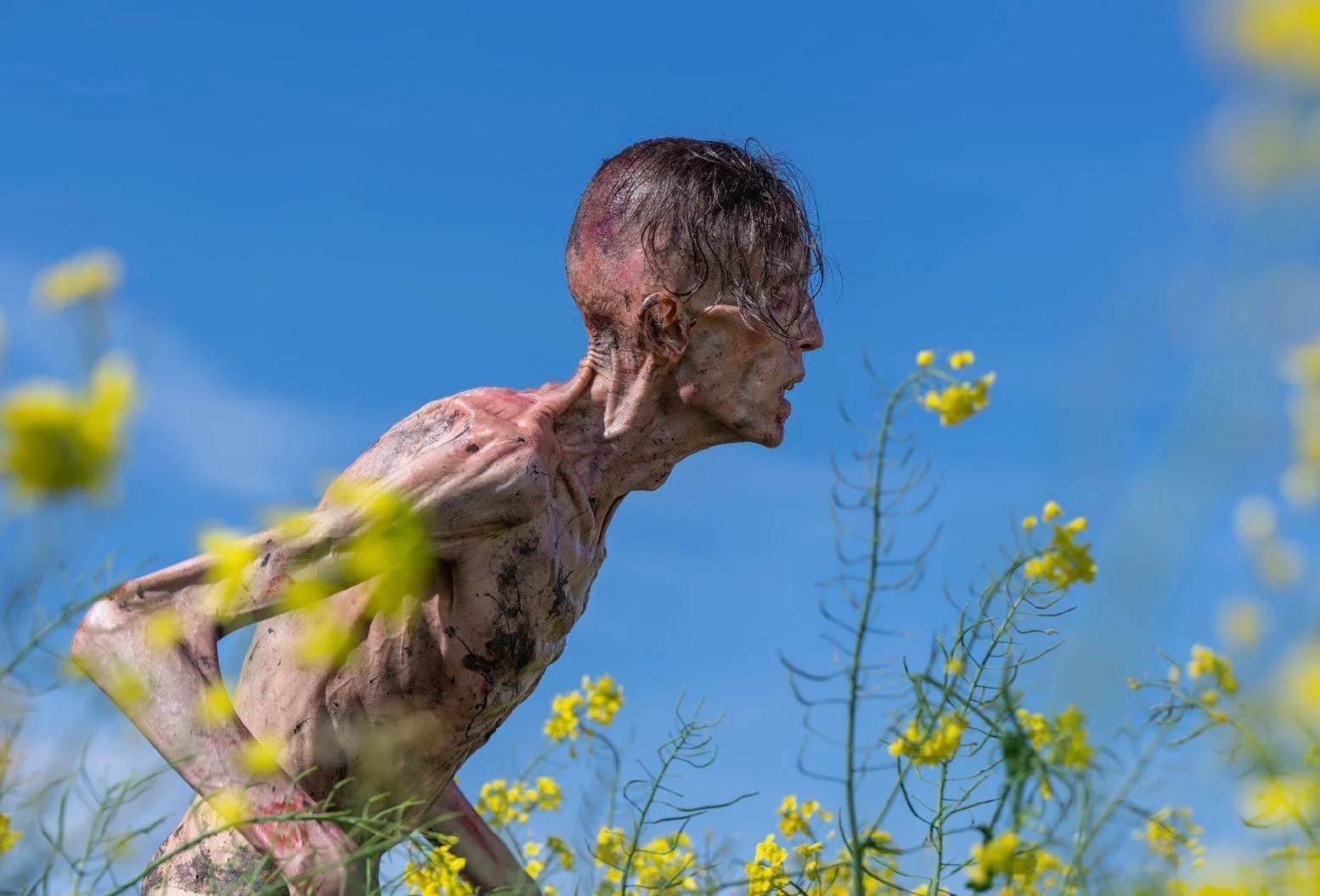
Spike (Williams) is one such child. As a 12 year old, he’s only known his small, carefully controlled town off the coast. Feeling that he’s ready, his father Jamie (Taylor-Johnson) takes him across the causeway to the mainland for the first time. In essence, this is to give the young man his first chance to face the mutated infected, and kill one for the first time. As the years have passed, the infected have changed with some becoming bloated, slow moving blobs and others becoming largely muscled and unnaturally difficult to kill Alphas. This adventure turns sour pretty quick, with Spike and Jamie struggling to make it home again.

The second half of the movie sees Spike defying his father and their community to venture out again, this time with this unwell and unpredictable mother (Comer). Spike has heard of a reputably insane doctor on the mainland in the hope that he can provide a cure. The dangerous journey provides challenges for Spike that he is not prepared for, and outlooks on life that helps him accept the world.
28 Years Later may not feel like a logical continuation from the the first films, and not just because of the extended time jump. We’re not longer looking at a world that has just fallen, or a world on the rebuild, but one that has been entirely abandoned. This is thrown into sharp relief when they encounter a Swedish soldier whose life is completely unrecognisable to Spike. One will casually talk about delivery drivers for online orders, a sentence that sounds like gibberish to the young survivor. This is not a movie that sets out to explain the world though, but to discuss the philosophy of life in a post-society world.
Boyle and Garland have worked to fit this aesthetic of this movie into the style established by the first film, which stands as a solid example of Boyle’s personal approach. It’s something of a nostalgic jolt to see a movie made in this style again, as it was influential in the early 2000s. The handheld look of 28 Days Later was oft copied, but one feature that made it feel so fresh at the time was the newer, smaller digital cameras. That approach has continued with a large portion of this entry being filmed on an iPhone with attachments, and it appears that some grain has been added at times to connect the films together. The early sequences also include the inclusion of stock footage from medieval set films, which sometimes feels like an overstep.
What holds us back from heaping unqualified praise on Boyle’s return to the franchise is the feeling that we’ve only seen half the story. There is a very open ending that, on its own, feels very out of place. Such an outrageous appearance of new characters in the closing moments would be a disaster, but knowing that the second half is only a few months away keeps us in a holding pattern.
Until then, a tense and upsetting experience that we want to see the rest of.
Rating: EIGHT out of TEN


![Top 10 Creepy Cryptids [by Bea Harper]](https://i0.wp.com/houseofgeekery.com/wp-content/uploads/2016/10/cryptid.jpg?fit=1200%2C675&ssl=1&resize=40%2C40)


