Movie Review: ’28 Years Later’ (Second Opinion)

Plot: 28 years after the initial outbreak of the Rage Virus, the United Kingdom remains in indefinite quarantine. The small island of Lindisfarne, connected by a causeway to the mainland, houses a survivor community. When scavenger Jamie (Aaron Taylor-Johnson) sojourns to the mainland with his son Spike (Alfie Williams) for a coming-of-age ritual, the duo get more than they bargained for. Upon returning to the community, Spike learns of a doctor named Kelson (Ralph Fiennes) on the mainland who may be able to save his ailing mother Isla (Jodie Comer). But can Spike and Isla survive in a world gone mad long enough to find a cure?
Review: As a cinephile, I’m constantly on the lookout for what I call “earworm movies.” Much like the mind controlling parasitic Ceti eels from Wrath of Khan, it’s a film that burrows deeply into your brain and consumes your thoughts. However, rather than controlling your actions like a mindless automaton, an earworm movie compels you to think deeply about the film and its implications both personally and globally.
28 Years Later, falls squarely into the earworm category. Since watching Oscar winning director Danny Boyle’s sublime work last Thursday, I have not been able to stop thinking about it. Not only is it one of the all-time great horror sequels, it is a monumental achievement both technically and in the themes it explores. Concurrently, 28 Years Later manages to be a uniquely British film that simultaneously speaks to universal human experiences while addressing the insanity of the current world. In the hands of a lesser director or a lesser screenwriter, this task would likely be untenable. However, when you have a supreme talent like Boyle (Slumdog Millionaire, Trainspotting) at the helm, and another in Alex Garland (Ex Machina, Annihilation) penning the script, that task becomes much more attainable.

There are a myriad of places I could begin when it comes to 28 Years Later, but let’s start with the most obvious: the visuals. Danny Boyle’s creative decisions coupled with the brilliant cinematography of Anthony Dod Mantle, combine for something truly transcendent. The original 28 Days Later was filmed using Canon XL-1 digital camcorders to great stylistic effect. 28 Years Later uses similar innovative techniques with modern equipment. However, whereas 28 Days Later showcases the apocalyptic urban decay of London in a very recent post-9/11 world, 28 Years Later switches to a more rural setting that celebrates Britain’s environmental beauty. Mantle’s sweeping vistas of the English countryside, including the famous Sycamore Gap’s tree, show a world free of agricultural calamity. It contrasts perfectly with a countryside rife with rampaging infected. It also dovetails perfectly into the equipment Boyle employed, namely iPhone 15 Pro Maxes, allowing multiple angles and easier access to rural landscapes that limited environmental impact. Shooting in the 2:76:1 aspect ratio also likens it to Ultra Panavision 70 which heightens the tension and encapsulates the unpredictability of the infected. Moreover, since Spike is a child and the de facto lead, numerous shots are at lower levels to emphasize a child’s perspective. Multiple uses of the “bullet time” effect were also extremely resonant.
Speaking of Spike, I cannot stress how tremendous a performance Alfie Williams delivers in 28 Years Later. It’s the most nuanced, intricate, and heartrending performance by a child actor since Haley Joel Osment in The Sixth Sense. In many ways, Boyle’s film is a coming-of-age tale where 12 year old Spike is forced to deal with the harsh realities of a world gone mad. He’s exposed to violence and forced to deal with the act of killing way too early even while his father Jamie (Aaron Taylor-Johnson) treats it like a game, saying he’ll get used to it. Yet the acts of violence are boiled into Spike’s brain as emphasized by the use of the “bullet time” effect I mentioned earlier. What rips your heart out is that Jamie’s words are true, and the more Spike kills, the less the “bullet effect” is used until eventually it stops.
However, despite the harshness and cruelty of the world around him, Spike approaches life with bravery, determination, curiosity, and empathy. Whether it’s standing up to his cheating and hypocritical father Jamie, or sharing a goofy moment with his mother Isla, we are fully invested in Spike’s journey. We want him to succeed and find a cure for his mother and establish his own place in the world. However, Spike’s ultimate arc also reminds us that the result of your efforts aren’t as important as making the attempt. Great genre fiction (and by extension great horror) is always talking about something else. If nothing else, 28 Years Later is about how we respond to hopelessness and helplessness in a world that’s descended into madness. How do we respond when the world is controlled and run by emotionally volatile rage monsters that have forsaken logic and rational thought? (Sound at all vaguely familiar?) Making the attempt to be a decent human being when you might not garner a net positive result is the only true antidote to apathy. The action is the point. It’s deliberate but not pedantic social commentary about what’s going on right now in 2025 and it really resonated with me.

As profound as Williams’ performance is as Spike, Jodie Comer’s role as Isla is just as powerful. It’s a master class in acting as we watch Isla vacillate between relatively coherent and lucid to utterly confused and disoriented. I just mentioned how one of the key messages of 28 Years Later addresses how we deal with hopelessness and helplessness. That applies at the micro level as well as the macro. Isla’s plight is a microcosm of Boyle’s message. She’s suffering from a mysterious illness that Spike feels hopeless and helpless to address. Anyone who’s ever watched a loved one succumb to Alzheimer’s Disease or a terminal illness (I’ve experienced both), understands this feeling. Yet Spike refuses and refutes apathy. He bravely chooses to take action and seek out help on the mainland.
Which brings me to Spike’s fire in the darkness, Dr. Ian Kelson, played brilliantly by Ralph Fiennes. A former physician who’s chosen to live among the infected, Kelson proves to be the most interesting and thought provoking character in the film. Typically I hate using the phrase “subverts expectations” but it aptly applies to Kelson’s character. The trailers, TV spots, and indeed the first third of 28 Years Later sets audiences up to think that Kelson is some kind of deranged lunatic. Now I won’t go as far as to say that Kelson’s sanity is on par with say my own primary care physician (how could it be considering the circumstances), but in a world that’s several scones short of a dozen, he may be the most rational baker in the kitchen. Kelson chooses to live among the abandoned and forgotten, to be a living testament and chronicler of lives lived. Kelson has more reverence and respect for human life than anyone on Lindisfarne. Indeed as Spike’s welcome home party demonstrates, they celebrate and welcome violence. “Memento Mori” isn’t just some esoteric Stoic philosophy for Kelson, it’s a way of life. Once you understand Kelson’s perspective, it transforms his Bone Temple from something horrific and obscene to a testament and celebration of human life.

As much as I adored 28 Years Later, I’m equally befuddled by how polarizing this movie has been for vast swaths of moviegoers. People have complained that 28 Years Later isn’t scary enough and that there’s not enough focus on the zombies. Not only do I find this ridiculous (the footrace on the causeway and the scene on the abandoned train toward the end of the film are worth the price of admission alone), it’s like people forgot that the original film is more about people killing other people rather than the infected. The same is true in 28 Years Later. Additionally, critics have puzzled at the purpose Swedish NATO soldier Erik (Edvin Ryding) and the mysterious tracksuit wearing villain Sir Jimmy Crystal (Jack O’Connell), finding the inclusion of both characters confusing.
Listen, how you approach the exercise of watching films can be different based on the circumstances. Sometimes you just want to chill out and watch Reptilicus or Frankenstein Must Be Destroyed. In other instances you may need to exercise some intellectual curiosity. If audiences aren’t interested in learning about Brexit or Jimmy Saville, well, that’s on you my dudes. Personally, I find it exponentially more rewarding and enriching when a film forces me outside of my comfort zone to learn something I wasn’t previously aware of. But as with many things in life, your mileage may vary.
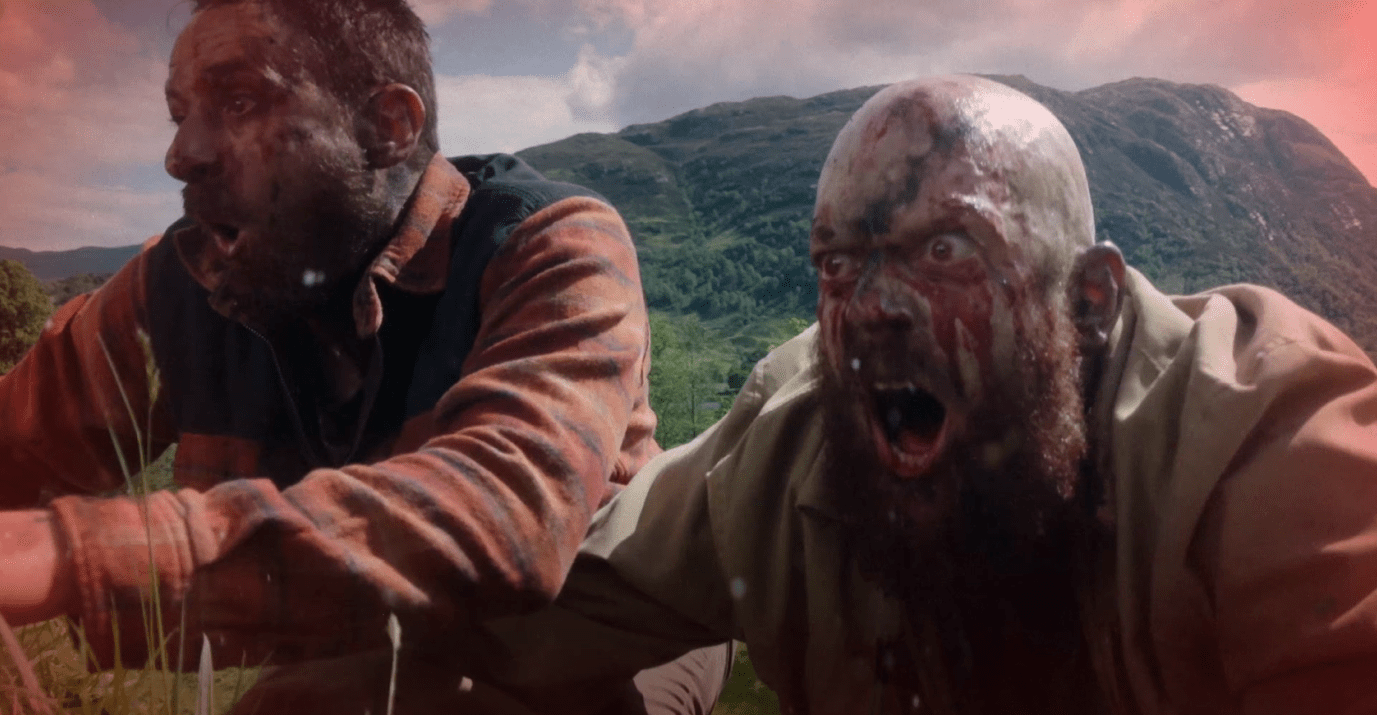
Regardless, 28 Years Later proves to be a monumental achievement for Danny Boyle and a worthy addition to the lexicon of great horror films. Like the well endowed and titular Alpha of the film, you’ll want to sprint to your nearest theater and check this one out on the biggest possible screen.
My rating system:
1 God Awful Blind Yourself With Acid Bad
2 Straight Garbage
3 Bad
4 Sub Par
5 Average
6 Ok
7 Good
8 Great
9 Excellent
10 A Must See
Masterpiece
28 Years Later: 9/10


![Top 10 Creepy Cryptids [by Bea Harper]](https://i0.wp.com/houseofgeekery.com/wp-content/uploads/2016/10/cryptid.jpg?fit=1200%2C675&ssl=1&resize=40%2C40)


