Movie Review: ‘Whalefall’
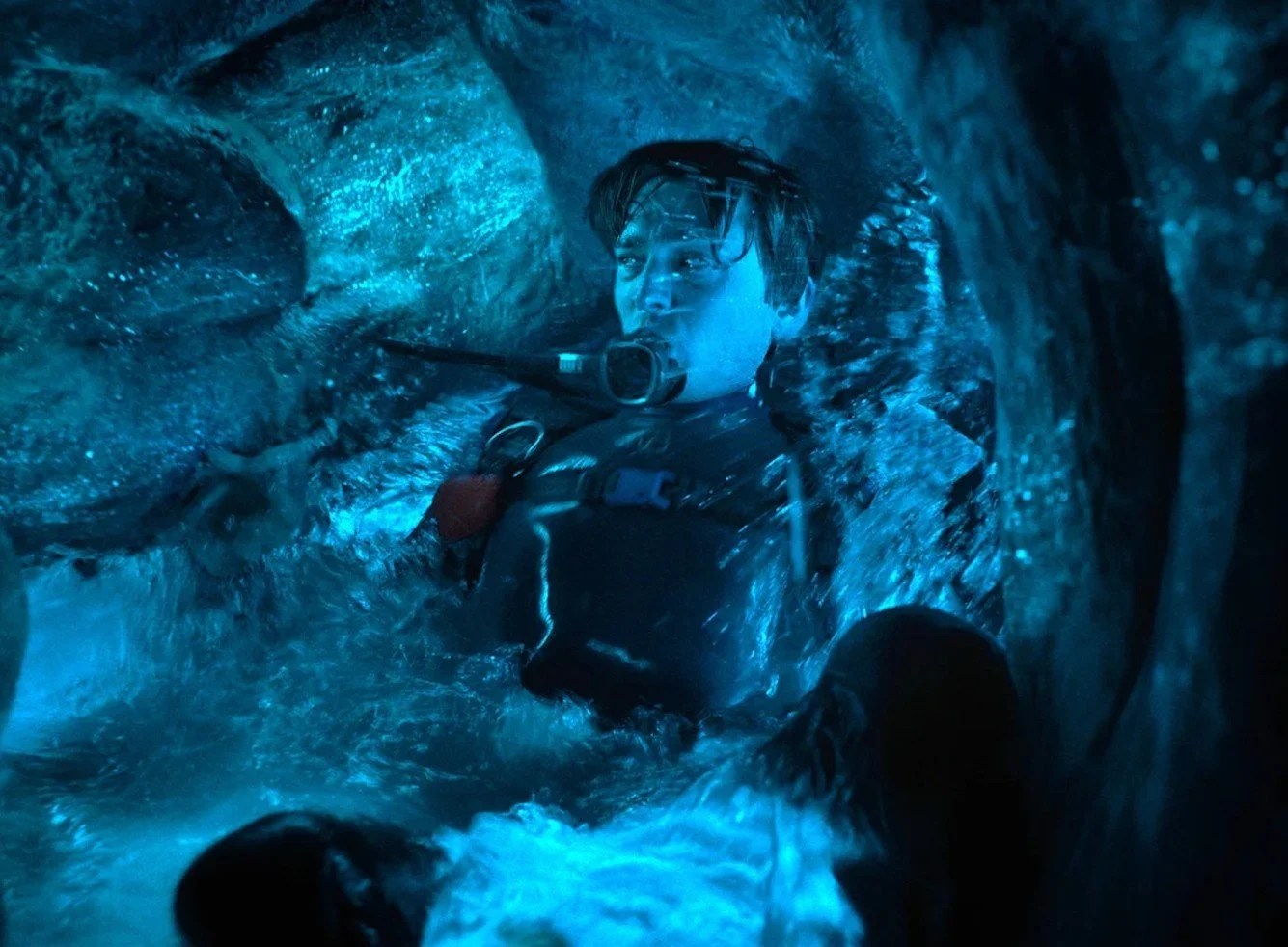
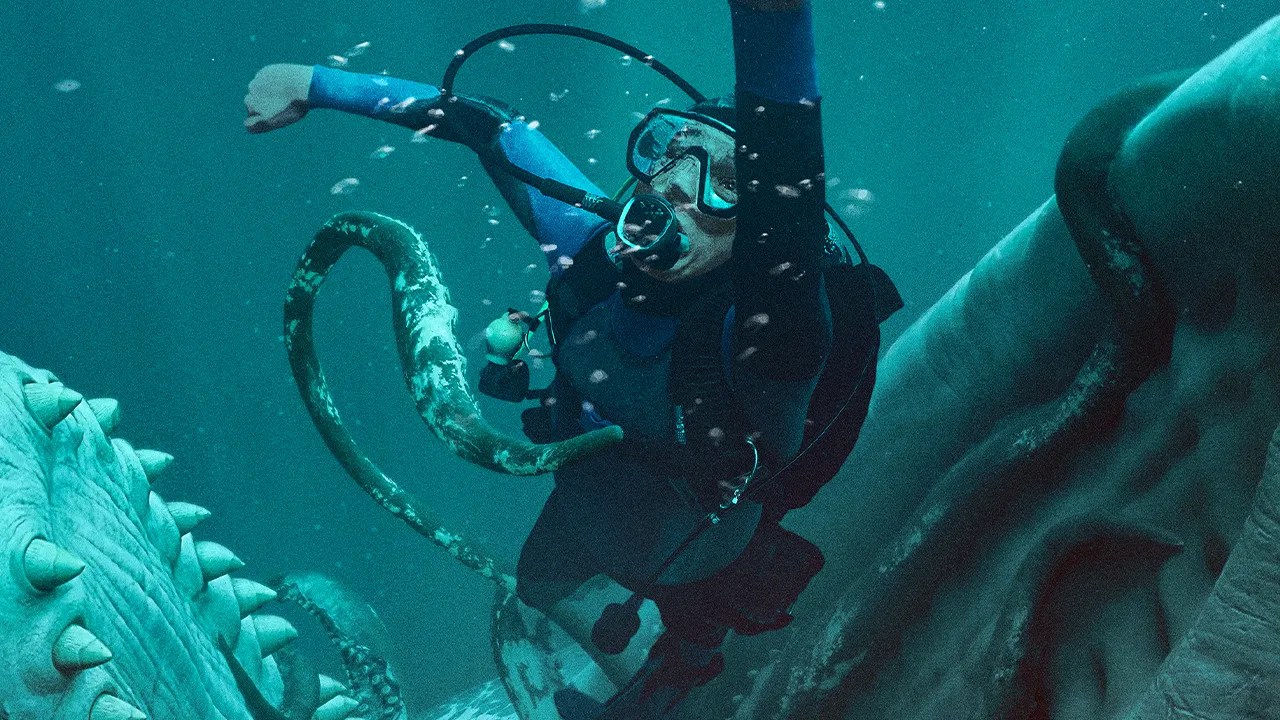
Plot: Based on the bestselling novel by Daniel Kraus, director Brian Duffield’s film follows the survival tale of Jay Gardiner (Austin Abrams). Traumatized by the loss of his father Mitt (Josh Brolin) and their contentious relationship, Jay returns to California after a year away looking for closure. Intending to recover his father’s remains from the ocean, Jay sets out on a solo scuba dive without authorization. At the edge of a submarine canyon, Jay suddenly finds himself in the battle between a giant squid and an abnormally large sperm whale. When Jay attempts to swim to the surface, the squid’s tentacles ensnare Jay and the whale swallows both Jay and the squid. With one hour of oxygen left and running out of options, Jay will have to face the haunting memories of his father and the lessons he taught to survive.
*Please note that I am going to be adding a new physical media barometer at the end of my reviews so that you may gauge whether a movie is worth purchasing.
Review: Earlier this year, right around CinemaCon, I got wind of movie that sounded completely ridiculous on paper. A young man gets swallowed by a whale and has less than an hour to escape. 20th Century Studios was touting it as 127 Hours but inside a whale. Personally, the premise sounded interesting and I soon discovered that not only was the film based on a novel, but it was by author Daniel Kraus who had just won the Pulitzer Prize for his work Angel Down. I immediately reserved Whalefall through my local library.
The novel proved exhilarating and I breezed through it in three days. I expected a rollicking and harrowing survival yarn—which it was—but I did not expect a nuanced and heartbreaking story about father/son relationships, childhood trauma, grief, and forgiveness. It’s one of the most emotionally moving books I’ve read in the past decade. Immediately, my anticipation for director Brian Duffield’s (The Babysitter, No One Will Save You) film skyrocketed, and with veteran actor Josh Brolin and up and comer Austin Abrams involved my confidence was high.
There’s a regrettable truth about adapting remarkable novels into movies. You can have a top-notch cast, dynamic cinematography, a brilliant conceit, and steady direction and the movie can still fail to land. It’s not because the people involved aren’t passionate or that they weren’t clearly devoted to making a good movie. Rather it’s because the material just doesn’t translate well to the big screen.
Unfortunately, that’s the case with Whalefall. While ambitious, Duffield’s Whalefall is ultimately a mixed bag that never quite lives up to its lofty expectations. I give Duffield (who co-wrote the script with Daniel Kraus) credit in that he wanted to provide audiences with something more than a simple “guy gets swallowed by a whale and time is running out to escape” premise. Duffield is clearly trying to stretch beyond his humble horror roots by making something both harrowing and emotionally resonant. While Duffield gets the harrowing part down, as the scenes inside the whale are an anxiety-laced, claustrophobic nightmare, the turbulent father/son relationship dynamic simply comes off melodramatic. In the hands of someone like J.A. Bayona (The Impossible) or Joe Carnahan (The Grey), Whalefall might have been a much more successful film than it ended up being.
I also had issues with the pacing of Whalefall. Any adventure or survival film needs those moments of levity and stillness in order to even out the narrative. Yet those moments should never commit the sin of derailing the level of intensity you want to perpetuate. Whenever Whalefall would cut away from the action of Jay inside the whale to provide a flashback scene, it ground the movie to an abrupt halt. Consequently, when the film cut back to the action, it took a moment for me to re-orient myself. The result is an uneven pace that at times felt jarring. Additionally, at 106 minutes, Whalefall is just too damn long. There’s an excellent, tighter 90-minute film within, but Duffield and company are unable to excise it.
Where Whalefall shines is in the production value and the fingernail chomping anxiety of Jay’s desperate attempt to escape. There’s a trend in modern movies when it comes to special effects to just use a blue or green screen and call it a day. While CGI certainly plays a role in Whalefall, Duffield takes a more practical approach to the effects whenever feasible. The fact that a 12-foot-tall, 18-feet-wide whale was constructed solely for this shoot is remarkable. It adds a layer of verisimilitude that I wasn’t expecting and drew me closer to Jay’s plight. I felt every Cetacean stomach contraction, every desperate plea for help, every toxic infused breath. Duffield and company should be commended for pulling this feat off alone.
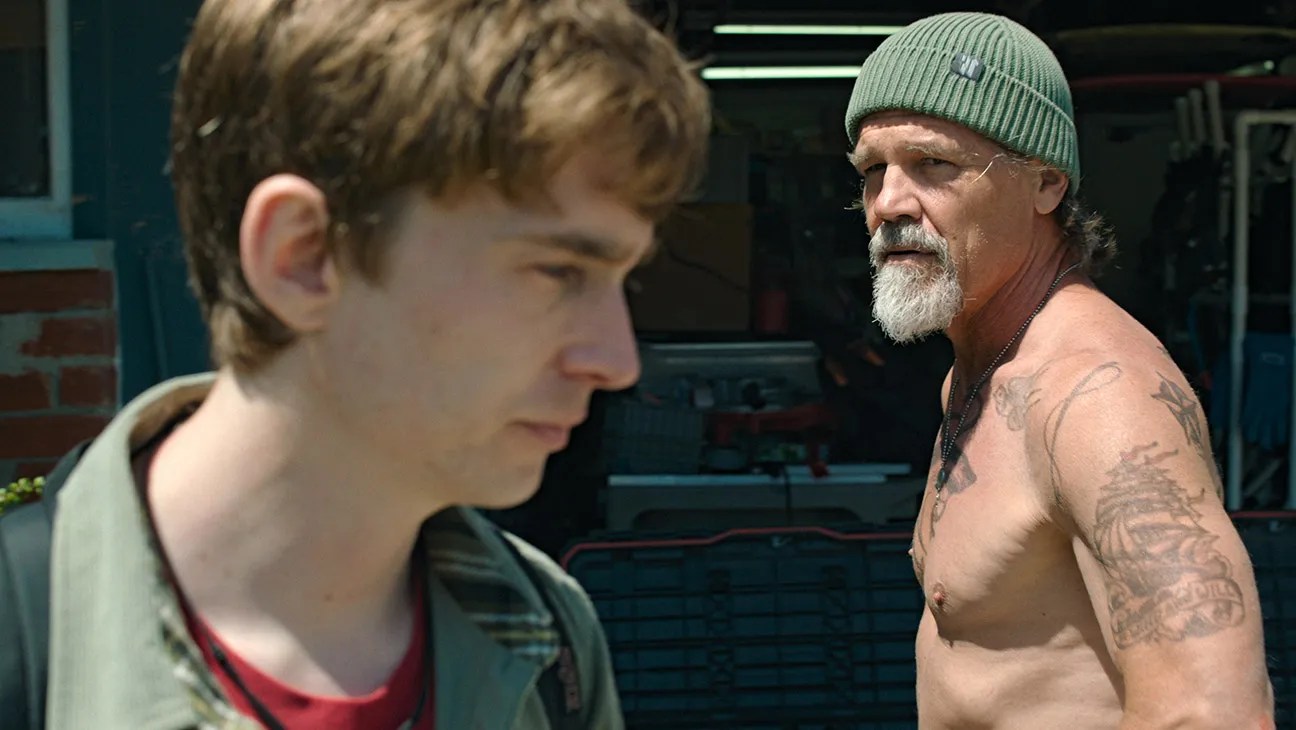
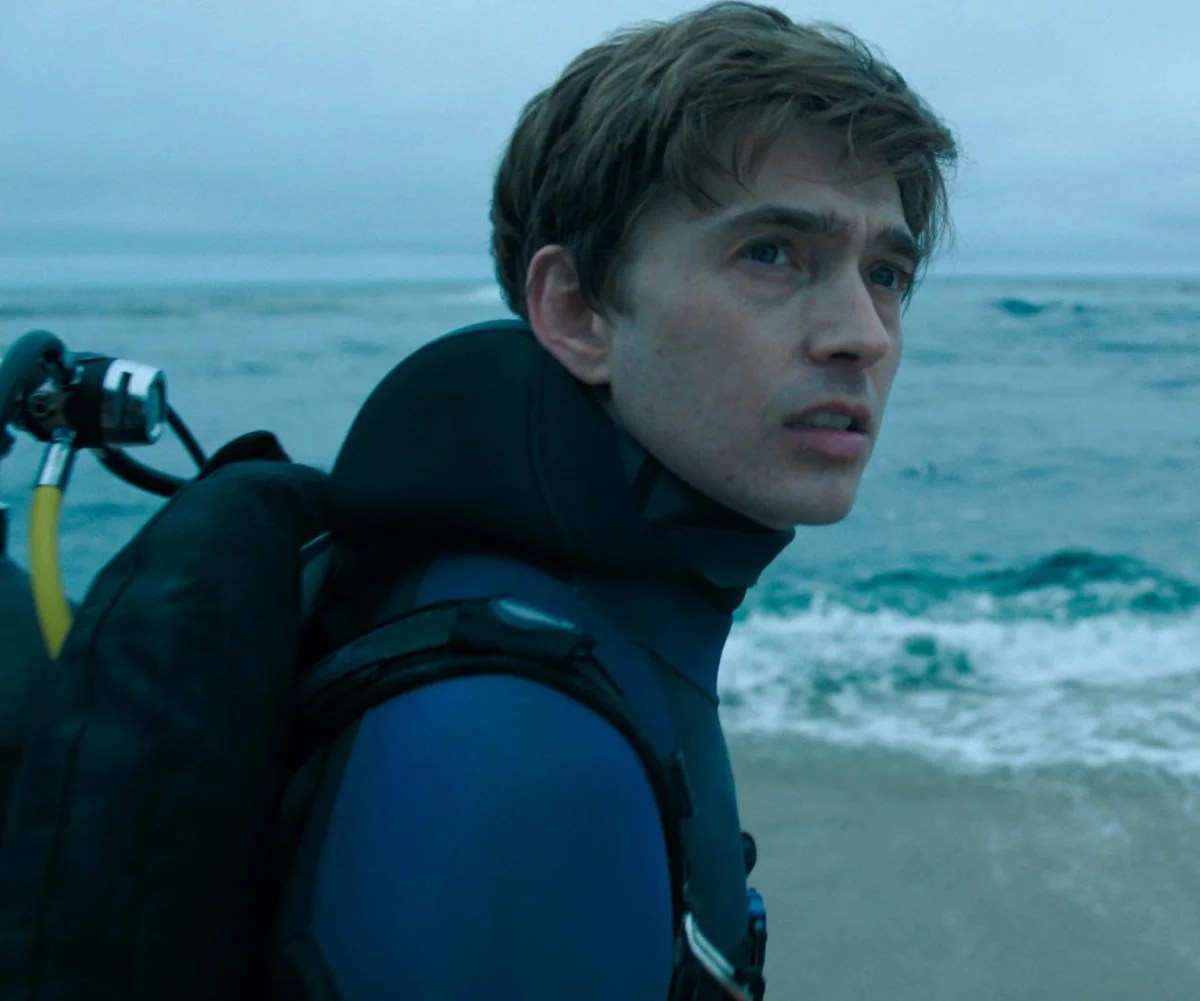
Of course, none of the aforementioned cinematic tricks work without the superlative acting of Austin Abrams. It is stunning that in less than a month Abrams starred in not one but two survival films (the other being Resident Evil) where essentially, it’s a one man band throughout. However, Abrams’ turn as Jay is radically different than his turn as Bryan in Resident Evil. There’s a level of pathos and relatability to Jay’s story in Whalefall. While the scenes between Jay and Mitt often veer into melodrama, I never once felt that Jay’s experience wasn’t authentic. Abrams balances grim determination with vulnerability. I was thoroughly invested in Jay’s story and desperately wanted him to survive. I eagerly anticipate Austin Abrams’ next project and wholeheartedly believe his star is on the rise.
Although Whalefall too often comes off half-baked and partially wastes its overall conceit, there’s still plenty to enjoy here, even if ultimately the end result left me wanting.
My rating system:
1 God Awful Blind Yourself With Acid Bad
2 Straight Garbage
3 Bad
4 Sub Par
5 Average
6 Ok
7 Good
8 Great
9 Excellent
10 A Must See
Masterpiece
Whalefall: 6/10
My Physical Media Barometer System:
Day One Purchase
Wait for a sale
Accept as a gift
Burn every copy you find
Whalefall: Accept as a gift