Movie Review: ‘Klara and the Sun’
Director: Taika Waititi
Cast: Jenna Ortega, Amy Adams, Mia Tharia, Aran Murphy, Natahsha Lyonne, Steve Buscemi
Plot: Klara is an older model Artificial Friend, a commercially sold robot designed to be a companion to a teenager. Upon being adopted by Josie and her family, she learns about love, death, grief and dreams.

Review: Kazuo Ishiguro’s science-fiction dystopian novel brings us into the lives of a damaged and grieving family through the eyes of a naive, infantile robot who is still developing her understanding of the world. It’s been described as a haunting novel, meditating on human nature and heartbreak. It’s a complex story with deep themes that would require a deft hand to effectively bring it to life.
Taika Waititi may not seem to be the obvious choice for the project if viewers are only familiar with his Hollywood work, but that’s not the case if you’ve taken in his smaller works. Boy, Hunt for the Wilderpeople and Jojo Rabbit showcase his ability to bookend powerful, emotive storylines with comedy, absurdism and colour. Klara and the Sun also puts the talented Jenna Ortega in the role of a new robot learning about the world, and Amy Adams in the equally complex role of the mother, a person whose life has served up a series of tragedies. With that collection of talent, there could be something special here.
We begin with Klara on sale in a run-down store. She’s two generations of robot behind the hot new release and has some kind of malfunction that causes her to frequently stand on one leg. She has also, in her mind, deified the sun. Being solar-powered, Klara has come to see the sun as the giver of life, healing and blessings. Just when she’s facing being sent back to the factory for parts, Klara is bought for Josie (Tharia) and taken to their isolated home, surrounded by wheat fields. Josie, we learn, has been ‘lifted’ — a procedure that modifies a young person’s DNA to turn them into a super-genius.
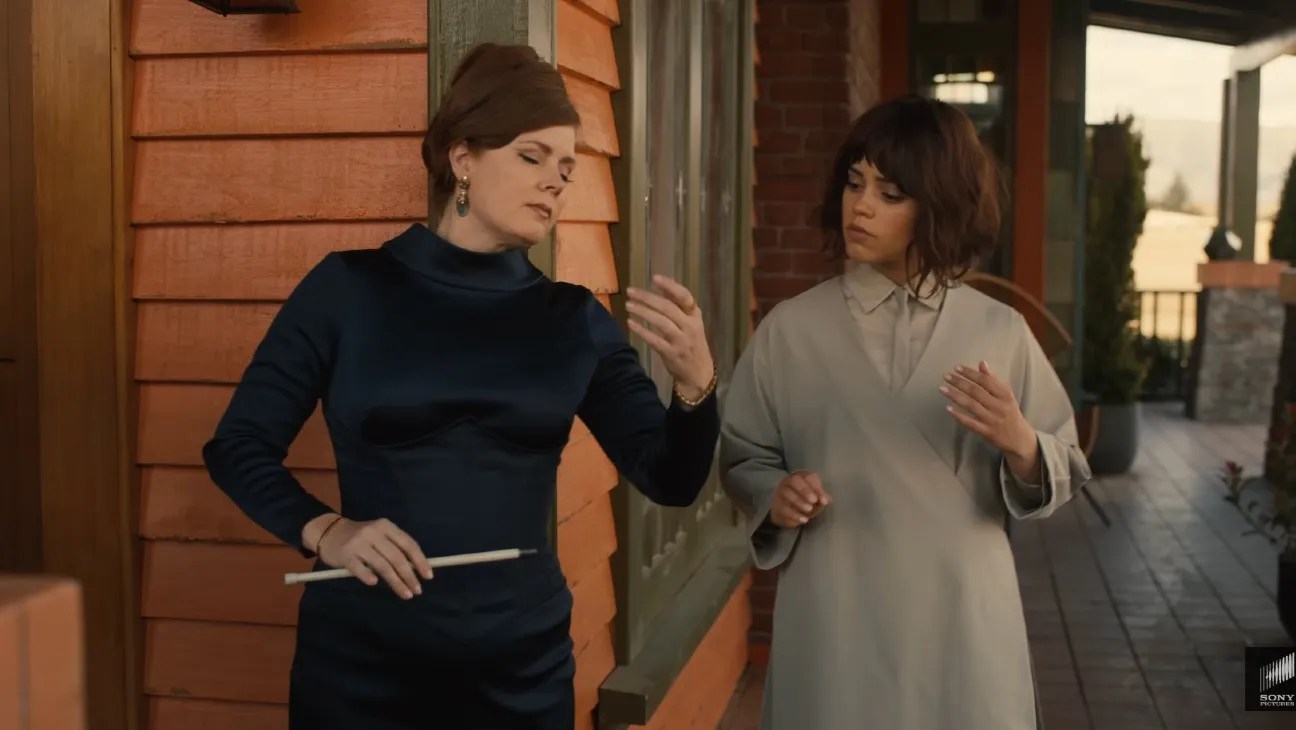
The procedure hasn’t gone right, however, and Klara learns that Josie is dying. Along with Josie, her non-lifted friend Rick (Murphy), her work-focused and distant mother, and their housekeeper (House), Klara learns to become their friend and family member, processing her feelings about the situation that unfolds. At the same time, we, as the audience, come to sympathise with characters who initially appear cold or cruel as we delve into their stories.
There are hints of a wider world beyond the farm. We learn early on that World War III has occurred, leading to the internet being shut down, which seems to have also resulted in the disappearance of computers and phones. Robotics has advanced to the point of producing convincing androids and automated machinery. Most of this gets only a passing mention, and little of it forms the backdrop of the world, with the wider setting only occasionally popping its head in through a shot of trashed tanks littering a field. Some things you’d expect to come up again, such as the mention of a generation of robots who killed people, never reappear. The film skirts around the ethics of robot companions and workers but never wants to address them. Given some of the reveals that emerge, it feels as though the subject gets little more than lip service.
Conversely, every major plot beat is foreshadowed so heavily that you could leave halfway through without missing anything. There’s an absolute armoury of Chekhov’s guns. It’s a script that feels heavily band-aided, with lots of plot holes and contrivances quickly plastered over. The excuses for restricting characters to this location and this set of circumstances are clunky. The housekeeper character seems to exist only to walk into scenes and tell Klara she’s needed elsewhere in the house. At the start of the film, she expresses concern about losing her job to a robot, but this is one of those ideas left on the floor.
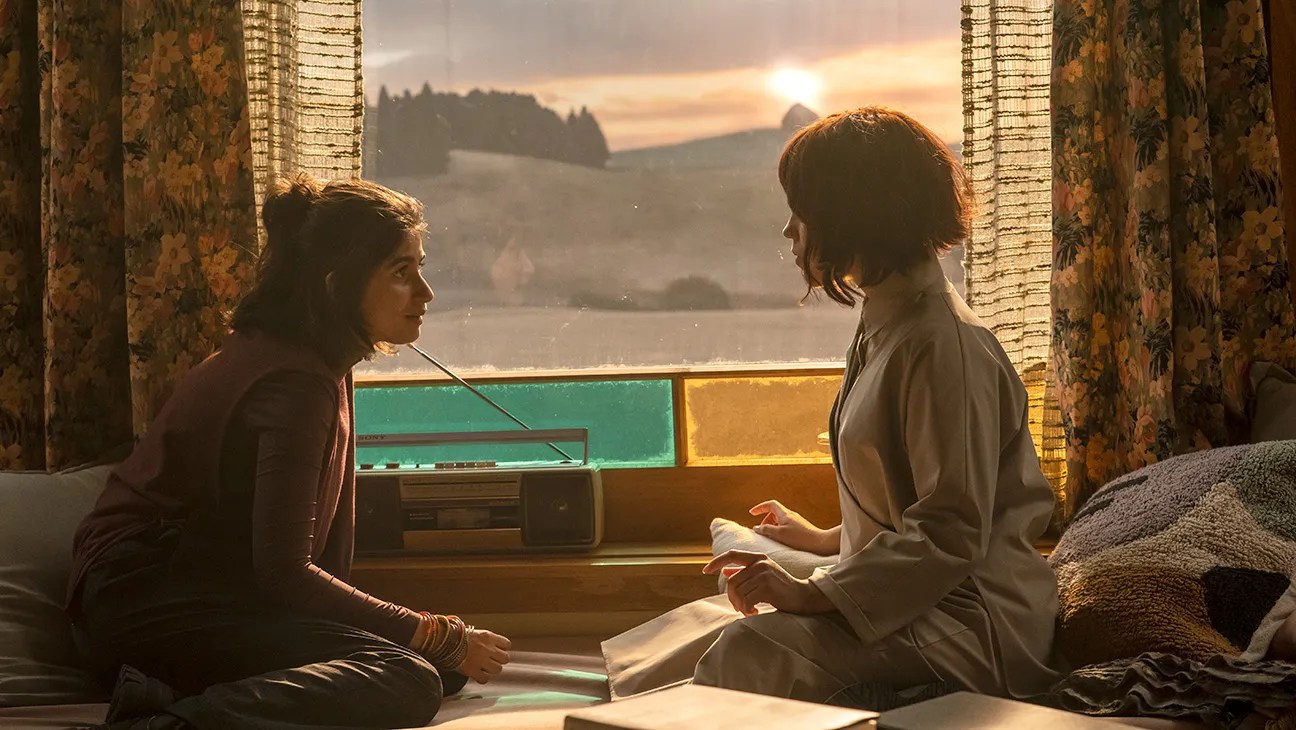
It’s the exploration of the themes and the performances that push through the weaker elements above. Klara and the Sun is a pleasant enough watch, and much of it is carried by Jenna Ortega. You never lose sight of Klara as a mechanical being, both in her physicality and expression and in the way she slowly adopts human mannerisms that mimic those of other characters. She effectively sells the firm and Pagan-like worship of the sun, along with rituals she has created around it. It makes a sense in the way that she observes the world. Amy Adams is also on top form, gradually lowering the mask of stoicism that hides her heartbreak and guilt.
Stylistically… it’s fine. There’s some great set design here, and the rolling fields of wheat never stop being a rich visual environment. It’s all shot and laid out very nicely. There does seem to be a concerted effort to make it all very quirky in a 2010s Tumblr kind of way, and it comes off as just being twee.
Some of it works and some of it doesn’t, but what will matter most is your personal emotional engagement with the themes. Unfortunately, that wasn’t the case for us. We certainly enjoyed it, but it never quite pulled at our heartstrings.
Rating: SIX out of TEN


